Row Smart, Wade Kind
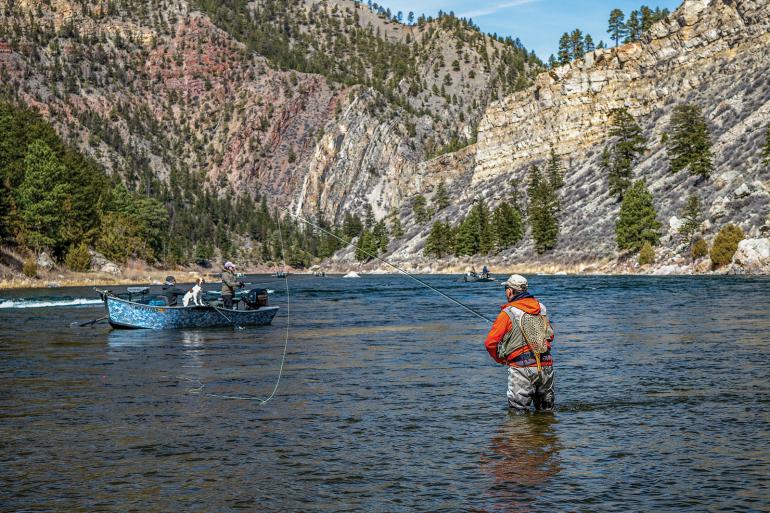
The unwritten intricacies of river etiquette.
Fishing etiquette isn’t a list of hard, fast rules—it’s the quiet code that keeps our waters enjoyable, tranquil, and safe for everyone who steps into them. Whether you’re wading a tight spring creek or floating our broad western rivers, the way anglers treat each other shapes the entire experience. Good etiquette preserves solitude, protects opportunity, and honors the shared resource we all enjoy. In a world where pressure on fisheries continues to grow, these unwritten courtesies matter more than ever.
Give Others Space, Even When It’s Inconvenient
The fundamental principle is simple: avoid crowding other anglers. If someone is already working a run, a bank, or a riffle, give them space to fish it. Hovering nearby, waiting for someone to leave, or positioning yourself just upstream or downstream creates pressure and discomfort. If you’re unsure whether you’re too close, you probably are. Consider it an opportunity to explore another area.
As rivers become more crowded, pulling your line off the water is one of the clearest signs of respect you can show. On a boat this, means “picking up” well before you get to another angler and fishing again well after you pass. This small gesture says, “I see you, I respect your space, and I’m not here to interfere.” A quick wave or friendly “good luck” and a clean pass can turn what could have been a tense moment into a shared appreciation of the river.
Avoid “low-holing,” or dropping your anchor right below another fisherman.
Try to remember that the wade angler has priority. Row around him—behind him whenever possible—and a simple “Mind if we slide behind you?” also diffuses tensions and alerts the angler to your intentions.
Understanding anchoring responsibility is also key. Never anchor in the middle of a prime run or block a natural travel lane. If you want to fish a spot, pull over well downstream or on the opposite bank. Avoid “low-holing,” or dropping your anchor right below another fisherman. Though it’s somehow become commonplace, it’s probably one of the most egregious etiquette violations out there.
Like all things, exceptions to these basic practices abound. Use discretion. Be an observant floater or fisherman. Often, anglers have to anchor in inconvenient locations to target rising fish that would otherwise be unattainable. When you float by someone in this situation, pick your lines up and respect the dry fly.
Ramps are first-come, first-served, and cutting in front of people is a guaranteed way for conflict.
Keep It Quick at the Boat Ramp
The boat ramp is where good days begin or where tempers flare. Remember, the ramp is for unloading and loading only. Do all your strapping, organizing, cooler-packing, and rod-rigging in the parking area. When the boat touches the ramp, it should be ready to slide in or out immediately. Move with purpose. Don’t rush to the point of chaos, but make sure things are good to go. Remember to help others if it looks like they need a hand. It’ll keep the line moving and instill good habits in others.
Respect the queue. Ramps are first-come, first-served, and cutting in front of people is a guaranteed way for conflict. If you’re ready before the next in line, a simple, “Hey, mind if we jump in front?” is an easy way to keep the flow going.
A Lesson in Humility
Fishing and river etiquette are ultimately about humility. None of us own the river; none of us are entitled to a particular run or fish. We are guests, temporary visitors in a place that will outlast us all. Treating others with respect honors that truth, and in doing so keeps the rivers what they are meant to be: a place of quiet, connection, and shared passion for the places we all love and enjoy.
Andy Bennett has been a fishing guide in southwest Montana for 26 years. He owns Backcountry Angler in Dillon.