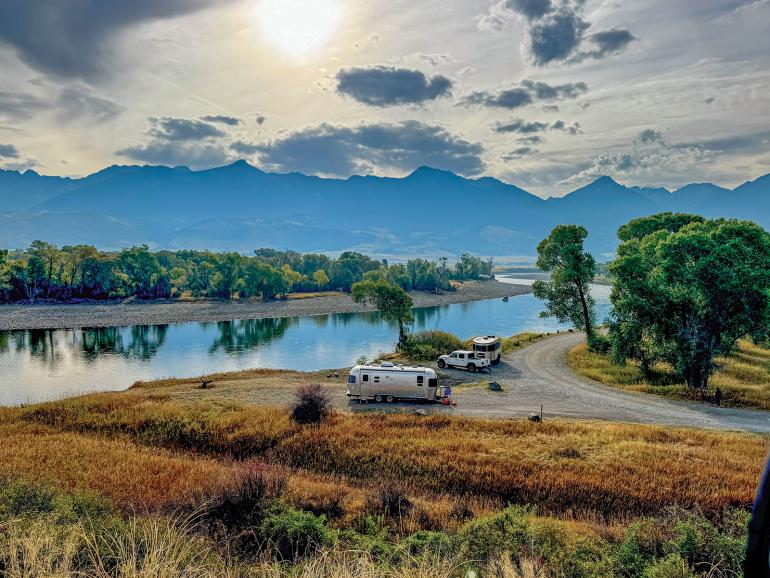
Considerations for a safe, self-contained campering system.
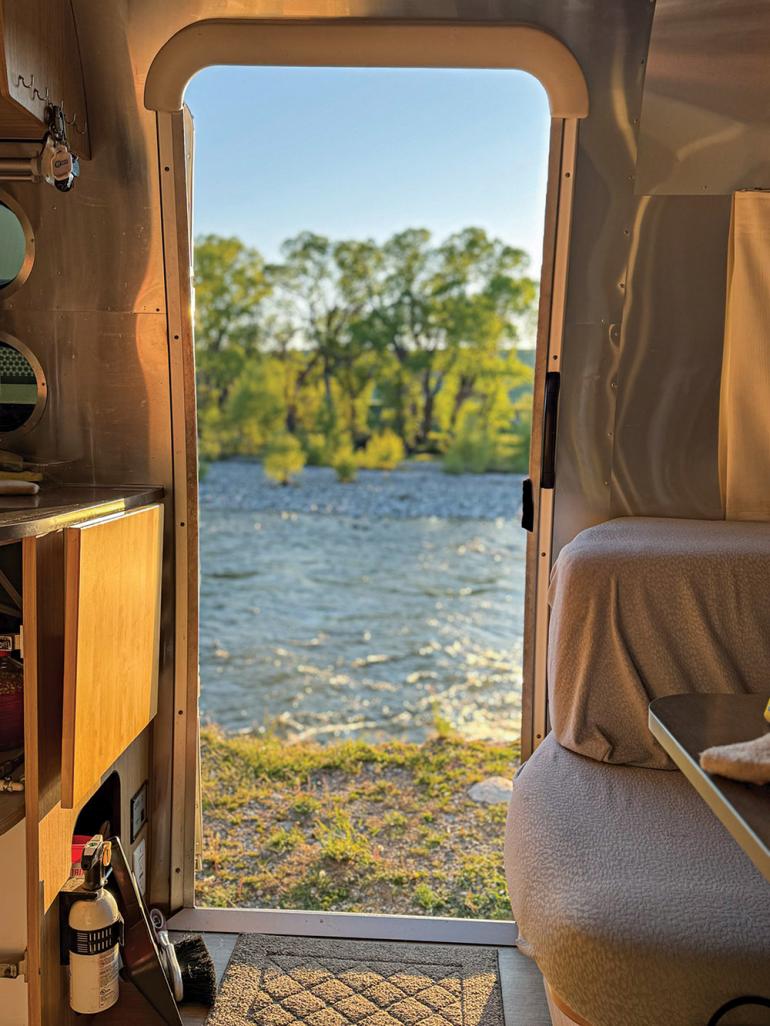
Late at night, the sound of staccato raindrops on the metal roof sang me to sleep. Sometime before dawn the rain stopped and camp was quiet. With the windows closed due to a descending chill, the sound of the Boulder River provided a pleasant hum in the background. Then, with a light click, the furnace fan kicked on—one of the many luxuries of living in a fully decked-out camper.
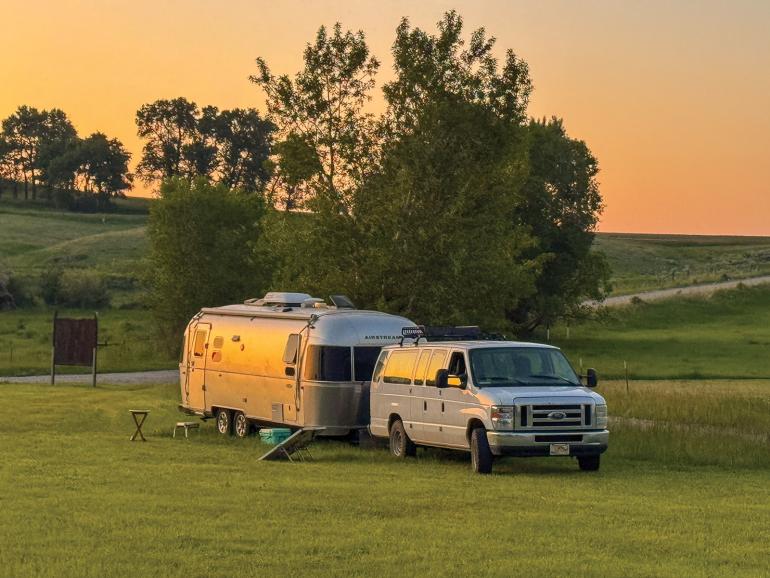
“Boondocking” in my Airstream for the past 18 months has been a learning experience. This self-reliant style of living—moving one primitive campsite to another, often on public lands—is not without its challenges, however. First and foremost, you must be able to produce your own power, which is easier said than done. Without the convenience of an electrical outlet, you need to build a reliable, diversified, and self-contained system.
The good news is that with today’s battery and solar-panel advances, it’s easier than ever to enjoy a steady supply of electrical power. Over the past year and a half, I’ve discovered a good system for keeping the lights on and the power flowing. Here are some tricks of the trade.
One of the continuous challenges of off-grid living is having sufficient electrical power for my refrigerator and freezer, along with a bevy of smaller electrical appliances and devices. When driving, my van’s alternator produces 12.3 volts that flows into a battery bank, which is the crux of the operation.
Choose your batteries wisely, as you get what you pay for. Run-of-the-mill 12-volt batteries from Costco can power a small fridge overnight, but not much longer. Two Go Power 6-volt AGM batteries, wired in parallel, have much more longevity, albeit at a steep price. I try to keep mine charged to a range of 12 to 12.5 volts at all times.
As with anything having to do with electricity, if you don’t know what you’re doing, don’t experiment. Setting up circuits is an exact science that can cause injuries and even explosions if done wrong. Consult books, get help from friends, or hire a professional if in doubt.
Driving charges the batteries while traveling; but when camped in one place for several days, you’ll need a different way to keep them full of juice.
Even with a good battery bank, it pays to be frugal with power usage. Shut off the lights, don’t run the stereo too much, and only use the cooling fans when it’s hot. To further save power, consider a fridge that runs on both propane and electric. A 30-lb propane cylinder can last about ten days in mid-30s to 40s temperatures. I keep my camper at 68 degrees. Carrying an extra tank ensures that you’ll never be caught empty-handed (or stuck drinking warm beer).
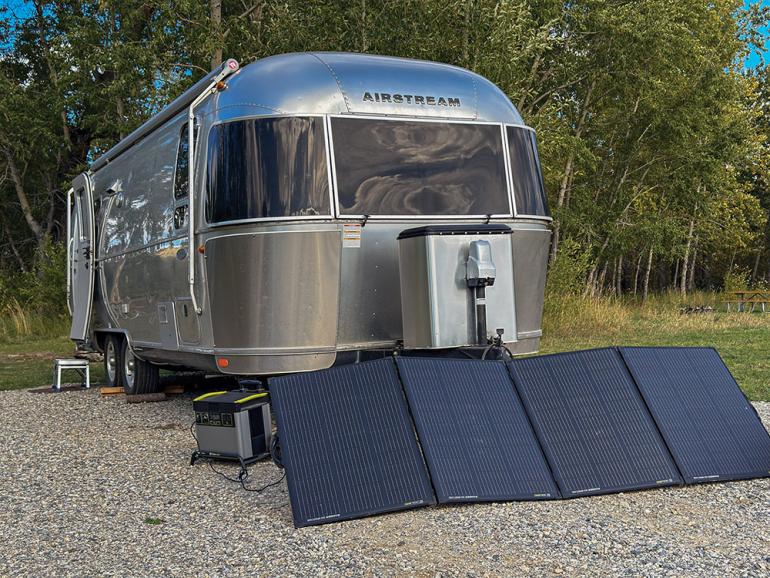
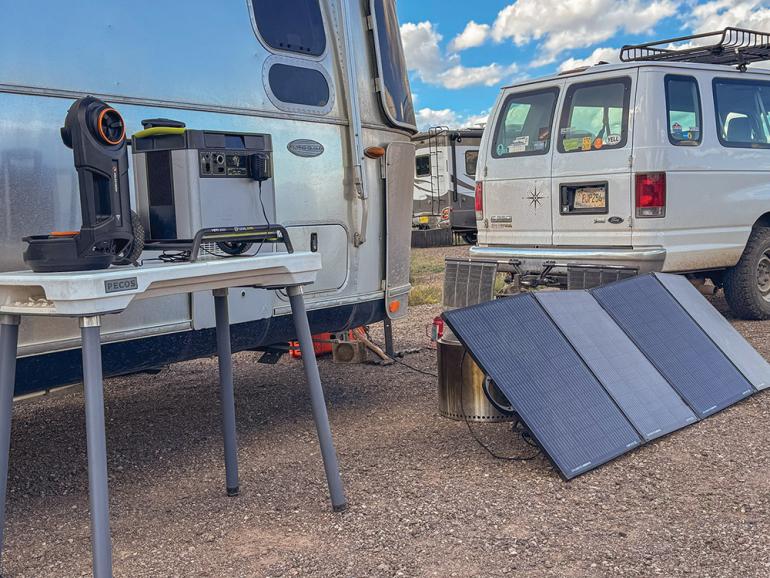
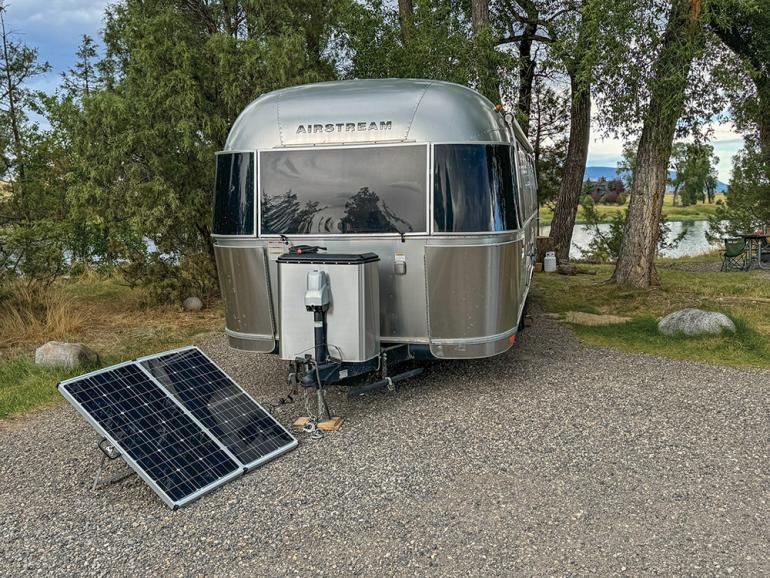
As mentioned, driving charges the batteries while traveling; but when camped in one place for several days, you’ll need a different way to keep them full of juice. When it’s sunny, I deploy a Zamp 180 watt solar panel and a 300 watt Goal Zero array. These charge both the Airstream onboard battery bank and my Goal Zero 3,000 watt solar generator. With decent sun, it keeps all systems running efficiently.
The Goal Zero powers the Airstream for two full days if I’m diligent about conserving energy. If I happen to be camped somewhere with electricity, I aways make sure to plug it in and top it off. More available power is always good to have out in the boonies—whether it’s to charge a dead tow-vehicle battery or to charge a phone & laptop.
If overcast weather persists, the Honda 2,200-watt gasoline generator is the third safety backup. Running it for an hour or two fully recharges the battery bank. It’s fairly quiet and I try to run it in the morning, especially if I use a furnace fan at night. It’s easy on fuel so I use non-ethanol premium.
In a real pinch, I can charge the Airstream by starting the van and connecting the trailer-lights power cable to the camper. It’s my last electrical resource, and it’s good to have available as a final backup.
The amount of portable technology available to campers—particularly solar power—has made boondocking a more comfortable, reliable way to camp and get away from crowded places. Being self-contained offers a sense of freedom and adventure that has no substitute. If you’ve been thinking about going mobile, there’s no better time than now. What are you waiting for? Get off the grid and give it a shot.