Core Values
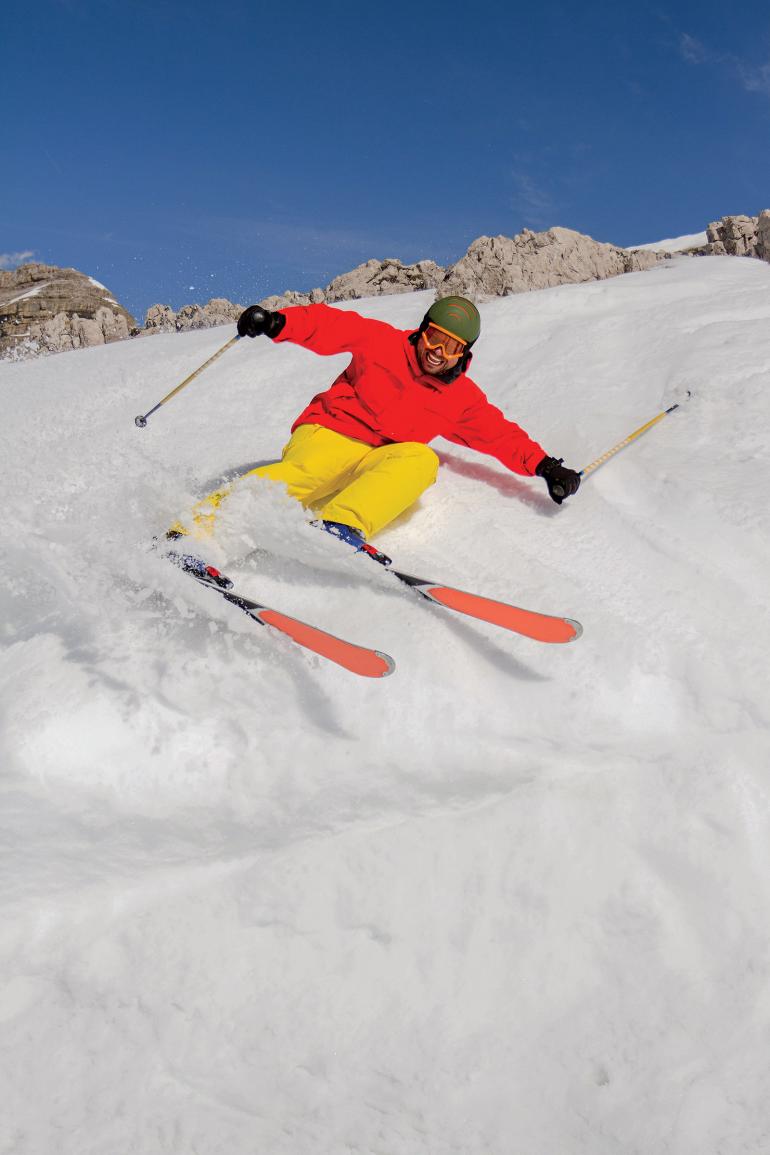
Building the foundation for better skiing.
Skiers, from novices to hard-chargers, frequently feel “the burn” in their quads toward the end of a long run. Often a symptom of inefficient technique (hips too far back over the skis), the condition typically results in sore muscles that recover with use and rest. More debilitating is lower-back or hip pain that can knock a skier out for the remainder of the season. The good news? Barring a performance-limiting physical condition, the right conditioning program can relieve most of the discomforts common to skiers while also enhancing their abilities on the slopes.
Most skiers over age 40 (and many younger) are performance-limited in core strength and flexibility. Excellent technique requires upper/lower-body separation (angulation) which is frequently limited by lower-back flexibility. It also demands the ability of the hips to move independently from the torso, and the legs to rotate flexibly in the hip joints. All of the above also necessitates enough strength in the core & hips to stabilize the upper body against considerable forces of speed and gravity. Along with better performance, strengthening the core and improving flexibility commonly reduce lower-back pain related to skiing and other activities.
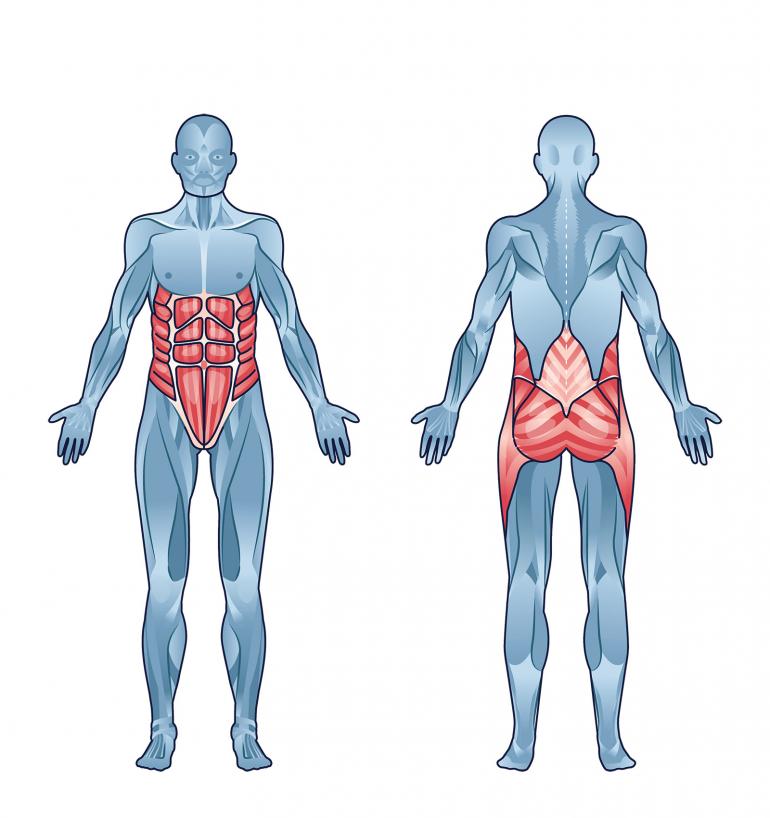
Historically, core conditioning consisted of working the frontal abdominal muscles and the corresponding tissue of the lower back. Abdominal exercises included sit-ups, crunches, and more recently, planks. The back was conditioned with things like deadlifts, “good mornings,” or hyperextension on a flat bench.
These muscles are integral for stability when skiing requires the upper and lower body to operate independently, activity that forces the hips & core to operate as the fulcrum.
While strength in these areas is helpful to skiing, conditioning muscles on the sides of the core is equally important. The obliques provide stability during the angulated portion of the turn. A superb way to fire up the obliques is the side plank. If you have trouble with those, start with mountain climbers or a standing wood chop. I also like the Russian twist. As you progress, up the ante by increasing the time and/or raising the upper leg on a side plank. Hold a weighted medicine ball or dumbbell to challenge yourself with the Russian twist.
Competitors in the upper eschelons of ski racing devote considerable effort to strengthening and developing flexibility in the hip flexors. Technically, “hip flexors” refer to a group of five muscles that allow the knee to be drawn toward the chest and stabilize the hip during other activities. Colloquially, the flexors also include the adductor and abductor muscles that give the legs power to push outward or pull inward from the hips. Taken together, these muscles are integral for stability when skiing requires the upper and lower body to operate independently, activity that forces the hips & core to operate as the fulcrum.
Two basic exercises to strengthen the hip flexors proper are the Psoas hold and the straight-leg raise. The first simply involves raising a knee to hip height while balancing on the other foot and holding, ideally for at least 30 seconds. The second is done by laying on the back with one leg extended and the other bent at a 90-degree angle. From this position, raise the extended leg until it’s parallel with the bent leg and hold for a few seconds before slowly lowering it to the floor.
The hip adductors and abductors are targeted by machines at the gym that require a seated participant to push the knees outward or pull them inward against resistance. But you don’t need a machine. The “fire hydrant” move involves dropping on all fours and, you guessed it, raising and holding a knee to adopt the basic pose of a dog urinating on said water-dispensing device. Add a resistance band to increase tension. These moves hit the hip abductors. For the adductors, look to exercises like side lunges.
Flexibility in the hips and core are as important as strength. Sitting for hours shortens the hip flexors, making them tight and painful when forced to lengthen, as is necessary when skiing. A wide variety of stretches can be used to increase flexibility in the hips and core. We’ll leave you with an assignment. Research and test stretches for hip and core mobility and report on the results to anyone who will listen. Look for information vetted by health professionals like PTs and athletic trainers. Not familiar with some of the exercises noted in this article? A quick online search will unveil the moves.
Dynamic skiing requires the body to stretch and exert force in ways dissimilar to most other activities. Train the core and hips accordingly, and you’ll ski more elegantly and feel like a pro at the end of the day!
Jack Ballard is a U. S. Ski and Snowboard certified race coach and competitive masters ski racer. He coaches at numerous ski race camps across the country and at Red Lodge Mountain.