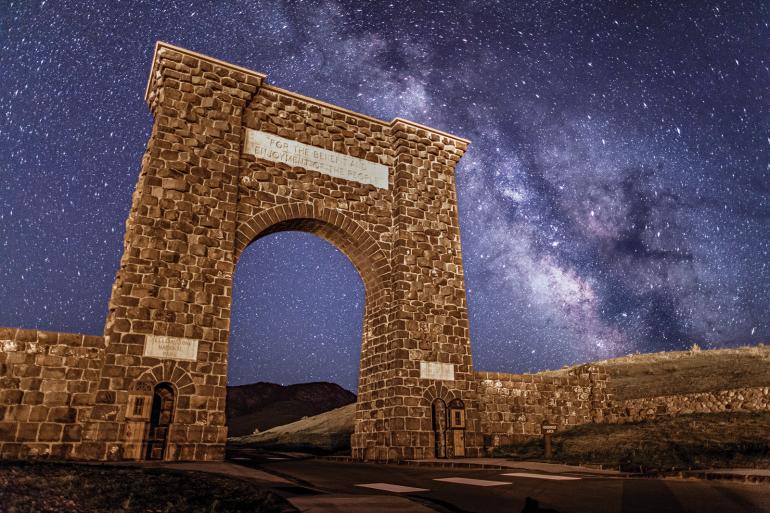
The original Yellowstone Park gateway, from trappers to tourists.
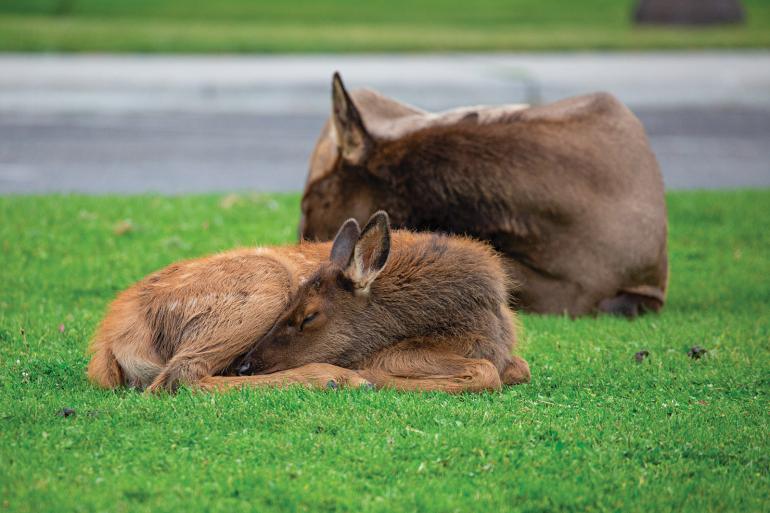
Steam rising from the ground. Roosevelt Arch. Giant, sloppy hamburgers. Elk napping on a church lawn. An adjacent religious cult. The gateway to the now-extinct Boiling River. A booth where you could get a yellow flyer, showing a cartoon bison throwing a surprised tourist through the air.
These are some of my favorite things about Gardiner, Montana. Having spent a summer working across the street in Mammoth Hot Springs, as well as countless outings around town, I consider Gardiner a second home. And like any good sentimentalist, I’ll take any excuse to revisit my old stomping grounds.
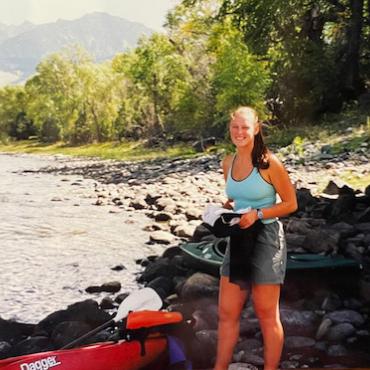
On a recent sticky July day, I pressured my kayak buddy Jamie into taking a long weekend in Gardiner to escape the indignities of summer tourism in Bozeman. Neither of us had gone boating in a while, and the rivers weren’t getting any higher. So we loaded our Daggers into Jamie’s truck with the intention of a simple overnight river trip. But by the time we hit Park County, our itinerary had morphed into the packed schedule of a bona fide out-of-stater, with some activities that called for reservations. Gardiner has an excellent guiding culture, focused on education and history as much as adventure, so we got out our phones and booked some fun.
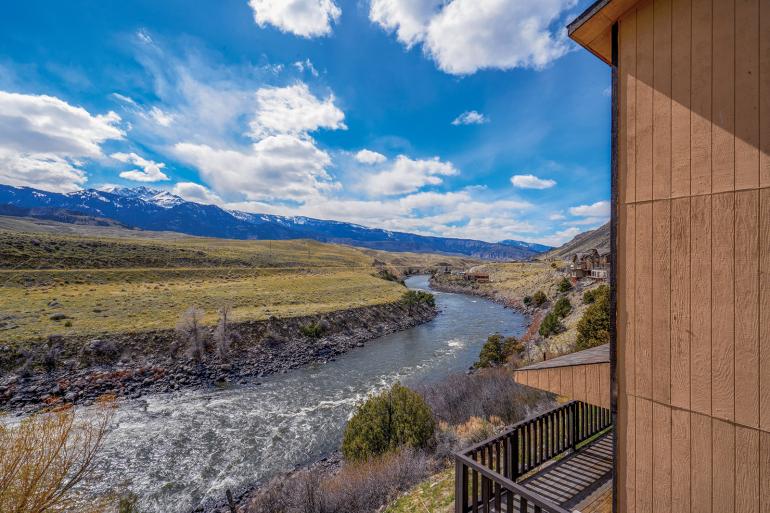
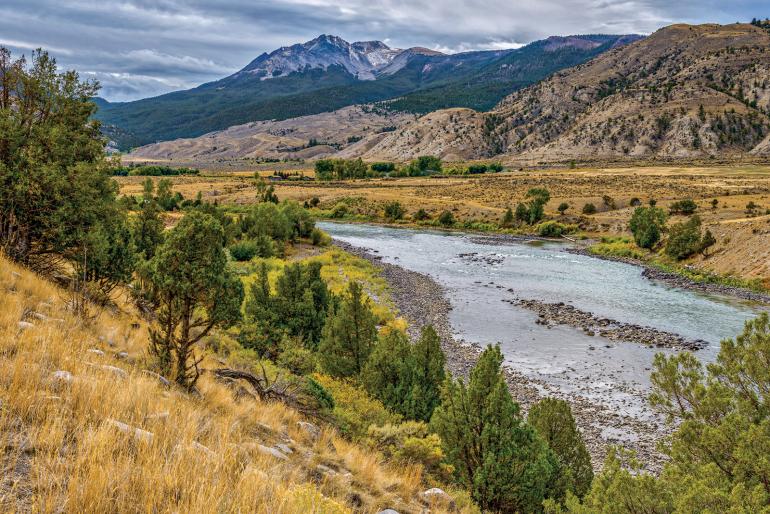
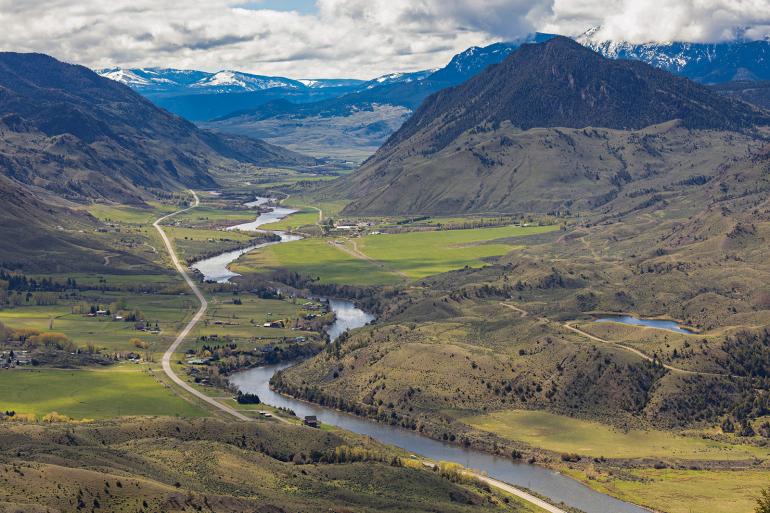
As we drooled out the window, the jagged Absaroka peaks and glittering Yellowstone River reminded us why people keep moving here, like it or not.
If you haven’t memorized the gorgeous drive from Bozeman to Gardiner, please put this down and go now. The views alone are unmatched, no matter the time of year. As we drooled out the window, the jagged Absaroka peaks and glittering Yellowstone River reminded us why people keep moving here, like it or not.
We drove through the curious community of Corwin Springs and past the shiny new Dino Mart Sinclair. A herd of elk meandering across Highway 89 compelled us to slow down as we entered Gardiner, population 772. Named after Johnson Gardner, a fur trapper who cruised the area in the early 1830s, Gardiner was officially established as a town in 1880. It was the first entrance into Yellowstone Park, and is the only entrance that remains open year-round. The community evolved as a hub for tourists, miners, trappers, soldiers, and any frontiersperson tough enough to venture to this exceptional spot at the confluence of the Yellowstone and Gardner Rivers.
Incidentally, if you’re bothered by the different spellings of the town and the river, it turns out there’s an explanation. In 1870, Henry Washburn, Nathaniel Langford, and Gustavus Doane conducted a formal expedition to present-day Yellowstone, producing ecological and cartographic work that greatly contributed to Yellowstone being designated a national park. (These fellas even named Old Faithful geyser.) When locals told them about Johnson Gardner, a historic phonetic misunderstanding was born: Langford wrote “Gardiner” in his documents upon hearing it pronounced by, allegedly, Jim Bridger himself. According to local lore, Mr. Bridger’s Virginia accent gave the word three syllables and, despite Langford later acknowledging this error, it was never corrected.
Back in modern times, Jamie and I were psyched to be in town well after the trapper era, because that meant lunch that wasn’t wearing its fur five minutes ago. We stopped at Sagebrusher’s Café, where the owner Karoline fixed us up with some outstanding BLTs and fruit salad. She chatted with us out on the deck while Hazel, her caramel-colored pooch, snoozed in the shade. We finally took our leave, driving down to Hillcrest Cottages, where we checked into the tiny quarters for a mellow evening.
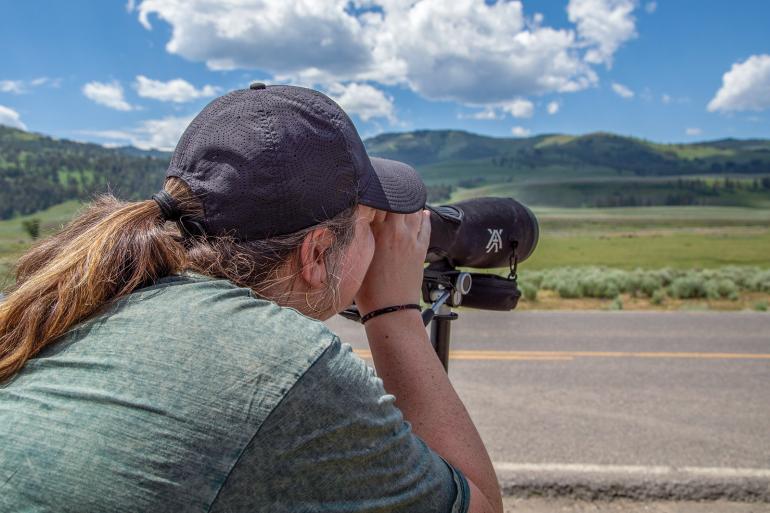
The 5am alarm came quickly. We rolled off our bunks and into layers of Capilene while the coffee pot cranked. Mugs in hand, we crossed the bridge to meet up with Quinn, our expert guide and wildlife biologist from Yellowstone Wolf Trackers. The sun was just beginning to cast its summer glow behind the Abasrokas, and it was quiet as we drove up the refurbished original stagecoach road into Mammoth. Turning east, Quinn remarked on some remnants of the ice age coming at us: a herd of shaggy bison, whose colossal constituents parted like the sea and clomped past our windows.
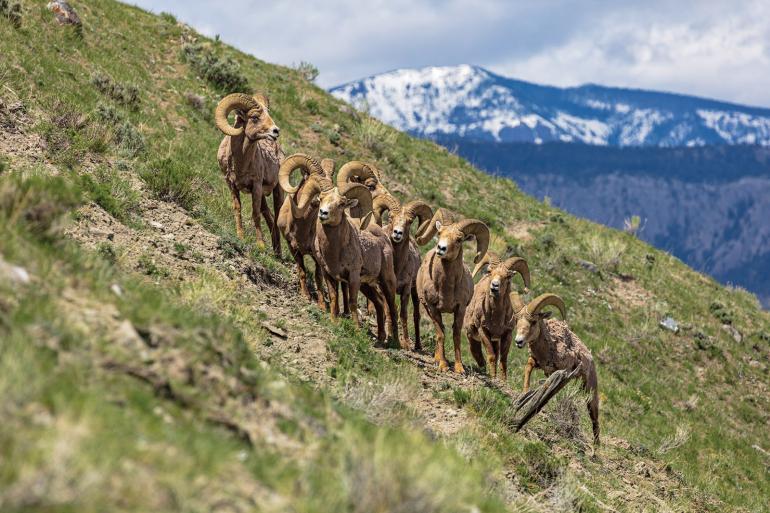
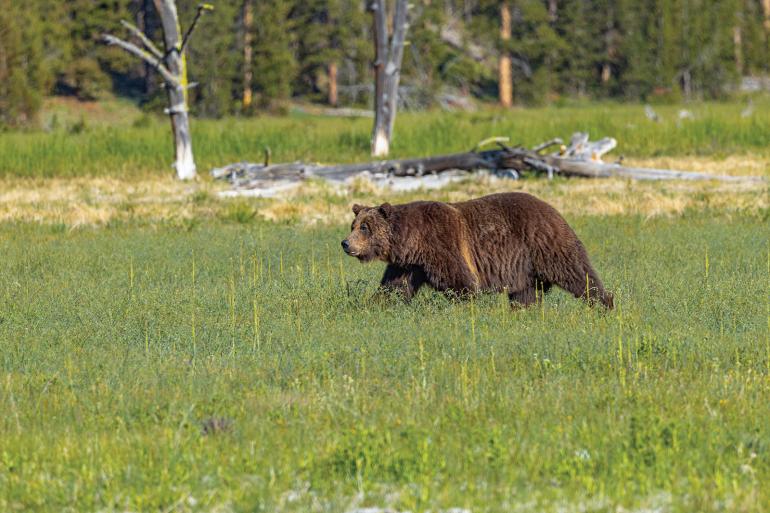
We continued through the Lamar Valley, where we were awed and humbled by sightings of three grizzly bears, sparring pronghorns, and a cluster of rams overlooking the boulder-spotted Lamar River.
We stopped near Slough Creek, where Quinn set up his spotting scope. Jamie and I took turns gazing, dumbstruck, at a stunning jet-black female wolf. As she trotted through the valley with a piece of elk carcass in her mouth, Quinn told us how wolves move their pups from dens to what are called rendezvous sites when the pups are around two to three months old. There, pups are raised by their pack before joining them in hunting and travel at around six to eight months old. We watched mama wolf until the sun was fully up, at which point she was done showing herself. So we continued through the Lamar Valley, where we were awed and humbled by sightings of three grizzly bears, sparring pronghorns, and a cluster of rams overlooking the boulder-spotted Lamar River. Jamie and I both felt like we had Ph. Ds in biology by the time it was done; Quinn was the best walking encyclopedia we’d ever met.
Noon seemed like 6pm, but we still had half a sunny day on the Yellowstone. We drove to the access point behind the old Service Stations building and threw our boats in. We paddled the town stretch to McConnell, past a bull elk and nearly into a bull moose on shore, who raised his grand head to squint at us, chewing indifferently. We gave him a wide berth and climbed out, ready for dinner. Maybe it was the water, but we agreed that Hawaiian fusion fare was just the ticket. We slid over to the Good Food Place, an unexpected gem near the Dino Mart, and shared the Mahalo Ahi Poke Plate and Yellowstone Huckleberry Chicken. Chef’s kiss, is all we have to say about that.
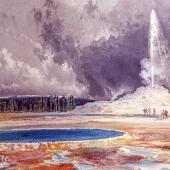
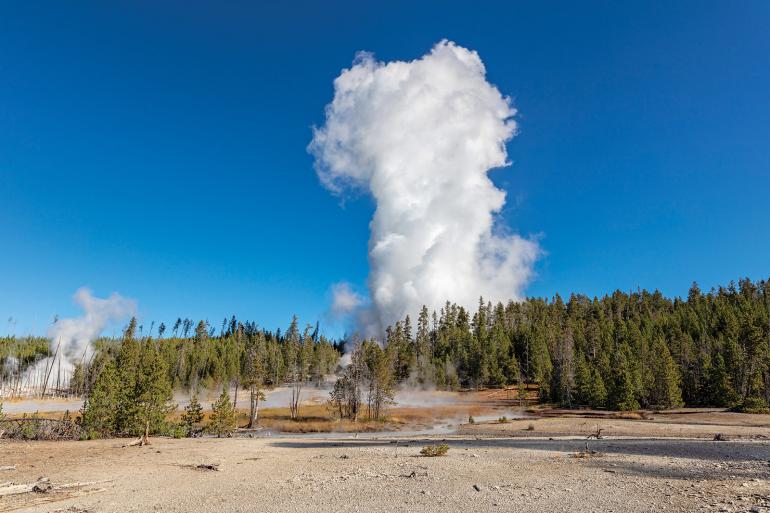
The next excursion was a geyser tour with Yellowstone Recreation Company. Owner and geologist Elijah Starkey, a jovial man with an arsenal of Park mishap stories, took us to Norris Geyser Basin. Home to the oldest, hottest, and most active thermal region of Yellowstone, Norris boasts the world’s tallest active geyser, Steamboat, at over 300 feet. We took a boardwalk loop through mud pots, springs, geysers (winner of the best geyser name: Porkchop), and hissing, cauldron-like pools in the crusty earth, while Elijah filled what was left of our brains with the geologic history of the Yellowstone Caldera. He also explained thermophiles, the microorganisms that help make these springs so vibrantly colorful. For nature enthusiasts who love words like “rhyolite” and “asthenosphere,” this tour is for you.
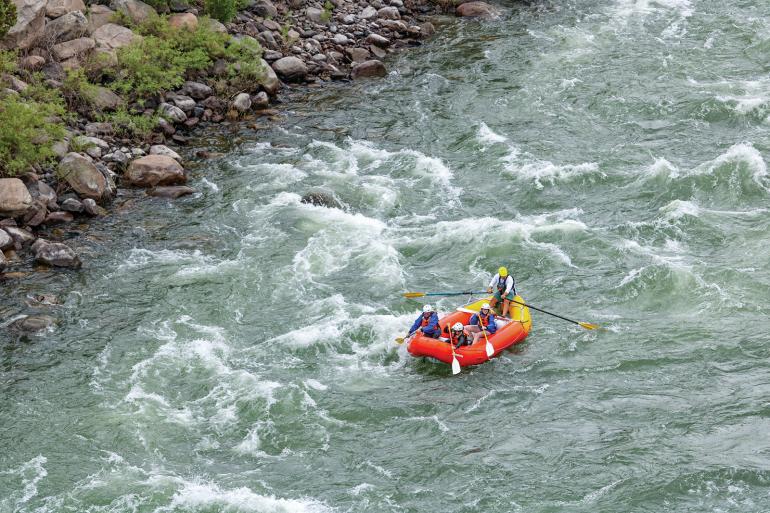
The following day’s tour was specifically for me. I’d always wanted to experience the notorious Yankee Jim Canyon, but no way was I going in a kayak. Like grizzlies, this piece of nature claims human lives regularly, and I’d left my reckless days behind. Therefore, Jamie and I reported to Flying Pig Adventures at the civilized hour of 9am, where our skilled guide Pat assured us that we were in good hands. We boarded the raft among the weirdly appealing smell of neoprene, and set off. As we approached the Boat-Eater rapid, a favorite spot to be flipped, I fought off visions of flying into a churning hole and reminded myself that this was fun. Miraculously, we remained upright, hooting and splashing as we paddled furiously ahead.
After the takeout at Carbella, Jamie and I celebrated our survival with a couple Hop Zones at the Blue Goose. Then it was time for the aforementioned sloppy burgers at the Corral, formerly Helen’s Hateful Hamburgers. We stuffed ourselves appropriately and took a long stroll to walk it off. Among dilapidated old structures and fancy new vacation rentals on Gardiner’s short, sloping streets are buildings that appear to have been constructed out of river rock 200 years ago. From these, I could imagine Johnson Gardner stumbling through a doorless opening, shotgun under his arm. Instead, we spied a cow elk grazing upon a grassed-over roof. This is one of the groovy things about Gardiner: the lines between “civilization” and what some treat as the Disneyland of the Rockies are blurred, and the world seems upside-down.
I will always love Gardiner. I’m grateful it has survived floods, fires, and an increasingly heavy annual dose of visitors. I’m glad it remains the kind of small town where locals answer, “No, Leslie is closed today” when you ask if Tumbleweed is open. I’m thrilled for the schoolkids of today who are no longer disciplined by having to scoop bison poop when they get in trouble at Gardiner Junior High. Finally, I’m grateful to spend time in this special place where you can high-five a bighorn sheep while riding the mighty Yellowstone as it barrels through the Precambrian gneiss, continuing to carve our future.