For the Birds
All about Bozeman's bird-of-prey rescue organization.
Standing at the front door of the Montana Raptor Conservation Center (MRCC), one might hear the doorbell already making a peep. But that’s no declarative chime; it’s the call of Watson, a 12-year old American kestrel, perched on the back of an office chair, letting you know he’s in charge.
What sets MRCC apart from other rehab centers is how treatment, research, and education come together in helping people understand, and care for, our state’s birds of prey.
Located appropriately and memorably on Bent Wing Road up Springhill, MRCC is a rehabilitation and education facility, though that undersells it a lot. Since 1988, the wildlife nonprofit has taken in thousands of injured, orphaned, or otherwise imperiled raptors to be treated and, ideally, released back into the wild. What sets MRCC apart from other rehab centers is how treatment, research, and education come together in helping people understand, and care for, our state’s birds of prey.
The goal is always release. That process can take weeks or months depending on the injury, and not every bird makes it back out. For those that can’t be released, MRCC provides lifetime care, giving the birds a new role in life, as educational Raptor Ambassadors.
Watson, a popular ambassador, was mistaken for a songbird long ago, and folks fed him constantly. “He’s an imprint, so he has no natural fear of people,” says Keaton Thomas, the education director at MRCC. As she leads me on a tour of the facility, she explains one of the unintended consequences of humans’ benevolence. “He doesn’t know he’s a kestrel. He goes toward people for food and looks to people for protection.” Which of course makes it difficult, if not impossible, for him to live in the wild. Unlike a broken wing that can be repaired, there is no reverse imprinting.
Keaton also tells me about Tony, an imprinted red-tailed hawk who is able to hunt, but only as a hobby, rather than a necessary survival skill. Recently, Tony caught a ground squirrel, but after spotting Keaton’s glove full of cut-up mice bits—a snack he knows and loves—his trophy squirrel was immediately abandoned.
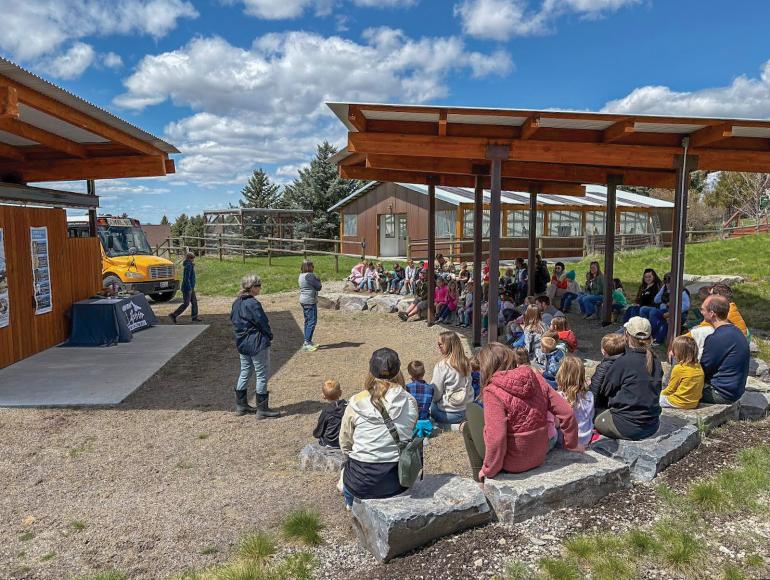
The educational component is where MRCC expands and extends its impact to the community, offering tours and presentations that introduce visitors to the broader role raptors play in Montana’s ecosystems. One of those roles is as an indicator species—being highly sensitive to pollution and habitat degradation, raptor populations reveal the health of the overall environment.
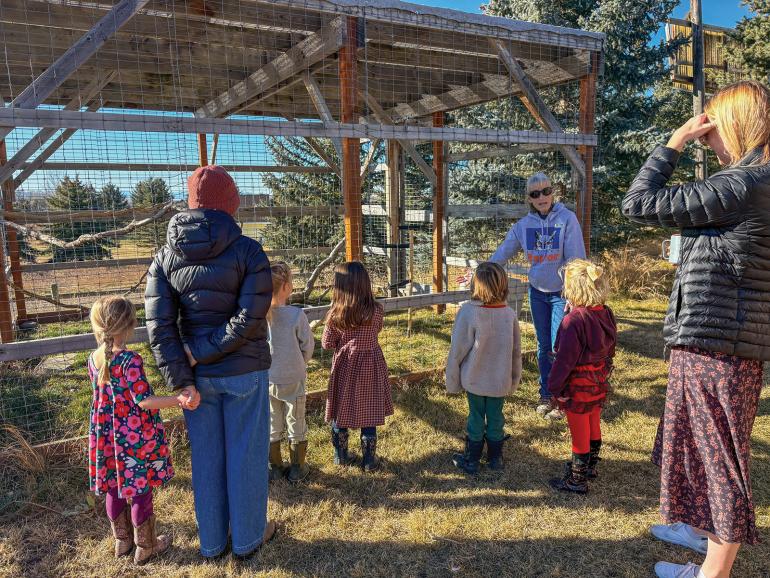
Programming runs in the form of presentations, migration discussions, or general information sessions, to name a few. The more regular programs work with school children through field trips and demonstrations, bringing awareness to their more active and receptive little brains.
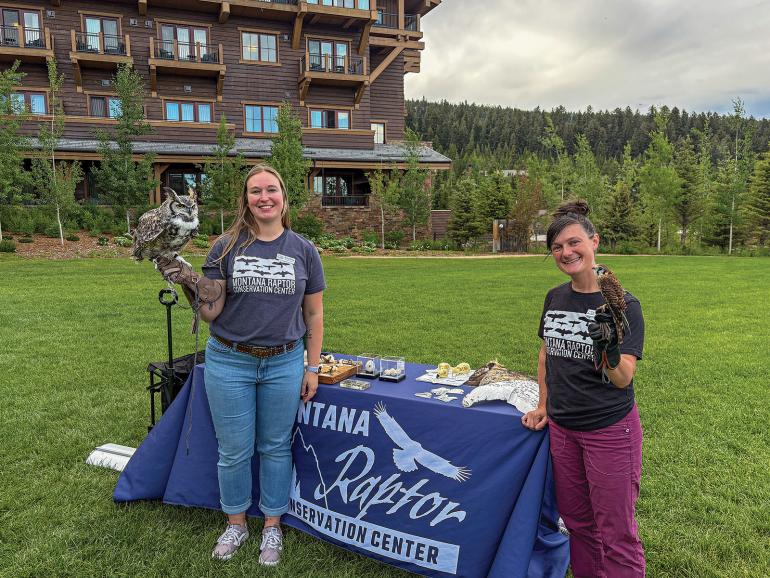
MRCC extends its outreach to a two-hour radius. Staff regularly brings educational programs into schools, community spaces, festivals, and fairs, particularly during the summer months when events and gatherings create more opportunities to connect with the public. These help fill gaps in wildlife education across the region.
The more people understand raptors, the more likely they are to support the conditions needed for them to survive.
Sharing a room with any wild bird of prey is a neat experience, but with MRCC’s ambassadors, it’s even more special, because the birds are eager to be there. “I hold out the glove and ask,” says Keaton. “Sometimes they’re excited and come right to the carrier kennel, other times they’re not in the mood to socialize.”
Pilgrim is a 33-year-old turkey vulture—their oldest ambassador, even though she doesn’t look at day over 21. She was found with a broken wing in Whitehall in 1993, and this year will mark her one-thousandth educational program—one heck of a volunteer record.
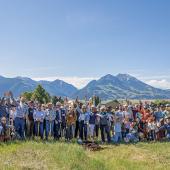
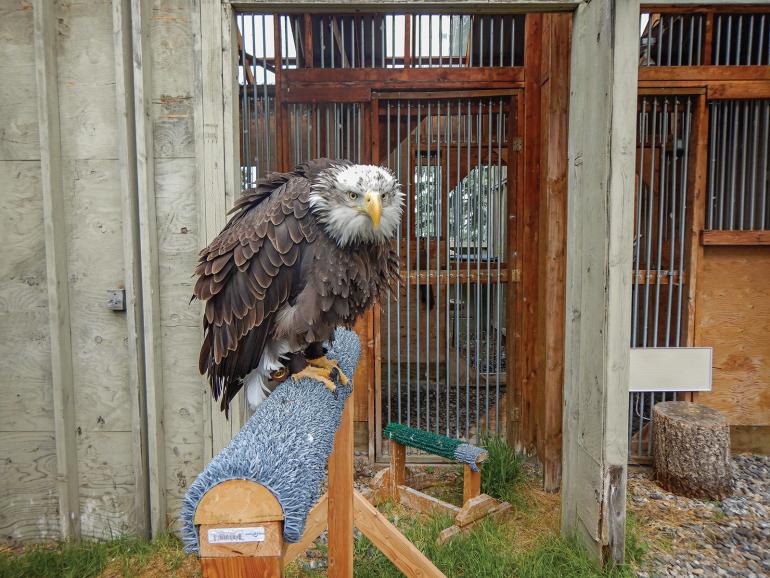
Similarly, bald eagle Madame 99 is an imprint who observes the group of kids crowding around her gate door, pushing their foreheads as close to the gate as possible. Her view overlooks the new amphitheater recently built by a local Scout troop. This summer marks the first-ever amphitheater event, and the space will remain open to the community for talks, presentations, “Hawks & Hops”—a popular event combining birds and beers—and more educational meet-and-greet gatherings.
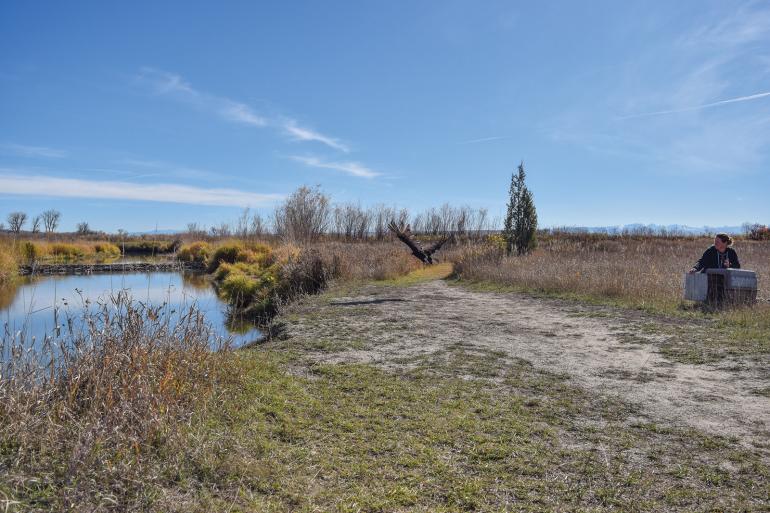
Rehabilitation work continues alongside these public-facing efforts. Birds arrive with injuries ranging from fractures to poisoning, often tied to human-related causes like vehicle collisions, window strikes, or environmental contaminants. “We see quite a few eagles and other raptors that have high lead levels in their blood systems,” Keaton says, explaining that it’s often a result of traditional hunting and fishing habits. MRCC tries to educate the sporting public about non-toxic alternatives. “The birds get the lead from feeding on the remains of animals that have been shot with lead ammunition,” Keaton explains, “and it makes them really, really sick.” With anglers, it’s sinkers left on streambanks and inside wounded fish that put lead in the birds. To keep raptors safe, hunters can use copper bullets and steel pellets, while several nontoxic weights are available for fishermen—which are required in places like Yellowstone Park.
For an organization working with animals mostly seen high above and gone in seconds, MRCC brings raptors into focus. Between rehab and education, every raptor that comes through the facility contributes to long-term bird conservation in one way or another. The more people understand raptors, the more likely they are to support the conditions needed for them to survive.
As Montana’s population increases, so does the potential for human-caused injuries to these extraordinary creatures. (Last year, MRCC received a record number of raptors.) Given our booming economy and increasing abundance of wealth, lifesaving efforts should not be prevented due to a lack of financial resources. To donate, visit montanaraptor.org. If you spot an injured bird of prey within 600 miles, call the Raptor Hotline at (406) 585-1221.