Bedroll Astronomy
What to look for while sleeping under the stars.
There’s a reason sensible Montanans always bring a jacket if they’re going to be out at night, even in summer: our largely semi-arid climate usually doesn’t have enough water in the air to insulate the landscape against heat loss after the sun goes down. So even summer nights can get chilly.
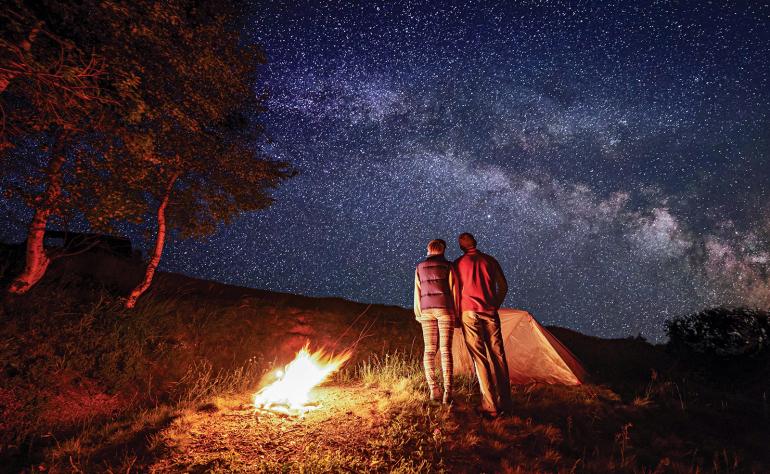
Nevertheless, the nights of summer are the warmest we’re going to get, so it’s our most comfortable chance to stargaze. And since this circumstance coincides with camping season and offers our greatest percentage of clear skies, why not snuggle up in your bedroll and enjoy a night out under the stars? Here are some sights to watch for this summer.
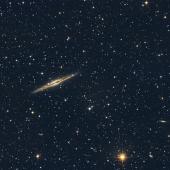
If you’re away from city lights and under a dark sky, as you ought to be when camping, look for the Milky Way arching across the heavens like a ghostly celestial bridge. It will rise up from the east after nightfall and lie overhead, running nearly north-to-south, around midnight in mid-July—by 10pm in mid-August and by 8pm in mid-September. The shimmering pathway is the edge-on inside view of our spiral galaxy; run a pair of binoculars along it and you’ll see it’s made up of uncountable distant stars. The best viewing will be around the times of new moon (July 14, August 12, September 11), when moonlight won’t wash it out.
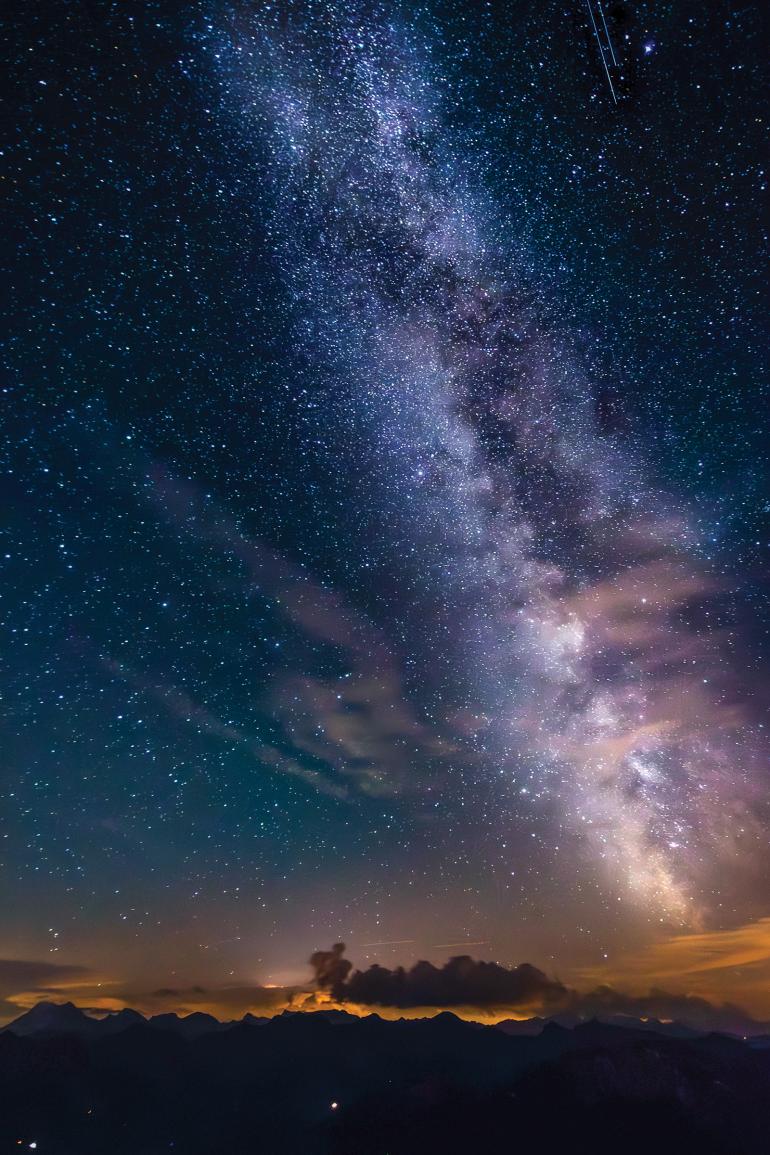
Caught in the Milky Way and also essentially overhead at the times given above are the three bright stars of the Summer Triangle: Vega in the constellation Lyra the lyre, Deneb in the cross shape of Cygnus the swan, and Altair in the large diamond shape of Aquila the eagle. Some Native American cultures including the Lakota considered the Milky Way the “Path of Souls” on which the departed journeyed to the spirit world; the Summer Triangle stars and others were their flickering campfires. Do you think your campfire stories can beat theirs?
The southern extent of the Milky Way engulfs the teapot pattern of Sagittarius the archer, though the Pawnee and Navajo fashioned a bear among these stars—whom you’d best avoid while stargazing. Just ahead of it, Scorpius the scorpion scuttles along the southern horizon. This starry pattern looks like a giant fishhook—which Pacific Islanders contend was used by their mythical hero Maui to dredge up peaks of the ocean floor that became our eventual fiftieth state, Hawaii.
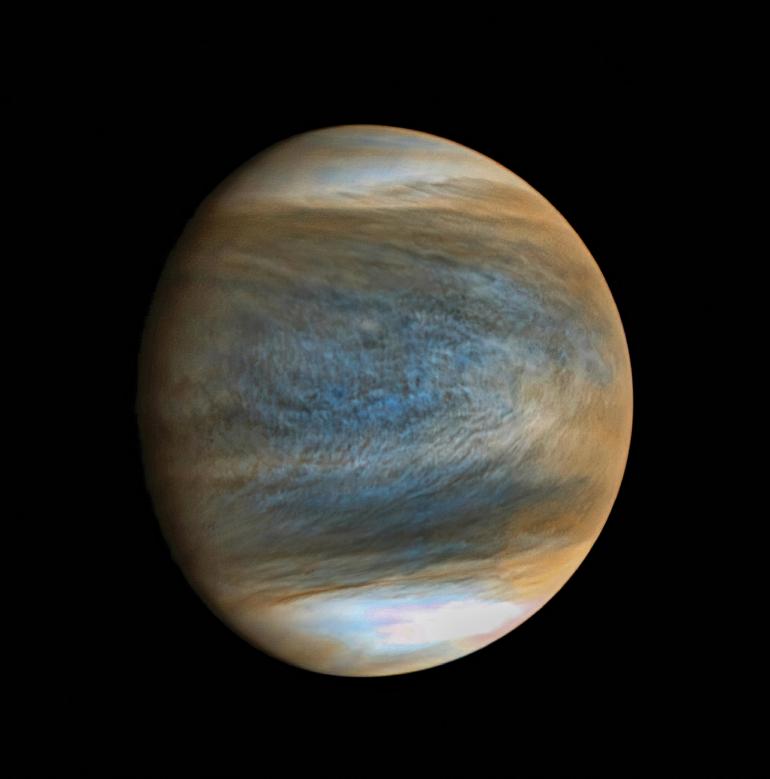
The planet Venus will be brilliant in the western evening sky after sunset this summer, and the waxing crescent moon will pass by it on July 17, August 16, and September 14. Look for their striking pairing just above the western horizon in the darkening sky.
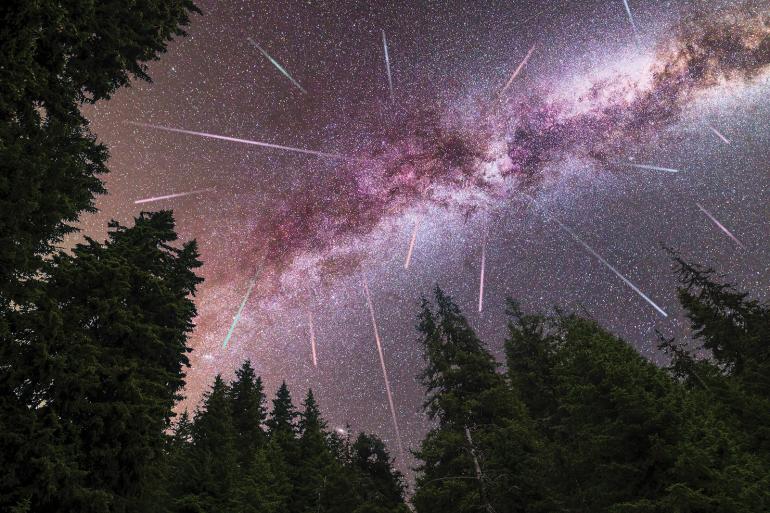
An event just made for lying outside will be the annual Perseid meteor shower, which peaks on the night of August 12 into the morning of August 13. Look toward the northeast, where the constellation of Perseus the hero rises in the early evening, and watch for sparks radiating from his gangly pattern across the sky. With the moon new and out of the way, a clear sky may produce as many as several dozen meters per hour—bits of dust shed by Comet Swift-Tuttle that burn up as they slam into our atmosphere. The shower was known in the past as the “Tears of St. Lawrence,” who was martyred on a flaming grill around this time in the year 258. Let it serve as a reminder not to inadvertently roll onto your campfire while observing.
As summer wanes, don’t miss the partial lunar eclipse on the evening of August 27. The moon rises around 8pm that night, already sliding into the outer part of the shadow the Earth casts into space. At 8:33, it begins to enter the inner shadow called the umbra, and starts to darken. Maximum eclipse occurs at 10:12pm with the moon hovering in the southeast. With all but the very top edge of the moon within the umbra, the shadowed part should take on a reddish-orange tinge. The grisly color evoked long-ago theories about what could be eating the moon; the Norse said it was a ravening wolf—yet another creature you’d rather not come sniffing around as you watch. The moon then slides out of the shadow, clearing the umbra by 11:51pm, and the much fainter outer part of the shadow at 1:01am.
Stargazing is seldom more pleasant here than on a clear summer night, and this summer has lots to see, bedroll or no. Just be sure to bring a jacket.
Jim Manning is the former executive director of the Astronomical Society of the Pacific. He lives in Bozeman.