Mix 'n' Match

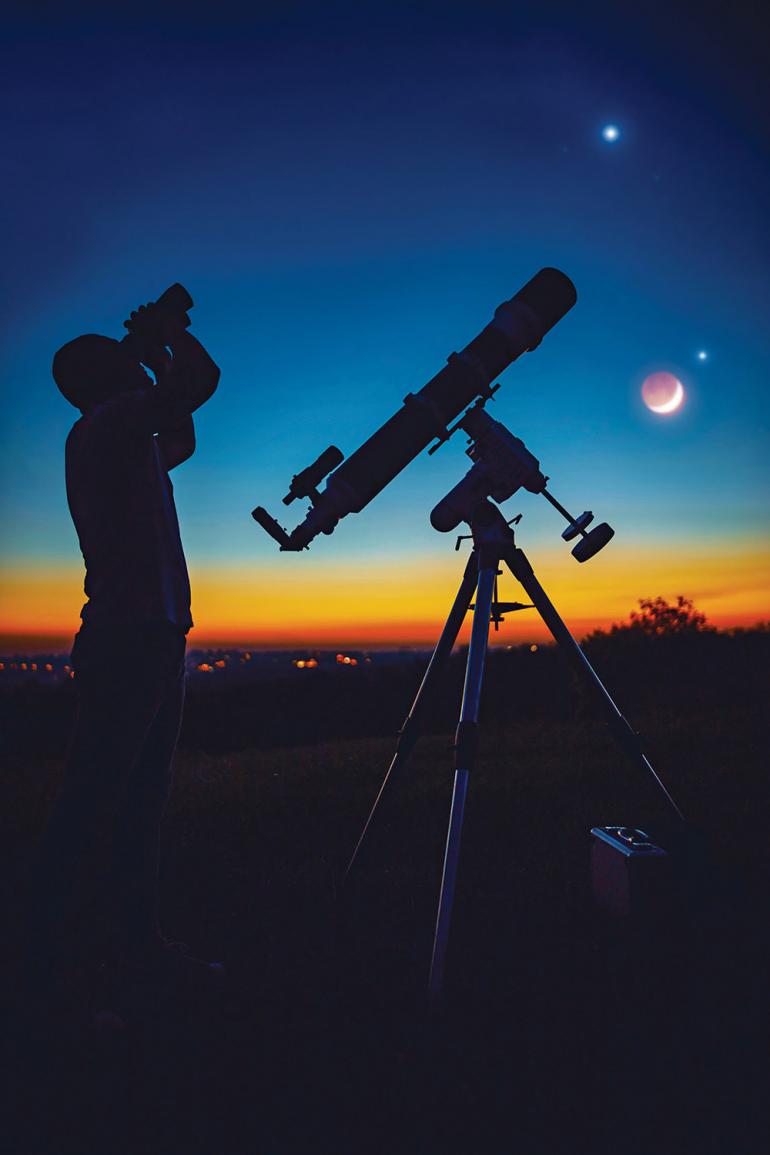
Celestial mash-ups in the spring sky.
Ah, spring! The schizophrenic season, at least in these parts. Daffodils one day, snow the next, and plenty of mud regardless. It’s a whimsical mash-up of winter and summer that sometimes doesn’t sort itself out until June.
This spring, the sky reciprocates with a series of celestial mash-ups of the moon and planets against some prominent celestial scenery—cosmic eye-candy to brighten the transition from one temperamental Montana season to the next. Just find a clear view to the western horizon, for that’s where the action occurs this spring.
First up is the meeting of the planet Venus and the crescent moon in the constellation of Taurus the bull on April 19, by which time we really should be thinking about putting the snow shovel away. Look west a little after 9pm, about an hour after sunset, and you can spy bright Venus near the horizon with a delicate crescent moon floating above it. In between lies the Pleiades star cluster—the Seven Sisters, which marks the shoulder of the bull. To the left of the moon sits the Hyades, the V-shaped star cluster marking the bull’s face, with the bright star Aldebaran his baleful orange eye. Use binoculars for added effect and to better make out the star clusters.
The Greeks, incidentally, saw Taurus as one of the god Zeus’s disguises when he clip-clopped down to Earth looking for romantic liaisons. Perhaps Venus will offer some admonitions while they’re proximate to each other.
Mark your calendar next for June 8 and 9, when Venus and Jupiter, in the ever-shifting orbital dance of the planets, seem to sidle up next to each other, about a degree and a half apart in the dusky western sky.
The next photogenic gathering occurs a month later, on May 19. Look around 10pm, again about an hour after the ever-latening sunset. The cycling moon has gone once around its orbit to stand again as a crescent in the west, now against the constellation Gemini the Twins. Above the moon twinkle Pollux and Castor, the prominent head stars of the twins, orangish and white. To the left of the moon and stars sits the planet Jupiter glowing amber, and brilliant white Venus shines below and right.
We might also note that the bystanding Gemini brothers were famous siblings in Greek lore, but with different fathers. Pollux was a son of Zeus (the Roman Jupiter) from a previous romantic dalliance, and Castor had a mortal dad. Zeus ultimately placed them both in the sky as a kind of immortality. So this is family-reunion time as Jupiter orbits past.
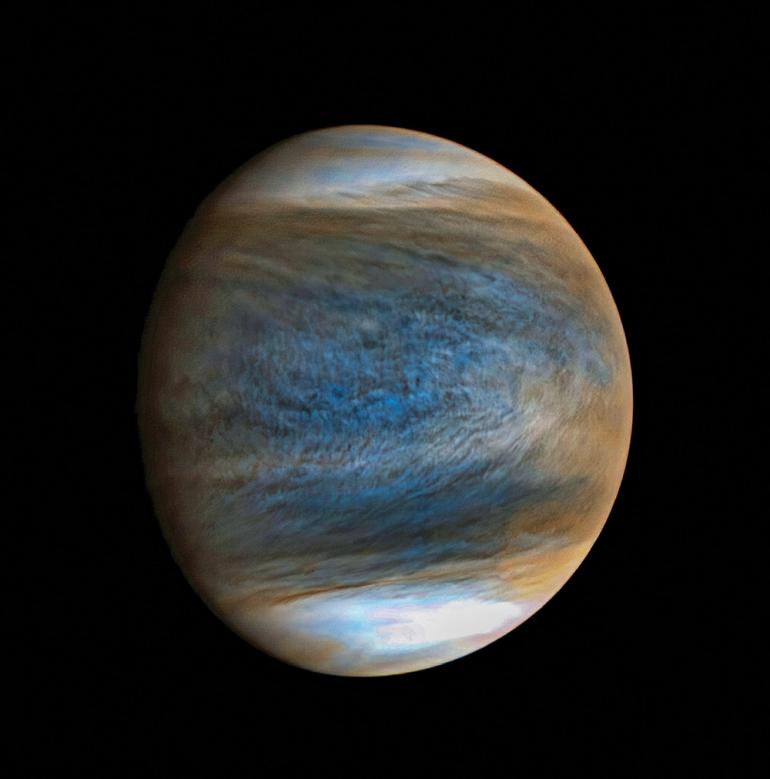
Mark your calendar next for June 8 and 9, when Venus and Jupiter, in the ever-shifting orbital dance of the planets, seem to sidle up next to each other, about a degree and a half apart in the dusky western sky. Look a little after ten and you’ll see them alongside the fainter Castor and Pollux, Venus outshining Jupiter by six times. That’s largely because Jupiter is about five times farther away from us, a little over 560 million miles compared to Venus, relatively close at a mere 110 million miles. We’re just seeing them along the same line of site in their respective orbits.
And if you’d like a further challenge, go out a little earlier with your binoculars and see if you can find furtive Mercury, sneaking out from behind the sun and glowing gold and fainter than Jupiter, lying a little down and right from the Venus-Jupiter pairing.
The sky is a constantly shifting tableau of glorious sights if you know when and where to look.
The final notable spring-sky grouping happens on the cusp of the summer solstice, on June 16, when the crescent moon returns to the western sky after Venus and Jupiter have separated. The moon lies between Jupiter and Mercury on this night (making it easier to find Mercury), with Venus going off in huff higher and to the left, while Castor and Pollux twinkle bemusedly just to the side. Look a little before 10.
And if you haven’t put away your shovel and gotten out the lawn chairs by then, we’re in uncharted climatological territory.
The sky is a constantly shifting tableau of glorious sights if you know when and where to look. So pencil in a couple appointments with the heavens in the coming months, and shake off the winter with the lovely celestial mash-ups of spring.
Jim Manning is the former director of the Astronomical Society of the Pacific. He lives in Bozeman.