Coming of Age
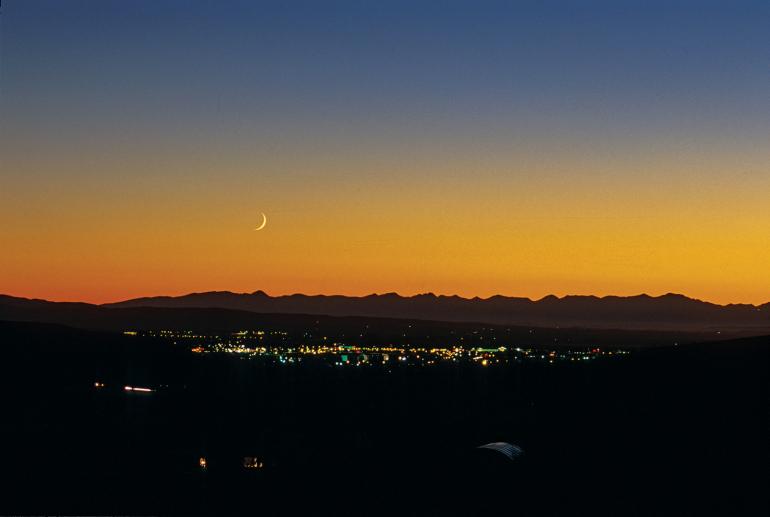
A look at the last 21 years in the Bozone.
For many Bozeman locals, 21 years is a lifetime; but for the Bozeman area in general, it’s been an era of development. High-speed eight-person chair? A term you couldn’t make up back in 2005. Bozeman has always had a small-town vibe with a cosmopolitan feel. It used to have a globally-recognized nonprofit that built schools for girls in Afghanistan—remember Greg Mortenson, anyone? His name might come up during a Saturday-morning stroll up Peets Hill, before the parking lot was paved and the only people you saw were the half-dozen folks you knew by first name. (You knew their dogs’ names, too.)
There were three different ski resorts to choose from, which meant three season passes you could trade like baseball cards with your roommates.
You’d go early enough to beat the weekend brunch rush, gorging on the Looie’s Down Under buffet, or grabbing a seat at the bar of the Western to avoid the 30-second delay while the waitress cleared a table. Better yet, skip downtown altogether and belly up at the Stockyard, which on most days was a one-woman show; no backtalk, partner, and no hungover college students need apply. Authentic Mexican food from La Tinga was a great place to stop after a day of skiing; tortillas were made by hand and only cash was accepted. No need to change out of your ski pants, because you ate on plastic tables in the gymnasium of the abandoned Armory building—that is, until it closed completely, quickly boarded up and covered in graffiti.
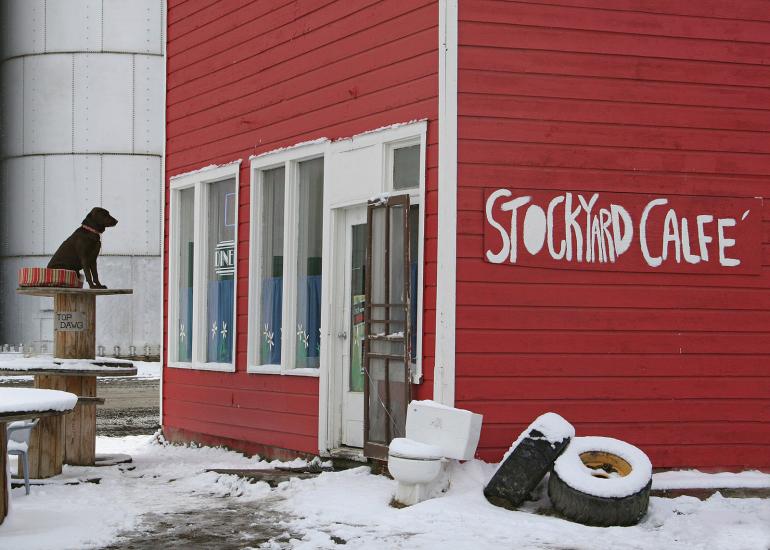
The old Stockyard Cafe, best breakfast in town
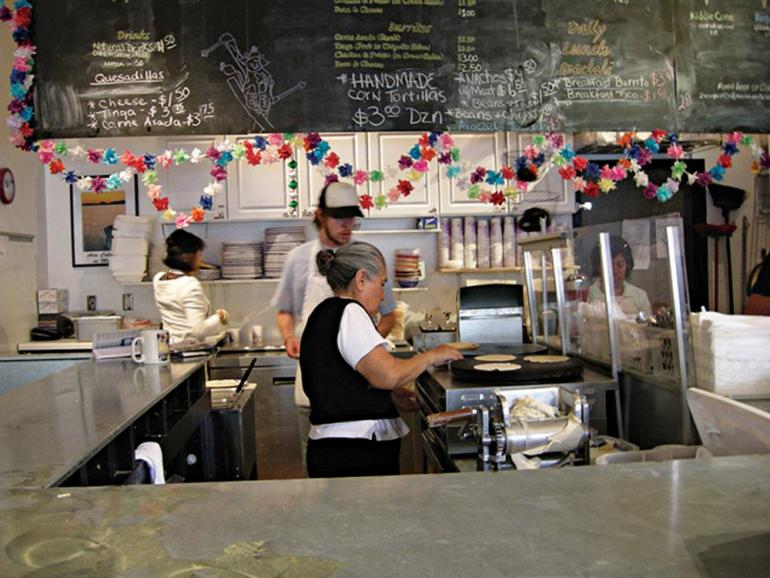
The old La Tinga, in the old Armory gymnasium
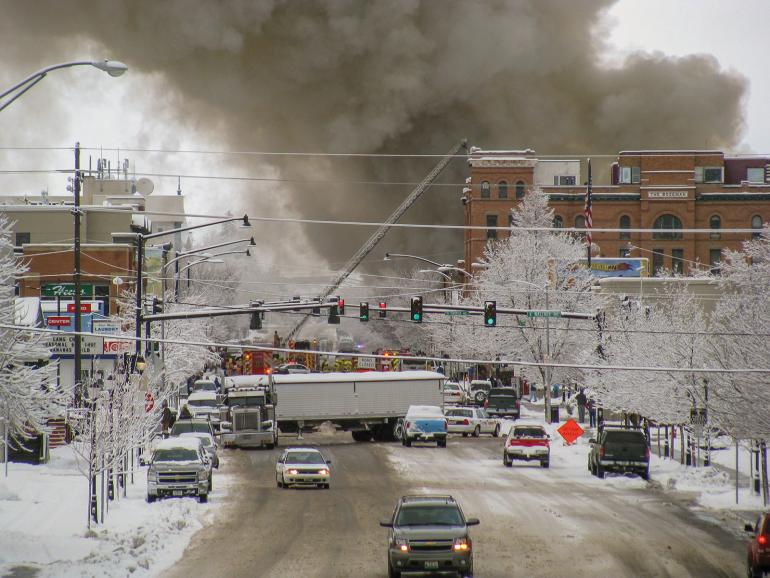
If you wanted to take out that cute girl you met hiking the M (Drinking Horse was just a tree-lined knob, no trail and nobody even knew the hill had a name), Boodles was a swanky place to go for a fine-dining dinner. Until it and the Starkey’s sandwich shop blew up one frigid March morning, along with Montana Trails Gallery and its beloved manager.
On those cold spring days when the corduroy was hard, you’d linger at the local coffee shop before heading up the canyon. Take your pick, Leaf & Bean or Rocky Mountain Roasting. Or, if you fancied a free slice of bread, you’d hit Great Harvest for a sandwich to stuff in your backpack. There was only one lodge to eat in at Bridger, and the food court at Big Sky was borderline unsanitary, given all the riffraff (read: normal folks) hanging out with sack lunches. The Moonlight Lodge was a local’s secret; park in the empty lot and hop on the Iron Horse lift—straight to Challenger, baby, no Big Sky base-area madness necessary. On non-powder days, a late start and leisurely sit-down breakfast could be had at Sliders, in the back of the Big Sky Conoco.
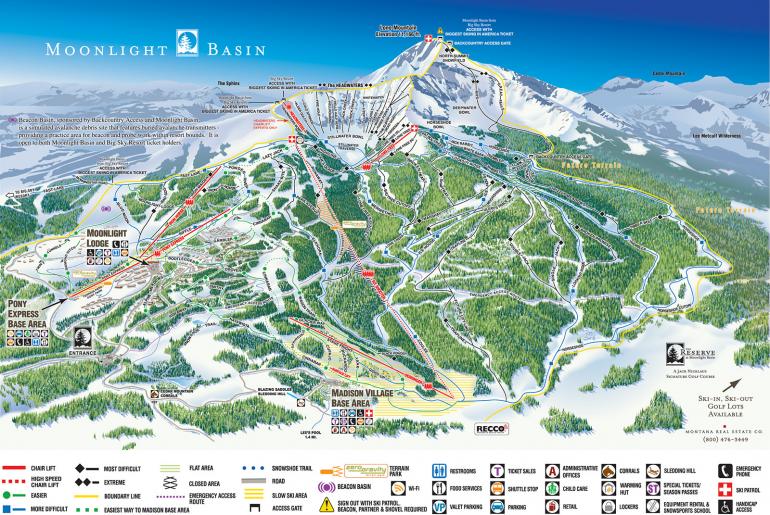
Yep, there were actually three different ski resorts to choose from, which meant three season passes you could trade like baseball cards with your roommates. Moonlight wasn’t the real-estate flyer that it is now, Big Sky still welcomed locals with open arms and affordable passes, and Bridger felt like a traditional small-town ski hill. As your skills progressed, you dreamed of skiing the expert, out-of-bounds area we now call Slushman’s. Ambitious, frugal skiers could skin up the south boundary toward Bradley’s, nodding at ski patrol along the way.
As you lay in bed pondering which resort to shred, you had to call a phone number to determine how much new snow fell and which way the wind was blowing. Then the phone tree would start; no group chats from your T9 keyboard Verizon cell phone. On a powder day, getting first chair was more important than shoveling or plowing the driveway, if you ever got around to it at all. After a blissful ski day, the Filling Station was the place to take in your favorite low-key bands—although fists sometimes flew between the Big Sky ski bums and the Bridger ridge rats. For the broke dirtbags, the old Dry Fly, inside the Holiday Inn, had all-you-can-eat hot wings and other happy-hour freebies, along with a legendary ski-bum bartender who could out-ski hotshot kids half his age. Night owls made for the Zebra downtown, where things didn’t start picking up until midnight.
If buying a book was more your style, forget Barnes & Noble; Hastings on West Main was where you went for the newest guidebook, because you weren’t going to find your next backcountry ski line or fishing hole on an app.
On somber weekdays when a high-pressure system was in town, you’d head to the library on Rouse, after paying your parking tickets where you now can get ice cream from Sweet Peaks—just watch out for the fire trucks heading out of the station next door.
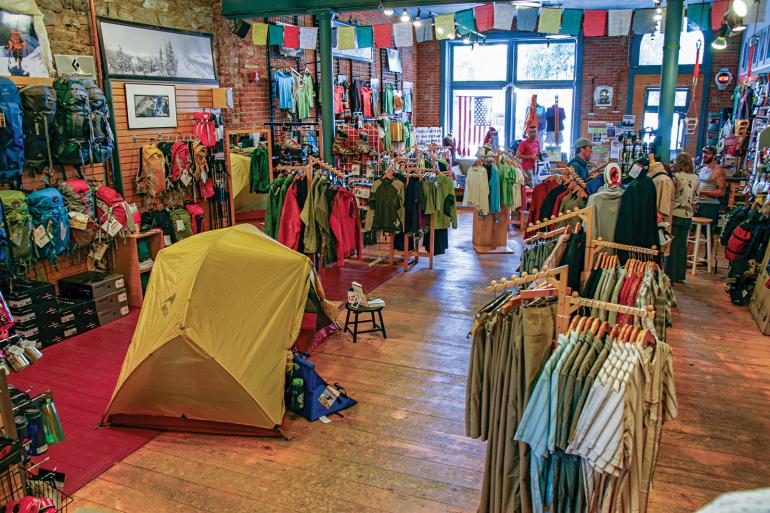
If buying a book was more your style, forget Barnes & Noble; Hastings on West Main was where you went for the newest guidebook, because you weren’t going to find your next backcountry ski line or fishing hole on an app. You could, however, peruse the stacks at Vargo’s for an old, out-of-print guide; a few years earlier, the store made the kitty-corner jump to its current location, which offered more space. If it was a climbing guide or map you were after, you could poke around Barrel Mountaineering, a few doors west of the Eagles, before picking up your repaired hiking boots next door at Carter’s Cobbler Shoppe, or some cheap wool pants at the Army Navy store down the block. Afterward, you’d pop into Owenhouse Ace Hardware as much for moral support as for supplies—there were rumblings about them leaving downtown, due to rising rents. To everyone’s relief, they managed to make it work, opening a second location instead of moving.
Come summer, Leverich was a multi-use trail without manmade berms, and you’d have to be on the lookout for people walking their dogs uphill. To even make it to the trailhead required a four-wheel-drive with good tires. If you couldn’t find a used Toyota T100 or a manual-transmission Subaru Legacy in the Mini Nickel classifieds, you’d head to the four-lane intersection at 19th & Main, where Billion had a round building resembling a spaceship. Audis were on display kitty-corner, where vacation homeowners and trust-fund kids bought the fanciest cars in town.
On Sunday morning, an eager angler might ride his mountain bike to Four Corners—terror-free, as it was hayfields and cow country the whole way—and have the bridge over Norris Road all to himself. Floaters on the Jefferson River relished in jumping the 60-foot cliff below Sappington Bridge, before the brash KG Ranch manager blew it up to create a diversion ditch. If you wanted to upgrade from an old innertube, you waited for the annual boat swap at Northern Lights for a sweet deal on a canoe or kayak. Either way, lower Jefferson, Madison, and Gallatin floats all ended with greasy steak fingers at Sir Scott’s Oasis in Manhattan.
Parking wasn’t a problem, downtown or anywhere, and you were never in a rush anyway.
With no trail to the M, daily runs and bike rides started in town and went up into the Story Hills, where the dirt road and a small singletrack network were open to the public. Paragliders soared off the top and come evening, cars lined the hillside for sunset views, picnics, and romance.
Serious fly fishermen stocked up at three spots, making an almost perfect triangle across town: River’s Edge at 7th & Griffin, Troutfitters on West Main, and Bozeman Angler downtown. Parking wasn’t a problem, downtown or anywhere, and you were never in a rush anyway. After perusing the sale rack at Chalet Sports, you’d step next door to Charlie’s for a Reuben or a Cubano. If you found yourself at the Round House around mealtime, a short walk across the parking lot took you not to Roost, but to Café Zydeco.
Walmart had already arrived, but across Oak Street was the more laid-back K-Mart, where you’d snag a few items from the sporting-goods section before crossing N. 7th in time to make happy hour at Santa Fe Red’s inside the Bozeman Inn. Their back patio was an oasis, complete with a fountain, occasional live music, and the best margaritas in town, sipped slow under a forest of shade trees. For a change, you might hit Fiesta Mexicana, sitting unassumingly across from the BMX park, where Aspen Crossing now stands tall.
In the Bon Ton district, the median home price was around the cost of a single Bitcoin today. Driveways contained Subarus or old 4Runners and dogs roamed the sleepy streets at will.
After dinner, you’d cap off the evening with an Old Fashioned at the Robin, a low-key, cool-vibe joint recently remodeled and upgraded from its former dark, dingy, dive-bar atmosphere. The Robin was the cornerstone of the Hotel Baxter, which had not one but two other restaurants, along with live music and dancing in the ballroom upstairs. Apartments rented for $500 per month and were often occupied by ski bums who tended bar in the off-season, but whose minds never left the ski hill. As they prepared your drink, you’d debate if Bridger would ever replace the red Virginia City double-chairs.
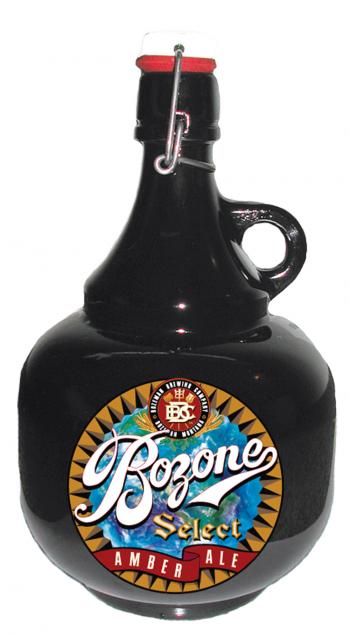
Across town in the Bon Ton district, the median home price was around the cost of a single Bitcoin today. Driveways contained Subarus or old 4Runners and dogs roamed the sleepy streets at will. Beer runs were made on foot, to the gas station at Peach & Rouse. The Bozone was the only gathering spot in the neighborhood—which was just fine, because it was the best gathering spot in town. A few blocks to the southwest was a close runner-up: the Eagles, where you’d often wind up sitting next to a has-been movie star or musician living off royalty checks.
Summer was the season of visiting fishermen and Yellowstone Park tourists, but things didn’t feel much different, because most of the MSU students went home, offsetting the out-of-state influx. The Pickle Barrel was quiet, no wait at high noon, and rush-hour traffic only happened in the fall, on the first day back to school—until students started skipping class for powder days, alongside their professors.
A part-time job at a local bar covered all your expenses, and also left the days free to hike, bike, and float the rivers to your heart’s content.
You’d celebrate the day that all the students left for Christmas break, because lift lines didn’t exist and the bars were quiet. Bozeman turned into a proper sleepy ski town for a few weeks. Ski bums outnumbered architects and realtors combined. The average apartment was less than $500 per month and if a basement was more your style, you could afford that while working part-time at the Co-op, where everyone knew you by first name. And you’d still get 100 ski days each season. Ditto for the off-season, when a part-time job at Mixers or Colonel Black’s covered all your expenses, and also left the days free to hike, bike, and float the rivers to your heart’s content.
Things have changed since the lean and mean days of 2005, that’s for sure. No doubt, Bozeman has packed on a few pounds in the last 21 years—but just like wine, it appears to be aging well, and we look forward to seeing some wisdom after another 21 years.
Got any more highlights from the early 2000s? Send your reminiscences to [email protected]; we’ll include the best ones in the next issue.