Into the Frozone
Why winter hiking is hot.
Imagine this: you lace up your boots, slam the door behind you, and step into a landscape so quiet that even your thoughts blush at how loud they are. Biting cold: check. Frost-crusted trees: check. Breath hanging in puffs: check. And best of all...there are very few people. Welcome to winter hiking, Montana edition. And yes, it’s worth the thawed but still-frosty hype.
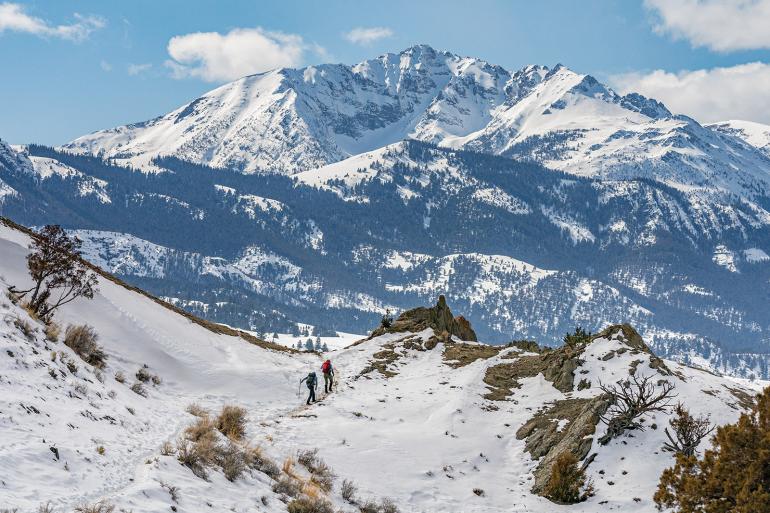
Summer on the trails consists of rolling choruses of backpack boomboxes, selfie sticks, and bug-spray regrets. Winter says, “I got this.” Fewer folks mean you can hear the crunch of your boots on the snow, the whisper of wind, maybe even spot untrammeled wild-animal tracks. Solitude is part of the landscape. If you’re lucky, you might roll to a ridgeline all to yourself, or share one with three frostbitten friends—both of which still beat elbowing strangers to get the view.
Winter gives you a welcome reprieve from these usual animal suspects. No swatting, no bear spray, no rattler paranoia, no sticky layers of bug juice & evenings spent itching your bite-covered body.
Plus, there’s no pesky fauna to worry about. The bugs are frozen, incapacitated, and irrelevant. The bears are in hibernation, avoiding your winter-hiking invitation at all costs. And the snakes? Well, they’re as lifeless as most folk’s ambition at 10°F.
Winter gives you a welcome reprieve from these usual animal suspects. No swatting, no bear spray, no rattler paranoia, no sticky layers of bug juice & evenings spent itching your bite-covered body. The evidence you do see of wildlife is quieter and more subtle: tracks pressed into snow, distant calls, or hardy species simply letting winter happen, too.
Winter hiking has its own challenges, though—it’s not just a “slip on boots and go” activity. There are slushy trailheads, snowdrifts, frozen sections, hard ice, and trail markers are often buried under several feet of snow. Sometimes the road to the trailhead itself is a snowbank blockade.
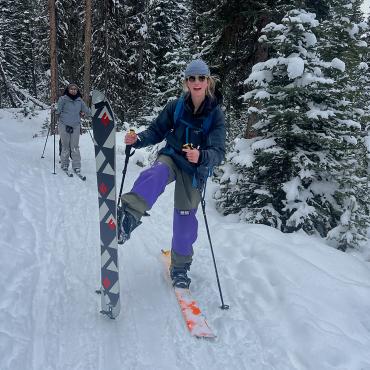
But that’s the point. Winter hiking shapes you. Not just in the obvious ways—reading routes under snow, checking avalanche conditions, or mastering the delicate art of layering without sweating through everything you own—but in the mental ones, too. It’s the patience you exercise when your water bottle freezes solid. It’s the humility you gain when you lose the trail under fresh flakes. It’s the resilience you cultivate when you get a little lost and every pine looks identical, but you keep moving anyway.
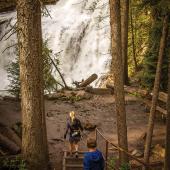
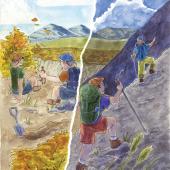
Yes, there are days when post-holing to your thighs feels like punishment. But there are also days when swishing up a mountain feels like floating. The grit you earn in the cold is the kind that can’t be built on a breezy July stroll to Palisade Falls. And when you finally step onto a summit in full winter silence, the reward is oversized.
Come spring, you’re stronger, sharper, and let’s be honest, a little smug knowing that while everyone else was sweating on treadmills, you were out earning real mountain miles.
Winter light is its own show. Low sun, long shadows, crystalline sharpness. The air smells different: cleaner, sharper, often tinged with pine or creek ice. And with fewer hikers, once crowded summits open up into breathable spaces. Space to think. Space to breathe. Maybe even space to sing off-key without an audience.
And the best part? You don’t have to go far. Hyalite Canyon serves up everything from mellow loops around History Rock to tougher pushes up Mt. Blackmore or Hyalite Peak. Sypes Canyon delivers a snowy ridgeline view, South Cottonwood stays welcoming even under a snowpack, and Drinking Horse turns short and sweet when the Bridgers catch the evening light. Come spring, you’re stronger, sharper, and let’s be honest, a little smug knowing that while everyone else was sweating on treadmills, you were out earning real mountain miles.
So pack well, check trailhead access, and respect the cold. Then let the silence do some work. You’ll find it louder than any summer trail chatter. No bears lurking (unless you stumble on an insomniac grizzly), no bug clouds, no snakes. Just snow, light, and the rare gift of Montana’s backcountry laid bare.