The hidden pleasures of biking on frozen waterways.
Montana’s waters are globally celebrated for all that they provide. As the days grow shorter and temperatures drop, our fluid assets reluctantly begin their crystalized transformation from liquid to a solid. Terra firma, if you will.
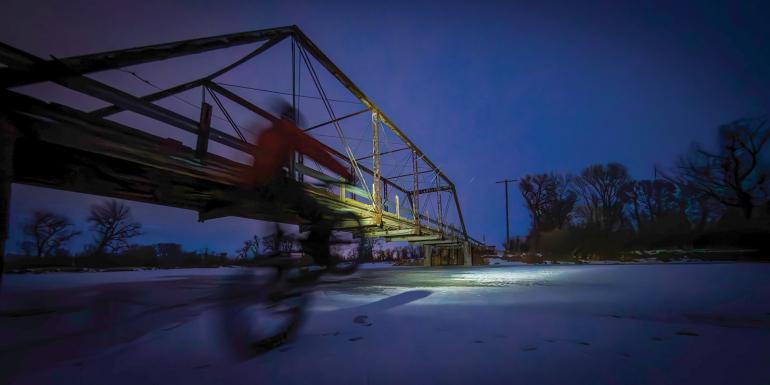
A longtime fan of winter recreation in all forms, I anticipate pedaling my bicycle upon the frozen landscape as much as I would any powder day in the mountains. Ephemeral, expansive, and ever-changing, with the unnerving potential for concussions, hypothermia, and drowning, H20 in its solid form has become a favorite surface medium on which to explore a seldom-seen side of Montana.
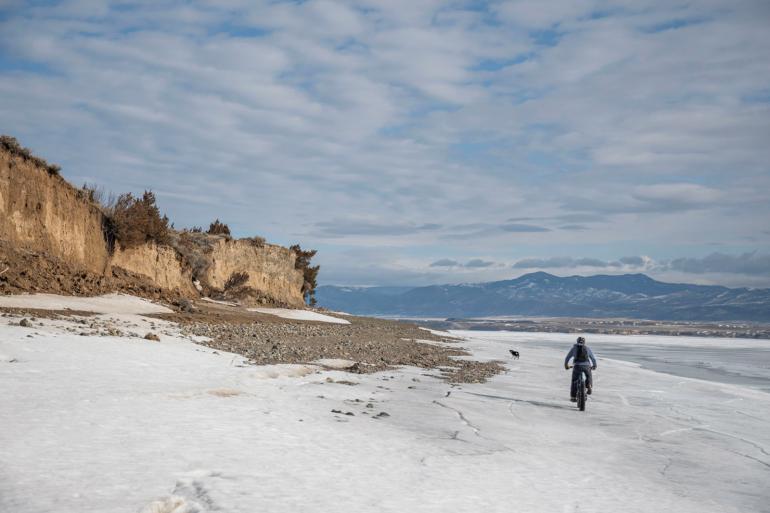
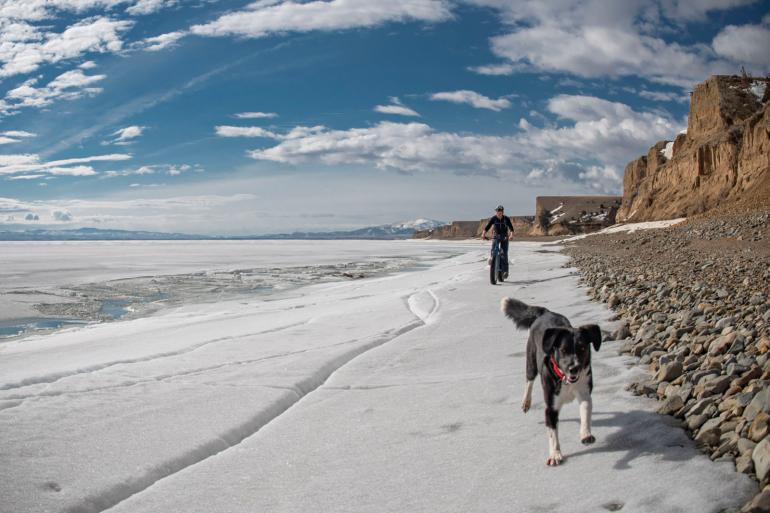
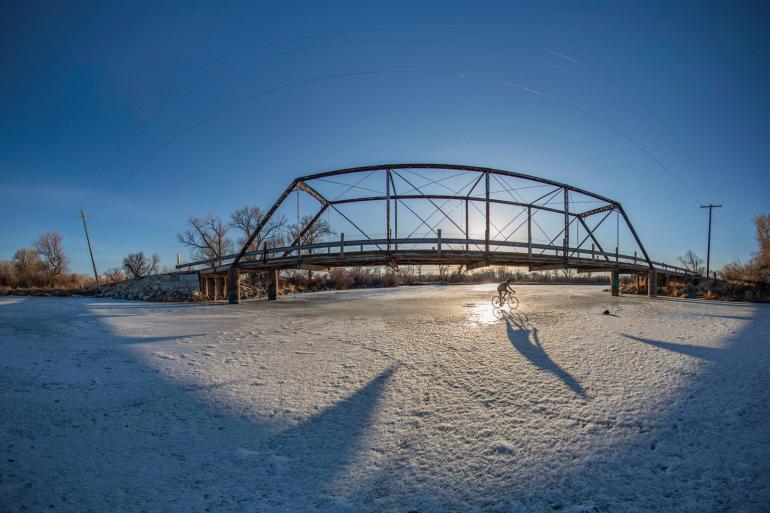
In normal years, the long, cold nights freeze the shallow ponds and river channels by late December, lasting until March at least. Unfortunately, finding dependable, ridable ice has increasingly become a fool’s errand as climate change interrupts longstanding weather patterns and makes for abbreviated “wild ice” seasons. But once tuned in to the nuance of the sport, every irrigation ditch, duck slough, and river side-channel become fair game for two-wheeled amusement. These smaller “mini-golf” features offer early-season skill-building opportunities in anticipation of bigger objectives.
Ice conditions change daily depending on the mix of wind, sun, temperature, humidity, and precipitation. There is no one-bike setup for all conditions—I use narrow studded tires on hard ice, and a bike with fatter tires for when there’s a few inches of snow on top.
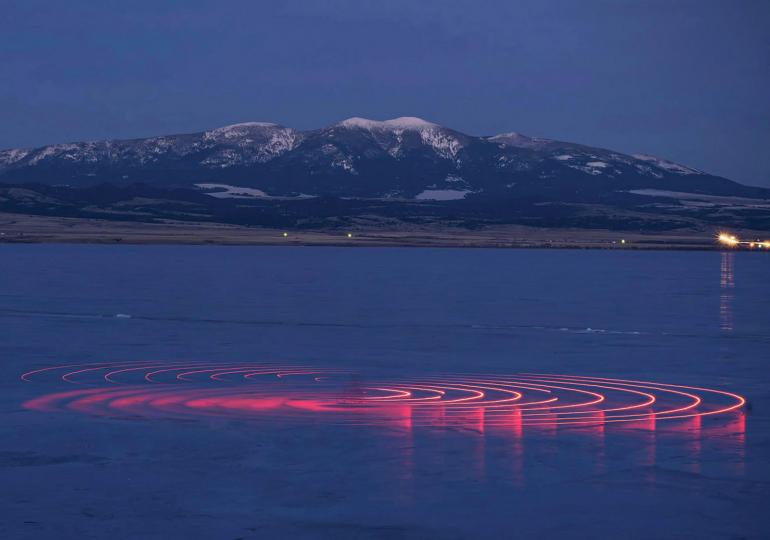
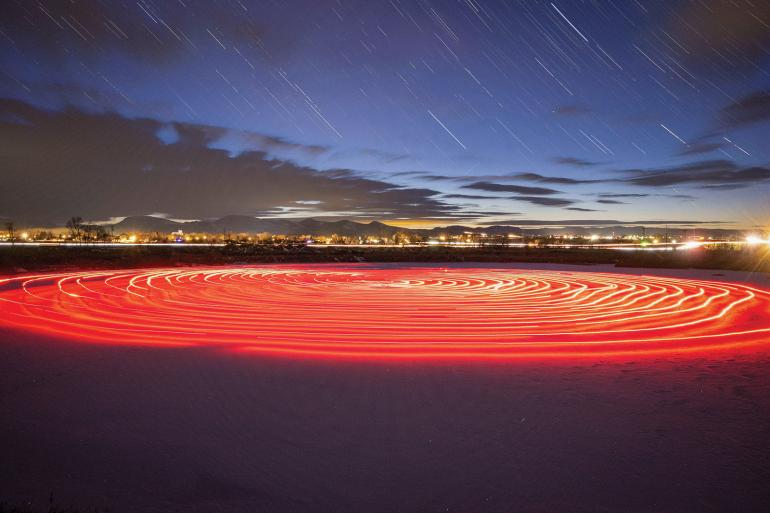
It’s in the waning days of winter, when warmer days inspire other cyclists to embark on desert pilgrimages in search of tacky red dirt, that my mind turns to the last gasps of big, wild ice riding. Canyon Ferry—the first dam on the Missouri River north of Townsend, with its over 50 square miles of surface area—is where I find a blank slate of possibilities on which to ride.
Pinning it with fresh, sharp studded tires on smooth, clear ice provides enlightened pedaling. You can spin at road speeds for miles in any direction free of man-made constraints and distractions. No lanes? No worries. No thoughts of being squished by inattentive drivers (holes left by ice fishermen and open water are another story). As a lifelong cyclist, for me the experience is liberating. Ride no-handed? Close my eyes? Why not? The opportunities are endless.
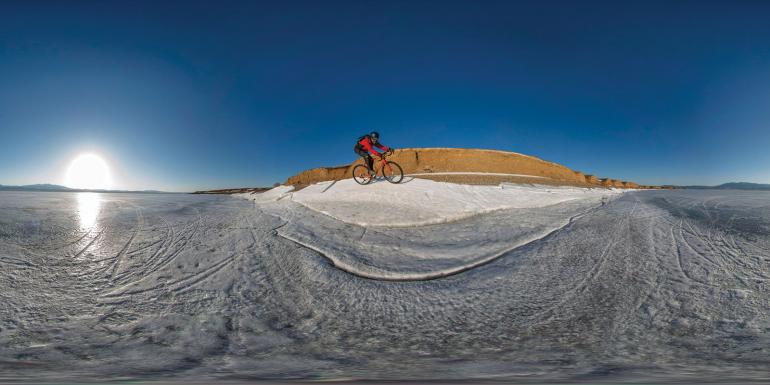
Of all my slippery shenanigans, my favorite conditions are when the thick ice along the shore collapses and up-ends, leaving a jumble of translucent berms and natural-born kickers. The result is sometimes miles of slopestyle features where one can transition from the shoreline bluffs into hard-packed, snow-filled gullies, then out onto the ice and back again. With an ever-changing plethora of worthy obstacles that far exceed my skillset and bravado, no two rides are ever the same.
Drawn by the solitude, I return to this big ‘ol sheet of ice as much for the artistic inspiration as the physical challenge of staying upright under very silly conditions. The reflective sunrises and sunsets out there amplify, and honor, Montana’s eponymous big sky.
Wild ice season often ends abruptly, turning from something that ice fishermen confidently drive ATVs upon to open water in a matter of hours. Once returned to liquid, the transient landscape will continue its slow, inevitable descent toward the Gulf of Mexico. When the summer heat comes baking, I will reflect fondly on spinning and chilling in this altered state. Until next year, my frosty friend…
Pad Up!
by Bob Allen
It goes without saying that ice is slippery and hard, so prepare accordingly. Like any adventurous outdoor pursuit, make a plan ahead of time and let a friend or family member know where you’re going, when you expect to return, and when it’s an appropriate time to call Search & Rescue.
Essential Gear
Bike or ski helmet (temperature dependent)
Knee and elbow pads—a must!
Base layer with tailbone and hip protection
Warm footwear (with optional studs or removable spikes)
Flat pedals
Ice picks
Drybag with extra layers & cell phone
Rescue throw-bag with 50’ of line
Coach’s whistle
Important Considerations
Be prepared for self-extraction should you fall in. To do so, keep the ice picks somewhere easily accessible to facilitate crawling out of the hole you’ve gotten yourself into (most people wear them around their necks). Same goes for the whistle, which ought to be attached to the strap of the bag or around your neck, to alert others of your plunge.
Studded tires are a serious investment and must be viewed as such. The sharpness (original shape) of the studs makes a huge difference, especially when compared to the modicum of traction non-studded tires can provide. However, dull studs barely make a difference over rubber tires, which is why I keep mine on a designated set of wheels that are never ridden on pavement.
On big ice (like lakes & reservoirs), I generally follow the lead of the ice fishermen who’ve preceded me, testing their luck with ATVs, snowmobiles, or trucks. If they’re driving out there, then I’m pretty confident that the ice will support my weight. I always check in to see if the fish are biting and query the thickness of their ice holes. All intel aside, the crazy looks I get when I roll up are always worth it.”
Finally, remember that clear, black ice looks identical to open water; it’s a complete mind-bending exercise of blind trust when spinning at speed. Proceed with caution!