Name Drop
Stache Express at Red Lodge

Schlasman's at Bridger Bowl
Granite Lift at Discovery Ski Area
The stories behind southwest Montana’s most beloved chairlifts.
Around here, a chairlift isn’t just a metal bench that hauls you up the hill—it’s a story. Sometimes it’s a nod to the miner who once scraped coal out of the rock below your skis. Other times, it’s a wink to a local legend or a landmark that defined a place long before snow-seekers came to play.
Schlasman’s (Bridger)
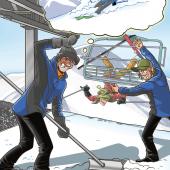
Let’s start with the one every Bridger diehard knows: Schlasman’s. Most call it “Slushman’s,” but that’s actually a misnomer—the real name honors P.B. Schlasman, a German-born miner killed alongside three others in an avalanche back in 1885. Schlasman was the only one of the four with a wife and kids, and so the ravine was named in his remembrance. “Slushman” appeared on several ski maps for years, but Bridger Bowl cleaned up the spelling when they installed the Schlasman’s Lift in 2008.
Stache Express (Red Lodge)
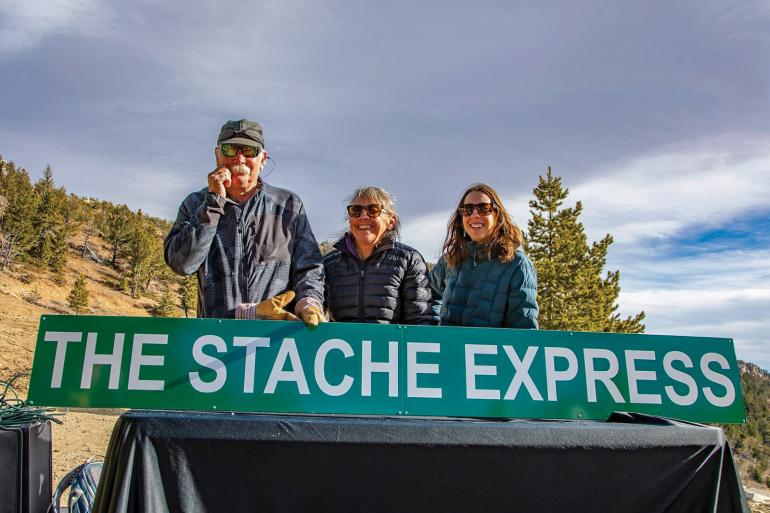
While other resorts might name their new lifts after mountains, wildlife, or European resorts, Red Lodge kept it local and lighthearted. Installed in 2023, the Stache Express is a high-speed love letter to longtime general manager, Jeff Schmidt, and his glorious Montana moustache. It replaced the old Miami Beach double-chair and hauls skiers higher & faster into intermediate terrain.
Iron Horse (Big Sky)
“Iron horse” was 19th-century slang for the locomotive—the very thing that opened up the West by giving Easterners passage to previously-inaccessible lands. When Big Sky began its own eastward expansion in the mid-’90s, the Iron Horse quad was an essential part of their plan, as it too would bring folks to new and otherwise looked-over terrain.
Discovery Ski Area
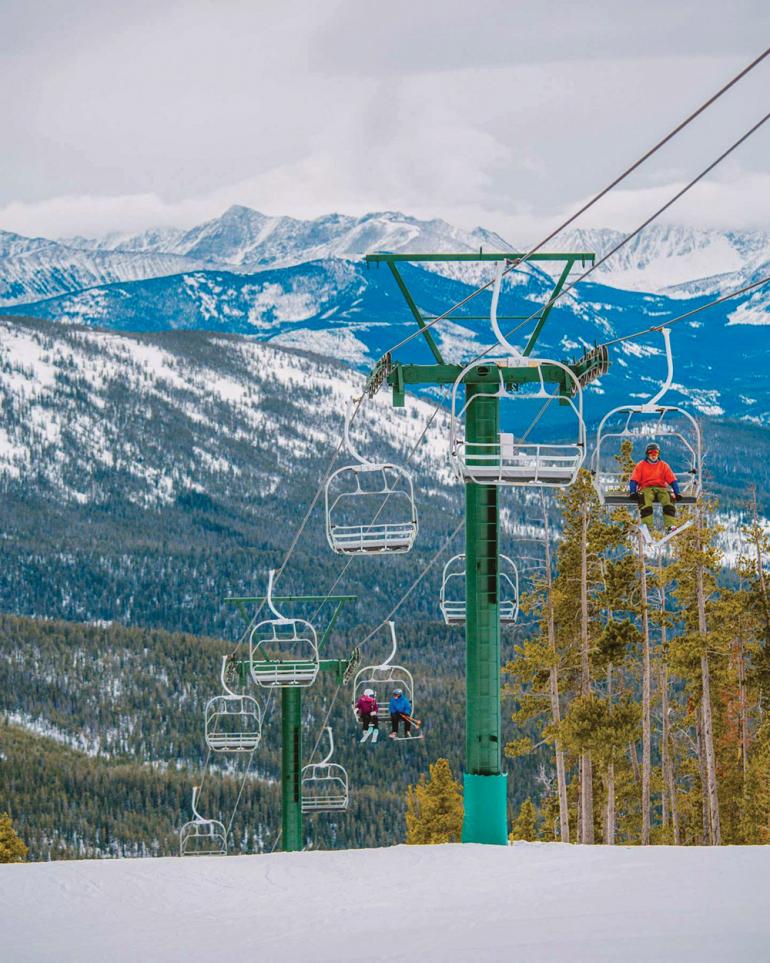
Discovery doesn’t name their lifts after people but instead have honored the old mining claims on which the ski area is built: Anaconda, Granite, Winning Ridge, Motherlode, and Claim Jumper. The names of lifts and terrain alike read like a mining map from the 1880s and give a nod to the silver & copper boom that Montana’s early economy was built on. Moreover, they are a quiet reminder that Rumsey was a working mountain long before it was a place of recreation.
Pierre’s Knob (Bridger)
Information was limited on the history of P.K., although O/B’s in-house historian, Joe King, had this to offer us on the namesake of the famed Bridger Bowl lift: “The lift’s name derives from Pierre LaBedeaux, an infamous 19th-century fur trapper known for his extramarital escapades. After a fateful midnight rendezvous in Bozeman’s Red-Light District left him with a, shall we say, incurable condition, his wife banished him from their cabin. He then fled to the mountains, living out the rest of his days in a tumbledown hovel on the site of P.K.’s top shack.”