Waste Not
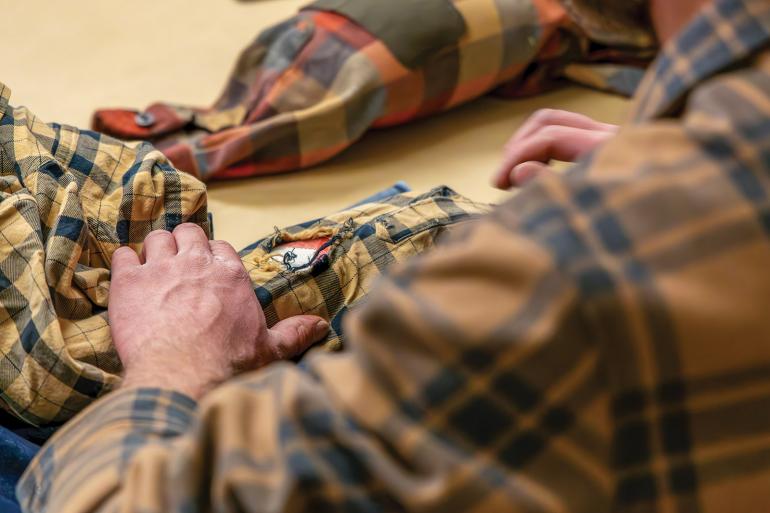
Getting the most from outdoor apparel.
Picture a few of your favorite garments. Are they your favorites because they’re sentimental? Or because they were expensive? Are they items you can’t be without when you’re recreating? Or maybe they’re garments that help you do your job and keep you safe?
Our relationship with clothing is as individual as we are. Some will replace an item at the first sign of a stain or a tear, while others wear their clothing to shreds. Some kids love hand-me-downs, while to others they’re a hard pass. Clothing can represent self-expression, peer acceptance, safety, comfort, celebration, grief, compliance, defiance. It can thrill us, disappoint us, or even save our lives.
The most sustainable garment or piece of gear is the one you already own.
There is a point where items no longer perform well, or can’t be saved, but most of us never hang in there long enough to see our gear arrive at that stage. We replace early and often. We like a jacket reasonably well and then head out to buy it in the new color that just dropped. There’s no doubt that Bozeman scores high for average number of puffy coats per individual. Most of us are so steeped in brand obsession, marketing tactics, and approval addiction, we hardly give much thought to the impact of the next item we want to buy.
Consider these simple facts before buying new clothing:
- There are already enough clothes on the planet to dress the next six generations.
- It takes an average of 850 gallons of water to produce one cotton t-shirt. That’s enough drinking water for one person for two and a half years.
- Synthetic textiles that make up ski jackets, packs, sleeping bags, and fishing waders do not decompose (even the new “sustainable” textiles) in the landfill or ocean. Some can be recycled into new textiles, but this comes at a cost and is not happening on a large scale.
I hear you. This topic is about as much fun as wasps. But there are things you can do, and they aren’t too demanding. The first is to keep in mind that the most sustainable garment or piece of gear is the one you already own. Any amount of time that you can keep it in use past your comfort zone is a plus. Consider alternatives to buying new: clothing and gear swaps, thrifting, borrowing, repairing, renting, repurposing. Shopping second-hand is easy in resource-rich towns like Bozeman.
There’s a great YouTube channel called The Simple Environmentalist that explores these topics in greater depth. The Good On You app (goodonyou.eco) reviews and rates brands and their practices in areas such as worker safety, emissions, and water use, among others.
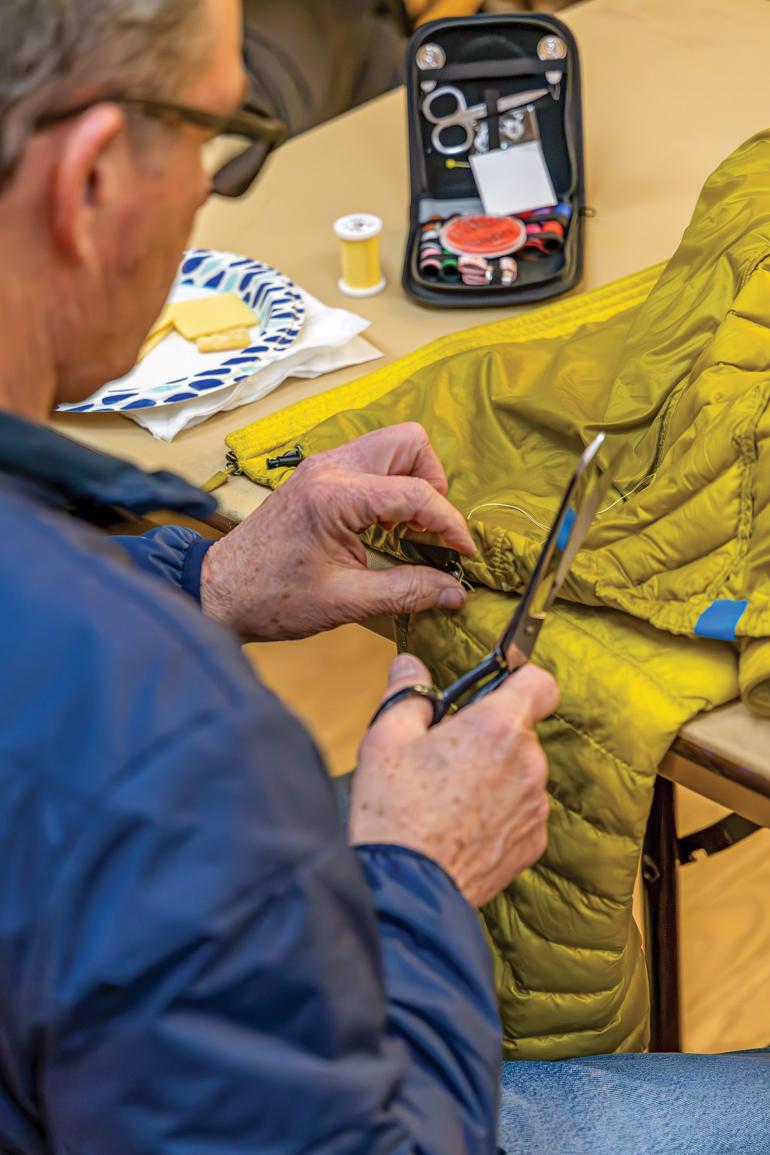
When you do decide to invest in a new item, find out what’s covered under warranty. Look for companies that offer repairs. The ones that don’t, let them know that repair services are important to you and affect your buying decisions. Investigate beyond marketing campaigns and beware of greenwashing. Give yourself time to make an educated decision.
Environmental overwhelm and despair are real. But don’t throw in the towel. Remember that you look great in that worn-out fleece—clothing 20 years old or older is “vintage” these days. You might even find yourself sharing the trail with a hipster who’ll try to buy it off your back.
Colleen “Coco” Tretter, a.k.a., the Green Darner, offered gear-repair services to the public from 2004 to 2018. She now provides warranty repairs for brands. She and her customers have kept more than 16 tons of gear and garments out of our local landfills.