Bite Me
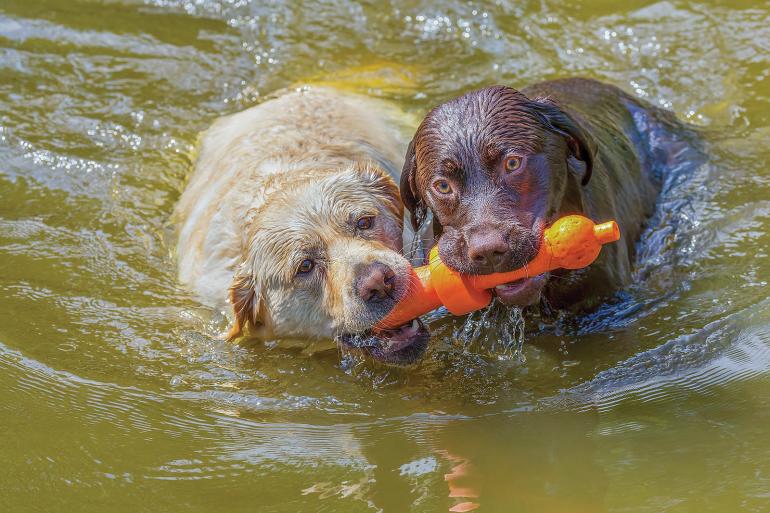
Safer chew-toys for dogs.
Bozeman is a wonderful place to live if you’re a dog—or a dog owner. Whether you’re hiking, camping, swimming, or using the many parks and green spaces around town, things are just more fun with a good dog.
As a veterinary dental specialist, I think about wagging tails and smiling faces a lot. Dogs explore the world with their mouths, so when I see broken or injured teeth, I know it has to be affecting their quality of life, and experience tells me that many of those injuries can be prevented.
Whether you have a highly driven hunting dog or a ball-crazy family dog, many of our four-legged neighbors love to fetch. It keeps them fit and mentally stimulated. However, one common mistake I see is using abrasive materials such as rough canvas bumpers or felt-covered tennis balls, which are of particular concern. While these are cheap and readily available, they wear down teeth quickly, especially once they attract grit. Acting like sandpaper, abrasive toys can actually kill teeth or leave them thin, fragile, and prone to injury from normal play behavior. Instead, use smooth rubber toys, which go a long way in protecting your dog’s teeth.
Highly driven dogs try to catch sticks while they’re still moving, and broken canine (fang) teeth are more common than you might think.
Another unfortunate fetch-related injury I see are broken teeth from throwing heavy sticks. When you’re on the trail, it can be tempting to pick up a branch and huck it for your hiking partner; however, it can carry a lot of momentum and bounce in unpredictable ways. Highly driven dogs try to catch them while they’re still moving, and broken canine (fang) teeth are more common in this scenario than you might think.
Similarly, I see dogs regularly who have broken their large, important back teeth chewing on sticks they found on the trail or at the campsite. As a general rule, if you can’t bend a chew toy easily with your hands, it’s too hard to chew. Safe chew toys are flexible. Avoid antler, marrow bone, cow hooves, hard plastics, yak chews, and sticks. This is especially important for large dogs with strong chewing muscles. Sticks also commonly get stuck between teeth, injure gum tissue, and cause disease. If you can leave an imprint in a toy with your thumbnail, that’s a good indication it’s safe for your pet.
Luckily, most of these injuries can be fixed and teeth need not be extracted, but prevention is still the best policy. If you have a dog that likes to chew or fetch, keep a safe toy in your camping gear or where you store your leash, so it’s always available. Choose safe toys and be conscious of your dog’s chewing habits, and your trail buddy will stay healthy and energized for the next adventure.
Matthew Evans, DVM, DAVDC, is the veterinary dentist at Bridger Veterinary Specialists.