Turning the Tables

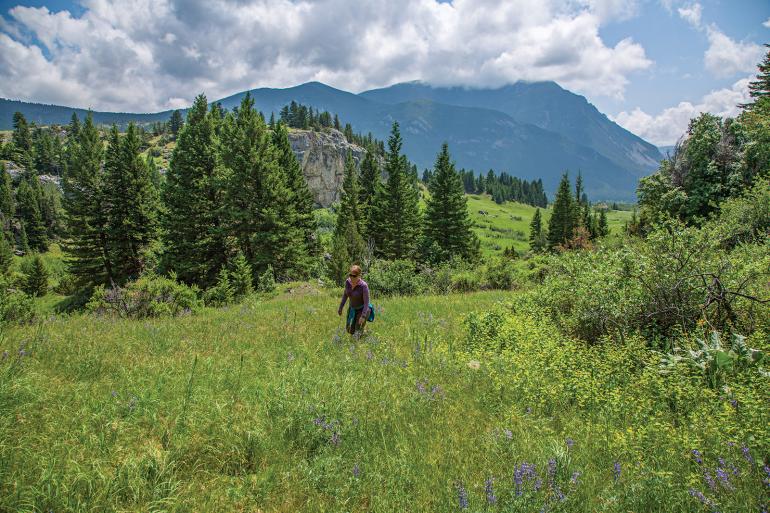
A call for a better classroom.
Climb the mountains and get their good tidings. Nature’s peace will flow into you as sunshine flows into trees. The winds will blow their own freshness into you, and the storms their energy, while cares will drop away from you like the leaves of Autumn.
—John Muir
In 1798, the English poet William Wordsworth urged his peers to spend less time inside reading, and more time outside, in nature. His famous poem, “The Tables Turned,” begins:
Up! up! my Friend, and quit your books;
Or surely you’ll grow double:
Up! up! my Friend, and clear your looks;
Why all this toil and trouble?
Now, it’s not as if there were nothing to read about in 1798. Napoleon’s army raged across Europe and North Africa. The Irish rose up against British rule. America was engaged in a naval conflict with France. The pope was kidnapped.
Wordsworth believed that humanity was essentially good, but was corrupted by the influence of society. To restore that goodness, we must escape to nature.
And yet, amid this turmoil, all this toil and trouble, Wordsworth and his friend Samuel Taylor Coleridge published Lyrical Ballads, a collection of poems that initiated the Romantic movement and altered the course of English literature. Prominent among the book’s themes is the return to an original state of nature, to a more pure and innocent existence. Like the French philosopher Jean-Jacques Rousseau, Wordsworth believed that humanity was essentially good, but was corrupted by the influence of society.
Replace “books” with “smartphones,” and “society” with “social media,” and one thing becomes clear: the more things change, the more they stay the same. Political scandals, religious conflicts, culture wars, socioeconomic strife… there’s plenty to for us to read about, and to get worked up about, just as much as in Wordsworth’s time. And yet:
Books! ’tis a dull and endless strife:
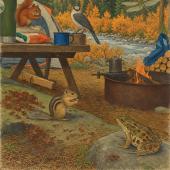
Come, hear the woodland linnet,
How sweet his music! on my life,
There’s more of wisdom in it.
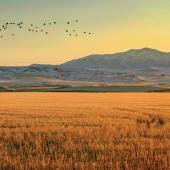
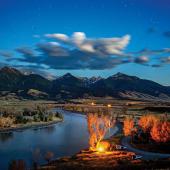
More wisdom, indeed. And more beauty! A resplendent sunrise over the Bridgers. Crystalline snowmelt trickling down a mountainside. Eruptions of gold as balsamroot blooms on sun-drenched hills. And above it all, the great blue firmament, vast as the ocean and pure as a mother’s love. As John Keats reminds us, “Beauty is truth, and truth beauty—that is all ye know on earth, and all ye need to know.”
Put down the pablum—that insipid, enervated material that is the intellectual equivalent of junk food.
This is not some blythe call for positivity, mind you. We’re not suggesting you bury your head in the sand. And the irony is not lost on us—Lyrical Ballads was a book, after all. This magazine, too, is all about reading, which we believe is sorely lacking in the modern world. The point is to put down the pablum—that insipid, enervated material that is the intellectual equivalent of junk food.
So this spring, we hereby re-issue Wordsworth’s erstwhile exhortation—not the literal words, but the sentiment. Stop troubling yourself over inane, ephemeral BS. Extricate yourself from the internet. Stop sitting on your couch, fingering your phone, poring over bad news, joining the latest moral crusade and lashing out in comment threads. It’s corrupting you.
Get outside, into the life-affirming fields and forests, the life-altering rivers and streams.
Luckily, there is one thing that can end the social-media madness and bring us together—one thing that is bigger than all of us, bigger than we will ever be: Mother Nature. She alone can heal our many wounds, replacing our dull, ugly bitterness with a refulgent and ravishing joy:
She has a world of ready wealth,
Our minds and hearts to bless—
Spontaneous wisdom breathed by health,
Truth breathed by cheerfulness.
And so we’ll say it again: this spring, put down your phone, that endless source of toil and trouble. Ignore the nefarious forces telling you what to think and who to hate. Get outside, into the life-affirming fields and forests, the life-altering rivers and streams. Look, listen, feel—and learn, really learn. As Wordsworth sums it up:
And hark! how blithe the throstle sings!
He, too, is no mean preacher:
Come forth into the light of things,
Let Nature be your teacher.