Back in Black
One boater’s proposal to open whitewater kayaking in Yellowstone.
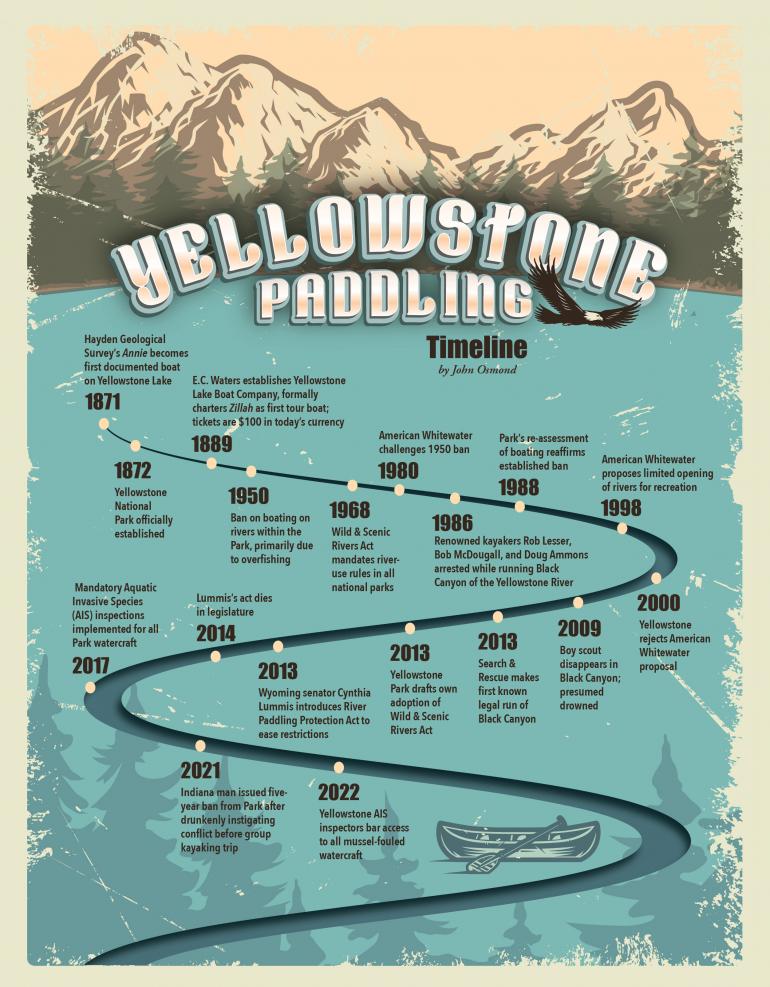
Rivers in Yellowstone National Park are not open to whitewater recreation—and that restriction may be doing more harm than good. Boating on the Park’s waterways was banned in 1950 to prevent overfishing. That was 75 years ago. Since then, the Park’s administration has rejected several proposals—made by respected conservation organizations—to legalize limited access to certain stretches of river within the Park’s boundaries.
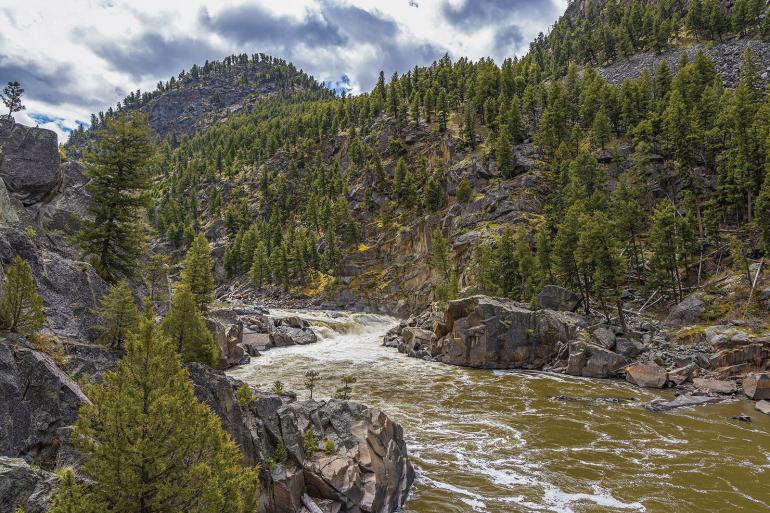
Of primary interest to many boaters is the Black Canyon—a legendary Class V whitewater run from Tower Junction to Gardiner. The countless rapids in the canyon are challenging, yet they’ve been run several times, both within and beyond the law. Legally, the Park Service has called up experienced boaters to run the stretch on search-and-rescue missions. Illegally, local paddlers have dropped into the canyon in the dark, run the whitewater stretch at dawn, then tucked away in a nook or cranny until darkness fell once again.
Stories of clandestine runs date back as far as the 1970s, when kayaking was growing in popularity. In 1986, renowned kayakers Rob Lesser, Bob McDougall, and Doug Ammons were chased in a helicopter and eventually arrested, though soon released with nominal fines. Twenty-six years later, in 2012, another group faced helicopter, horseback, and foot pursuit, which resulted in capture and $5,000 fines. On appeal, a district judge later reduced the fines to $25 apiece, but banned the boaters from Yellowstone for life.
Any serious proposal, however, must consider all boaters, not just kayakers.
Since then, the Park has pursued paddlers with more bark than bite. For the most part, boaters get away, and each year the cycle of illicit entry starts anew. If Park officials know about these runs, they should be evaluating the environmental impacts. Legalizing boating would make it much easier to assess and address them.
Any serious proposal, however, must consider all boaters, not just kayakers. Though they certainly have the most skin in the game—and the most history on this section of water—packrafters, canoeists, and brash paddleboarders are certainly drooling for a taste of it as well. Thus, a plan would have to consider all these user groups, perhaps setting limits on the number of any given watercraft in a season.
A permit system could do exactly that. Many other national parks in the U.S. already have such systems in place, the Grand Canyon being the most famous. A well-designed system could limit the season, restrict the number of visitors, and impose constraints on the type of vessels and the impacts they could have (e.g., fishing from boats or camping on the riverbank).
Of these restrictions, seasonality might be the most important consideration. Spring on the Black Canyon offers the most interest for serious boaters, but it’s also the most sensitive season for wildlife like elk and moose that are wintering in the river corridor. For more average paddlers, though, the Black Canyon is a late-season run, given the river’s immense power and consequences during spring runoff (most kayakers who have ventured out at high water never attempt it again). Restricting the number of boaters—especially in spring—would be crucial to maintaining a balance between preservation and public use of the resource.
Allowing legal boating would allow boaters to focus on making good decisions, taking their time to scout and running the river in broad daylight, all without the constant fear of getting caught.
But no matter how you dice it, more recreational opportunity in the Park would mean more visitors and therefore more resources needed to tend them. There’s already a parking lot and bathrooms at the put-in, along with a small trail to the water. With an increase in visitors, the bathrooms would likely need to be maintained more often, and the parking lot would require more maintenance; but this is nothing the Park Service isn’t already doing at the many other campgrounds and boat ramps. In terms of logistics, a road for shuttles already exists, and there is a hiking trail along the river that could be used for scouting. The take-out is outside of the Park.
It’s also worth noting that legalizing boating could improve safety in the Black Canyon. As a Class V run, most boaters interested in this stretch of water are experienced paddlers—people who know how to scout rapids, understand risk, and strive to make good decisions. Allowing legal boating would allow boaters to focus on making good decisions, taking their time to scout and running the river in broad daylight, all without the constant fear of getting caught.
The illegality of boating in the Park is arbitrary and outdated.
Specifics aside, one of the bigger sticking points with boating proposals has been potential conflict with other user groups. Hikers and backpackers in the Black Canyon likely would not be happy to see kayakers and packrafters; however, 99% of the Park’s visitors would never see, interact with, or know about these paddlers. The unwritten code of conduct between outdoor recreators will guide most interactions, but regulations should also be in place to punish those who act with disrespect toward other users, or violate the preservation mandate of the Park.
At the end of the day, the illegality of boating in the Park is arbitrary and outdated. All arguments mentioned earlier could show improvement if the Park was willing to reconsider and allow boaters. Nobody is asking them to open this stretch to commercial trips. The Park has the opportunity to design its own carefully crafted rules, but unfortunately, they seem fixated on catering to larger infrastructure for larger masses of visitors that have larger, more negative impacts. Boating is a low-impact sport, and the community is small, passionate, and typically conservation-minded. They’re looking forward to the day that they can legally descend this fantastic stretch of whitewater.
Editor’s note: The opinions expressed herein are those of the author, not this publication or its staff. We’re a community magazine and so we give voice to range of positions, which do not always align with our own.