Getting to know the wildlife that call your campsite home.
Plop. (WTF?)
Plop. (Grrr.)
Plop. (Grrr—Blitzen, relax.)
Okay, who’s tossing pebbles on the roof of my tent and freaking out the pooch? I know it’s not Sasquatch. He would be throwing boulders.
Crawling out of a toasty sleeping bag into the crisp dawn air was not how I wanted to start my car-camping weekend. But I did. And with blurry eyes, scanned the campsite. Nothing. Then… plop.
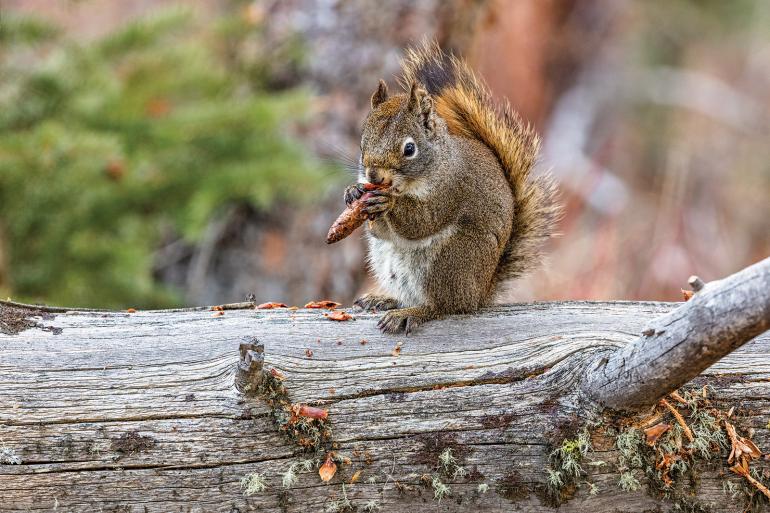
It was a pinecone—actually, a fir cone—dropping from the limb of a Douglas fir hanging overhead. And in the dim morning light I could just make out a small, squirrel-like creature surgically disconnecting cones and letting them fall to the ground—actually, on top of my tent.
I have returned to that campground many times. And each visit that rascally squirrel, or his bad-mannered brethren, have replicated the same caper.
Once the day hike is complete, kids & dogs fed and settled in, there’s often the opportunity to at least casually observe some of the animals scurrying, flying, or crawling near one’s camp chair.
That got me curious about the animal, which I learned was a red squirrel, and its natural history. What was up with that fir cone carpet-bombing? It also got me thinking about the other wild creatures that share my campsite: birds, other small mammals, reptiles, amphibians, even insects. I realized that while I might know their common names, beyond that they were just the “extras” in my car-camping extravaganzas. It reminded me of some of the people in my neighborhood. I know their names, but not much more about them—their personal lives, what they do for a living, the role they play in my community. I decided it was time to deepen my relationship with the natural world.
The cool thing about car camping is that once the day hike is complete, kids & dogs fed and settled in, there’s often the opportunity to at least casually observe some of the animals scurrying, flying, or crawling near one’s camp chair. And with the right field guide or app, you have the ability to instantly identify and learn about what you’re watching. It’s an opportunity to feel less like a forest intruder, and more like a friendly neighbor. Seems like we could use more of that these days.
So many creatures, so little time! What follows are brief profiles of some of the more common, but still wild, characters you’re likely to encounter at just about any campground in southwest Montana, especially if it’s forested or near a body of water. None are rare, though some face growing challenges from a variety of environmental threats.
They say that the first step in preserving our wildlife is to become intimate with it. Car camping is a great vehicle, so to speak, for doing that.
Red Squirrel
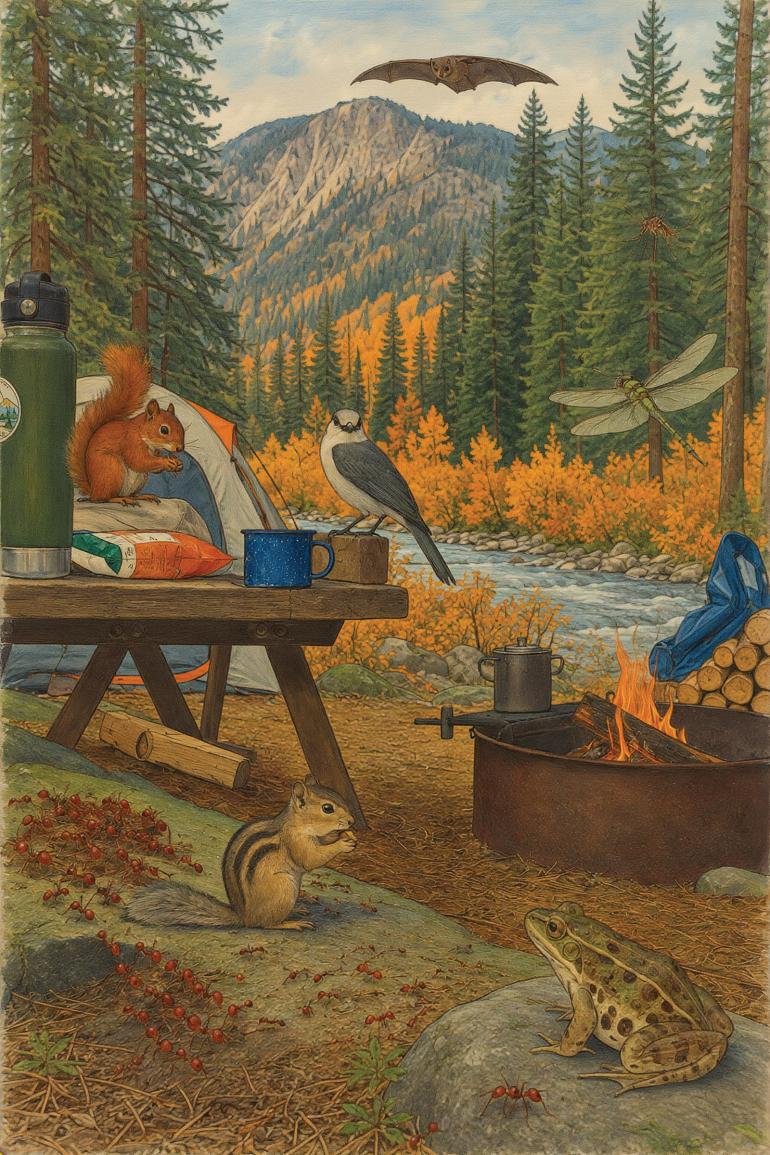
My campground alarm clock, the feisty chattering red squirrel, has been called “the keeper of the woods” for the role it plays in regenerating our coniferous forests. They have a penchant for cutting and hoarding the seeds of conifers in caches on the ground, which propagates new seedlings that eventually grow into cone-laden mature trees. These “middens” are also sought out by other species ranging from shrews to grizzly bears. That outsized chattering is often meant to ward off predators and competition, which could possibly include you! In terms of population, red squirrels are generally doing well. And that is a good thing for the long-term sustainability of our forest ecosystems.
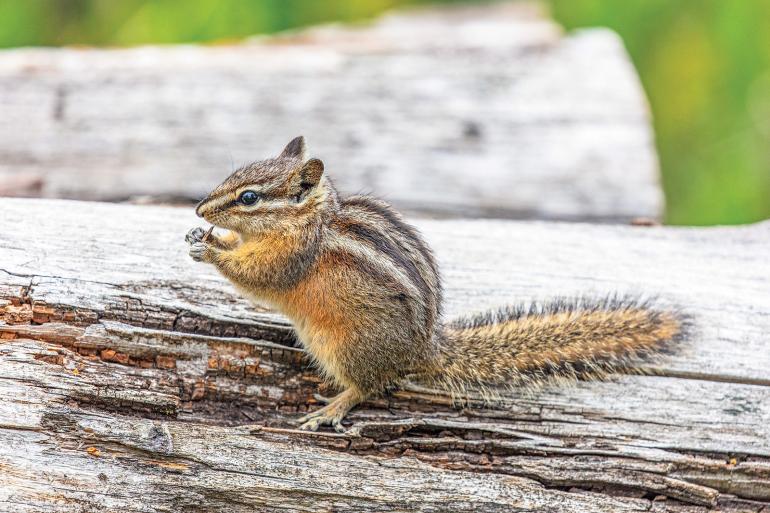
Least Chipmunk
These furtive little guys (the smallest North American chipmunk) live a fast and furious life—at least during warm weather—gathering seeds, berries, mushrooms, and insects in their cheek pouches and burying them in caches. They have incredible memories—a handy talent when you have hoarded food in hundreds of locations. And they live in burrows that can reach a length of six to ten feet, three or four feet underground. That is a lot of digging for a little chipmunk. No wonder they’re so hungry. Often, they can be spotted darting around campsites, especially picnic tables, in the hopes of finding a crumb from a granola bar or some other goodie. Of course, it’s best not to feed them human food. They have plenty of natural sustenance and let’s face it, a lot of so-called human food isn’t even good for humans! Least chipmunk populations seem stable, and they are important prey for birds like hawks and other predators ranging from coyotes to bears. Habitat protection, particularly the maintenance of corridors that link lowlands to higher-elevations habitats, could help this charismatic species survive even with a warming planet.
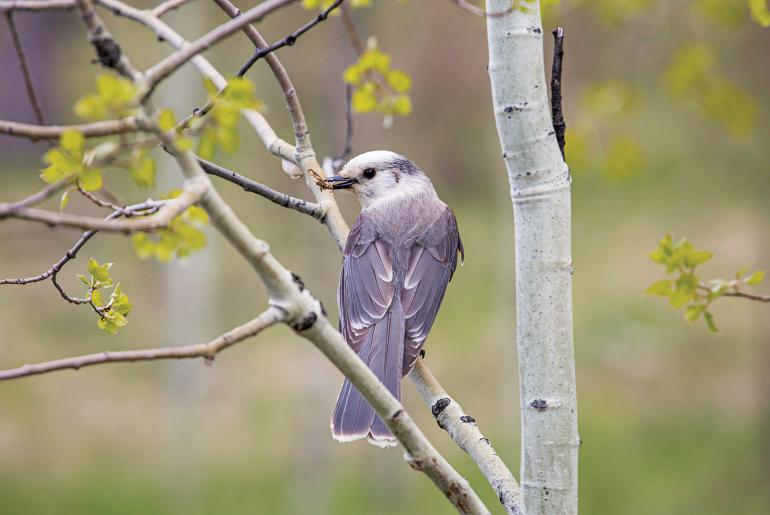
Gray Jay
The brazen gray jay is the avian equivalent of the campground host—friendly, though sometimes a bit too nosy. A member of the notoriously intelligent Corvid family of birds (ravens, crows, magpies, jays), gray jays are common in Montana’s coniferous forests. There’s even speculation that the resin of these trees preserves the food—such as berries and insects—that jays cache in tree bark using their sticky saliva. Gray jays mate for life and have intricate social structures. They are sometimes nicknamed “camp robbers” for the kleptomaniacal behavior often on display up close and personal at your picnic table. Their more natural food larders are scattered over large areas and an acute memory of their location has been described as almost “mystical.” Because jays are so dependent on food caches, particularly in winter and early spring, a warming climate that can affect the rate of spoilage of these stored foods is of concern. Their significant intelligence might help them adapt to these changes. Time will tell.
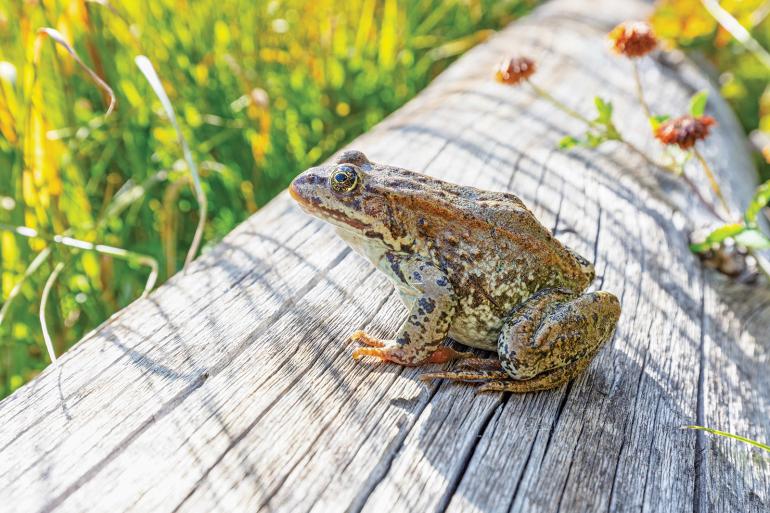
Columbia Spotted Frog
Before there were smart phones and iPads entertaining our kids, there were frogs. I’d like to think that even in the year 2026, the croaking or jumping of a frog would still capture the interest of children. It still captures my interest, anyway. And if camping near a pond, there’s a good chance there will be at least one species of frog in the area. The most common in the mountains of Montana is the Columbia spotted frog. You may have seen their larvae (tadpoles) darting under aquatic vegetation at the water’s edge. Adult frogs feed on both aquatic and terrestrial insects and occasionally juveniles of their own species. They have adapted to our harsh climate and can spend winter underwater and in moist mud during droughts. And though they generally stick close to where they were born, spotted frogs have been known to travel over a kilometer for breeding or foraging purposes (I break for frogs!). Spotted frogs are facing an array of challenges ranging from predation by introduced bullfrogs, to the dewatering of streams and ponds, the impact of grazing animals, water pollution, and of course, habitat destruction. So yeah, if the kids want to try to catch a frog or tadpole, that’s still cool. Just be gentle and release it back into the wild—the frog that is, and maybe the kids too!
Dragonflies
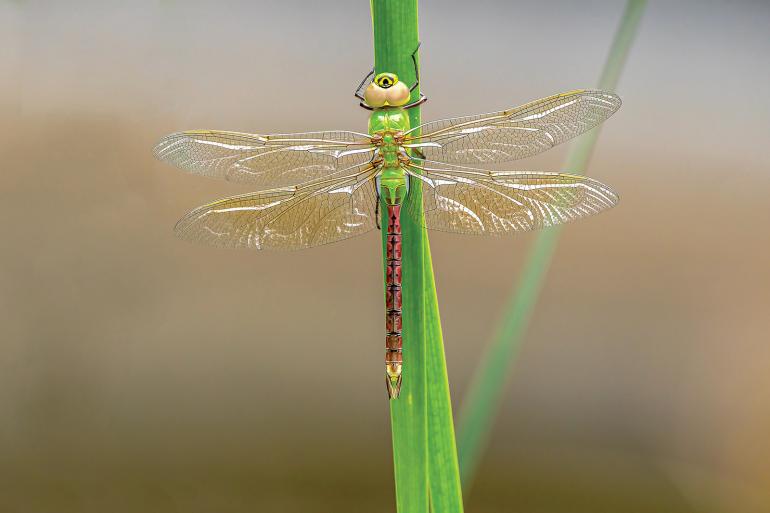
There are around 60 species of dragonflies in Montana, the most widespread being the green darner. As noted by researchers, “dragonflies have the highest hunting success rate of any predator”—up to 97%! If you’re camping, that’s good news as mosquitoes are one of their favorite prey. Dragonflies have had plenty of time to perfect their hunting prowess, seeing as they have been on the planet an estimated 300 million years. If you see dragonflies around your campsite, chances are there is a water body nearby. Hatched from eggs deposited in water, their nymphs sometimes live for years before they metamorphose into adults. During this aquatic period, they are stealthy hunters that in addition to mosquitoes, also chow down on small fish, tadpoles, and other aquatic creatures. You may have seen them hover in place, then abruptly fly forward, or backward, or up, down, left, or right. They have been clocked flying over 30 miles per hour. Eyes that have a 360-degree field of vision, and the ability to distinguish a dizzying number of colors, give them an unfair advantage (thankfully) over mosquitoes, of which they can consume over 80 in a single day. Currently, six species of Montana dragonflies are considered “species of concern.” Loss of habitat, water pollution, and climate change are some of the threats to this iconic insect. Watch their aerial acrobatics, or stare one in the eye as it hovers in front of you, and you will fall in love.
Western Terrestrial Garter Snake
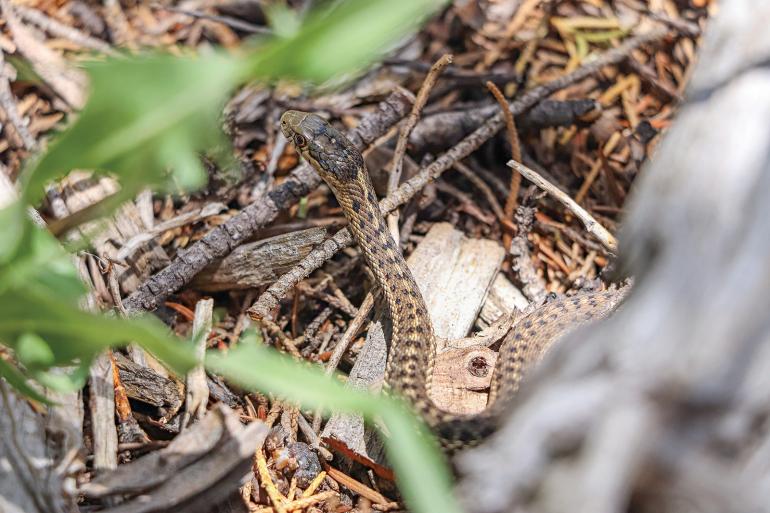
If you run into a snake at your campsite, chances are it will be a garter. There are ten species of native snakes in Montana. Just one, the prairie rattlesnake, is venomous. But the good ol’ garter snake is the one most of us encounter, especially near water where they prey on insects, frogs, and fish, and on land where worms, insects, bird eggs, and baby mice are on the menu. Garters are a good “gateway” to the study and appreciation of Montana’s snakes and reptiles in general. But if you try to capture one, they have a habit of defecating on you. I guess I would be freaked out too if some giant grabbed me. But in the end, other than the pungent fecal stench that takes multiple washings to eradicate, they are harmless to people. (Though I still jump straight up when they surprise me on the trail.)
Thatching Ants
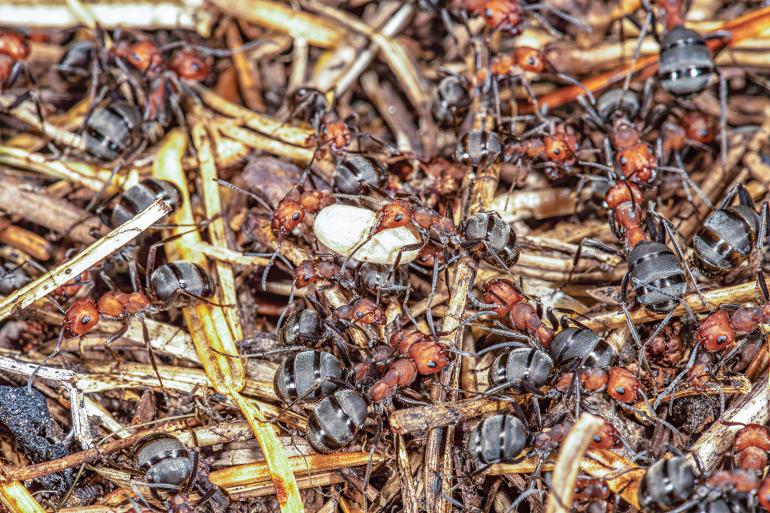
What’s car camping without at least one ant-related incident—usually involving a raid on an open bag of cookies, or someone getting bit by a swarm of ants unhappy that their home was disturbed. In Montana we have over 70 varieties of ants. But when in the field, the one most obvious is the red-headed thatching ant, which builds commonly seen mounds made of pine needles, twigs, and soil. Under these mounds is a sometimes four-foot-deep labyrinth of tunnels and chambers where they “ranch” tiny aphids for a sweet sticky substance called honeydew. These ants in turn are preyed upon by other animals, especially northern flickers that sometimes dig into the mounds to nab the sluggish insects. While thatching ants play multiple beneficial roles in forest ecosystems, you do not want to disturb their nests. When agitated, they can bite hard with strong mandibles and then spray formic acid—adding insult to injury, so to speak.
Little Brown Bat
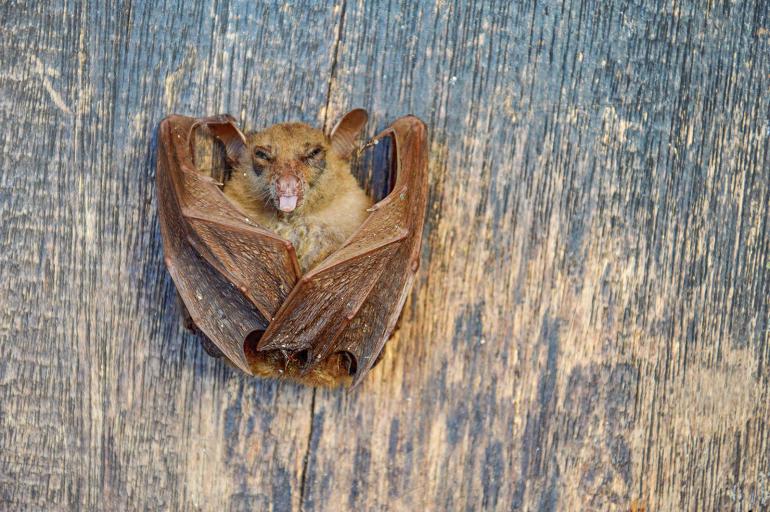
Come nightfall, with most birds safely in their roosts; another creature is likely to be flitting over your campsite. There are 15 species of bats in Montana, with the little brown bat being one of the most common. They spend their days in sheltered areas like old buildings, tree bark, bridges, caves, and abandoned mines. Armed with echolocation, once the sun sets they begin dive-bombing insects. One investigator counted over 1,200 mosquitoes captured by one bat in just an hour! Females have only one “pup” per year. Little browns can be vulnerable to impacts from habitat disturbance, including people entering caves where they’re nesting. However, the greatest threat to their survival is “white nose syndrome,” a fungus spreading throughout North America devastating bat populations. The disease has been documented in Montana and biologists are scrambling to find methods to treat and control this malady. In the meantime, protecting bat habitat and preventing disturbance of hibernating bats are two things we can do to reduce stress on these unique mammals. What would an evening campfire be without the ghostly shadows of bats darting overhead?
Mosquitoes
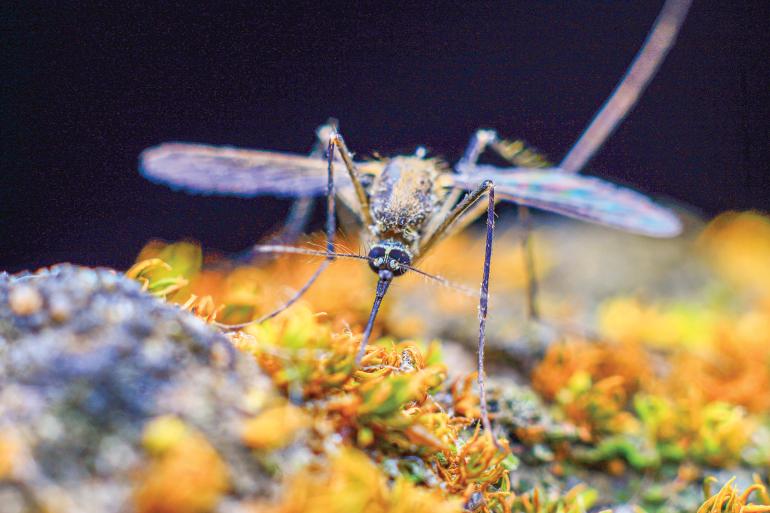
While there are about 50 species of mosquito in Montana, two species: Aedes vexans and Culex tarsalis, are the most apt to be the ones driving you crazy, particularly if you’re camping near standing water. That water source is essential for reproduction when their larvae hatch from eggs to the pupal stage. After three or four days, their skin splits and a fully formed mosquito takes flight. Creepy, I know. But nevertheless, amazing. Male mosquitos feed on the nectar of plants but only live a few days. If they can find a steady food source—primarily blood from animals—females can live for months. They seek dinner by honing in on the carbon dioxide, changes in temperature, and other chemicals emitted by their living prey. A blood meal is required for reproduction (egg laying). It’s easy to ask, what good is a mosquito? But the answer depends on who or what you engage in that conversation. Many aquatic animals like fish and frogs feast on mosquito larvae. And adult mosquitos are an important source of food for birds, bats, and even other insects like dragonflies. Some scientists predict that changes in climate could actually increase their numbers. So, slather on the repellent, throw some smoky wood on the campfire, take another swig of Jack, and count the days until the first frost.