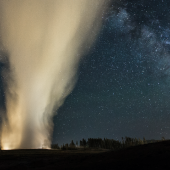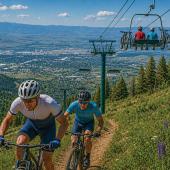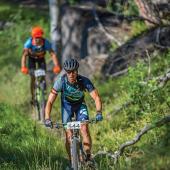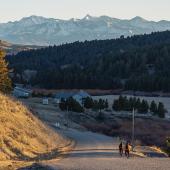

A day to remember in Yellowstone Park.
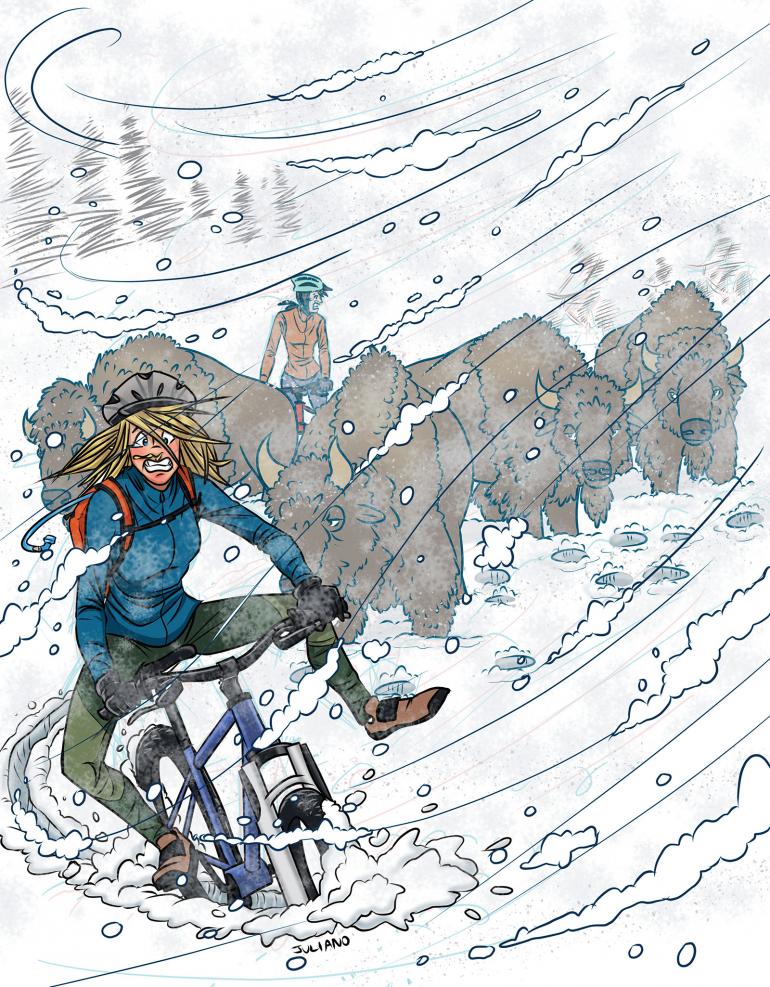
I’m not going to make it, I thought, struggling to keep my frozen legs moving. The only thing giving me hope was the bike tire in front of me, carving a narrow path through the snow. Any feeling in my face had long vanished, along with the blood running to my fingers and toes.
I’m really not going to make it, I thought again as I squinted through the snow pelting my face—realizing this was the second time in my life I’d had that thought with any seriousness.
The first was when I was ten and decided to paddle the family canoe across our lake on a breezy summer day. By the time I’d reached the far shore, the wind had picked up so fiercely that returning home was impossible. I tried again and again, barely making it a quarter of the way across the lake before being slammed back to shore and tipped into the muddy water. Eventually, I’d abandoned the canoe and run around the lake toward home—crashing through the woods in an exhausted panic. When I finally emerged from the trees into our yard—muddy shoes, skinned knees, and hair tangled with twigs—my mother stood watering the garden, completely unaware that I’d gone missing in the first place.
That, I suppose, was what made the canoeing incident so frightening: I had felt alone. But this time, at least, I wasn’t. And when a strong hand reached over to give my bike a shove forward, I was grateful for that.
Any feeling in my face had long vanished, along with the blood running to my fingers and toes.
It was spring break, and I was visiting my older cousin, who had moved to Bozeman a few years earlier. The town suited her perfectly—everyone seemed to be some sort of superhuman athlete, just like her. It was the kind of place where people described things as “just a short drive,” or “a pretty easy hike,” or “just one more hill,” and they were always lying. But I loved it. Every trail she showed me and every activity we tackled was a challenge framed by some of the most beautiful scenery I’d ever seen.
So when my cousin and some friends suggested we take advantage of the seasonal vehicle closure in Yellowstone National Park, I readily agreed to attempt a bike ride from West Yellowstone to Mammoth on a borrowed bike. After all—what could possibly go wrong?
When we reached the parking lot, blue skies stretched overhead and birds chirped with enthusiasm, as if welcoming the spring day. It was warm enough that I considered leaving my outer jacket behind, but I packed it just in case I got cold after a soak in one of the hot springs along the route. Soon we were on our way—the five of us pedaling through the Park on what seemed like a perfect spring day.
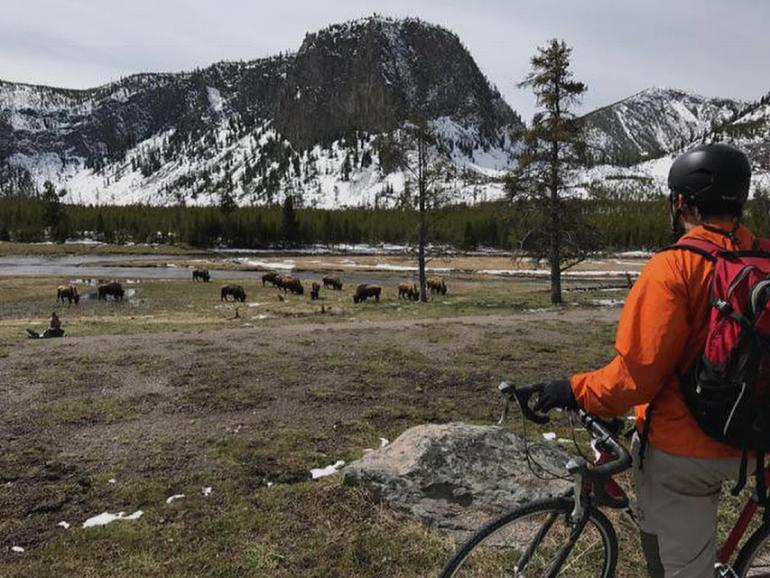
I’d never been through Yellowstone before, and the sights were so mesmerizing that I hardly cared how uncomfortable the stiff bike seat felt after a long winter. Eventually, we approached a small herd of bison standing in the middle of the road, completely unbothered by our presence.
“What do we do?” I asked, feeling equal parts unsettled and thrilled.
“Just make a wide circle around them,” someone said. “Give them space, and they’ll leave you alone.”
Cool, I thought, admiring—but careful not to make eye contact with—the giant, wide-eyed beasts as I pedaled past.
I was secretly relieved by the vote to turn back, eager to warm up and perhaps even find the big, fat burger I’d been dreaming of ever since we passed the bison.
We finally arrived at what was supposed to be our first stop: a small geothermal pool no bigger than a kiddie pool in the ground. While the steam rising from the earth looked especially inviting, there was one thing we’d forgotten to bring—towels. And with the wind beginning to howl, we decided that riding back wet might not be the best idea after all.
We considered whether we should continue or turn back as we sat near the hot springs, eating the snacks we’d packed for lunch. Within minutes, fat snowflakes made the decision for us.
I was secretly relieved by the vote to turn back, eager to warm up and perhaps even find the big, fat burger I’d been dreaming of ever since we passed the bison.
For the first mile or so, we were only mildly uncomfortable from the sudden drop in temperature and wind. We continued chatting as we rode, but I kept my head low, grateful that I’d been able to admire the scenery on our way in.
We pushed forward as the weather worsened, pedaling faster in a desperate attempt to reach the warmth and safety of our cars. I glanced left and couldn’t help but laugh at the sight of my friend Heidi—frozen hair, crystal white eyelashes, and an icicle of snot forming beneath her nose that no doubt matched my own.
The snow grew deeper by the minute, slowing us to a crawl as we reached a significant hill. And just as I considered getting off my bike to begin walking, someone gave my seat post a strong shove, offering just enough momentum to crest the top.
As we rolled blindly down the hill, I took stock of my body. I couldn’t feel my hands, toes, or face, and my legs were completely numb from snow melting through my thin tights. I blinked rapidly, trying to summon tears in hopes that they might thaw my frozen eyeballs. I closed them for a long moment, opening just in time to see something large and brown ahead.
There are some things in life that don’t seem as bad in hindsight. This wasn’t one of those things.
“Whoa!” I shouted, realizing we’d reached the herd of bison again—still standing, unbothered, in the middle of the road. I swerved around their massive bodies—much closer than before—without so much as a flinch from them. Thankfully, the burst of adrenaline that followed sent a surge of blood pumping through my body, a feeling I gratefully accepted as I pushed forward.
But the energy didn’t last long. The snow now nearly reached our pedals—and again I considered getting off the bike to push. I’m really not going to make it, I thought. Then we heard a honk.
Lights cut through the snow as a Park vehicle approached, and we pulled over to let it pass.
“Wait! Should we ask for a ride?” someone suggested through chattering teeth, but the ranger kept on driving.
My heart sank as we watched him disappear—until we noticed the tire tracks he’d left behind, cutting a packed path through the deep snow and straight toward the parking lot.
We steered our bikes into the tracks, whooping with relief as pedaling became bearable once again.
“That was the worst thing I’ve ever done!” I shivered with relief, and everyone agreed.
For the rest of the slog, I kept my head down, shielding my face from the wind while fantasizing about a hot shower, warm clothes, and greasy food.
At long last, we reached the parking lot—and as if on cue, the snow stopped. By the time we loaded the bikes and stretched our stiff legs, the sun even began to peek through the clouds.
“That was the worst thing I’ve ever done!” I shivered with relief, and everyone agreed.
Later that night, we piled into a hot tub, thawing our bones and reliving every absurd moment.
“You’ll never come back to Montana again!” my friends and family joked.
There are some things in life that don’t seem as bad in hindsight. But this wasn’t one of those things. We all agreed—even years later—that bike ride felt just as bad looking back as it did while it was happening. That said, it became one of my favorite memories, and I couldn’t seem to stay away from Montana after that.
Now, over a decade later, I live not too far from the Park. And when my friend Heidi calls to ask if I want to go for a bike ride, I can still picture her from that day—snow-caked lashes, icicle boogers, and frozen hair.
“Let me check the weather first,” I say with a laugh.
Yellowstone Biking Nuts & Bolts
A great way to experience the Park is by bike, especially during the spring travel bans when vehicles are prohibited and the roads are quiet and peaceful. But springtime weather, road conditions, and wildlife can be unpredictable, so being prepared is crucial to staying safe, remaining comfortable, and enjoying the ride. Here are a few checklist items to consider before setting out.
A — Always Carry Tools
Nothing ruins a ride faster than a flat tire or broken chain. Pack a mini-pump, repair kit, and a spare tube so you’re prepared for unexpected mechanical issues. With the exception of other cyclists and the occasional maintenance worker, Yellowstone is pretty much empty this time of year, so it’s up to you to get yourself out of trouble.
B — Bike Style
A road bike with wider tires works well on clear pavement, but a gravel bike with more tread offers added stability should you encounter snow, slush, or debris. If you’re less concerned about mileage, and want to make detours onto side roads, a mountain bike might be better. Some local folks even ride cruisers with coffee-mug holders. Consider your goals and choose accordingly.
C — Clothing
Proper clothing is essential for staying dry, safe, and comfortable. Padded shorts can take the pain out of an early-season ride, while moisture-wicking baselayers prevent freezing when the wind whips and the snow flies. Yellowstone is notoriously fickle—even if the sky’s blue when you set out, pack along a waterproof shell, beanie, and gloves, just in case.
D — Drink Up
Long distances and dry climates require extra hydration, so carry more water than you think you’ll need—especially in the event of a long, demoralizing ride against a brutal headwind, which every veteran Yellowstone cyclist has endured. Adding electrolytes helps your body retain fluids, regulate muscle function, and prevent cramping as you lose sodium and other essential minerals.
E — Electronics
Cell service is spotty in the Park, so in addition to your phone, it’s smart to pack along a SPOT or other GPS transmitter, in case of emergency. If you’ve got friends or family back in town, a two-way radio might suffice, depending on the length of your ride.