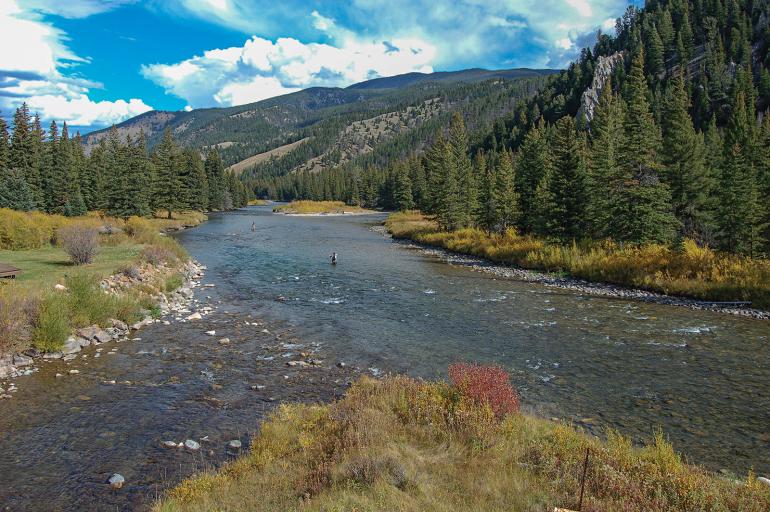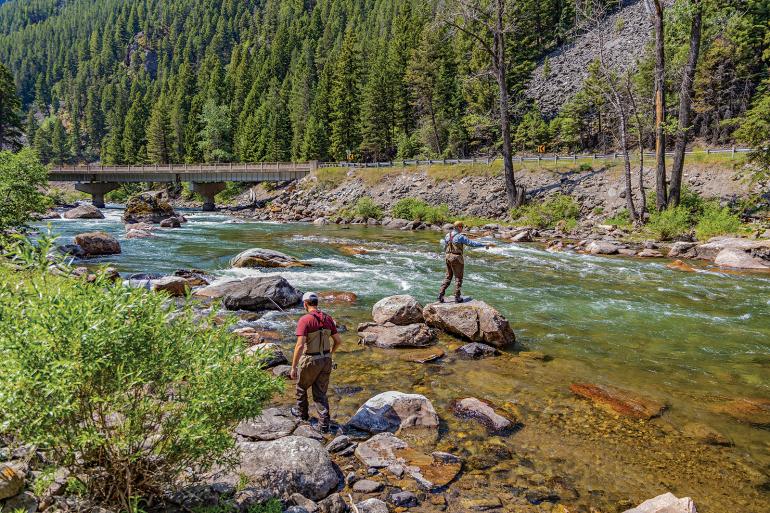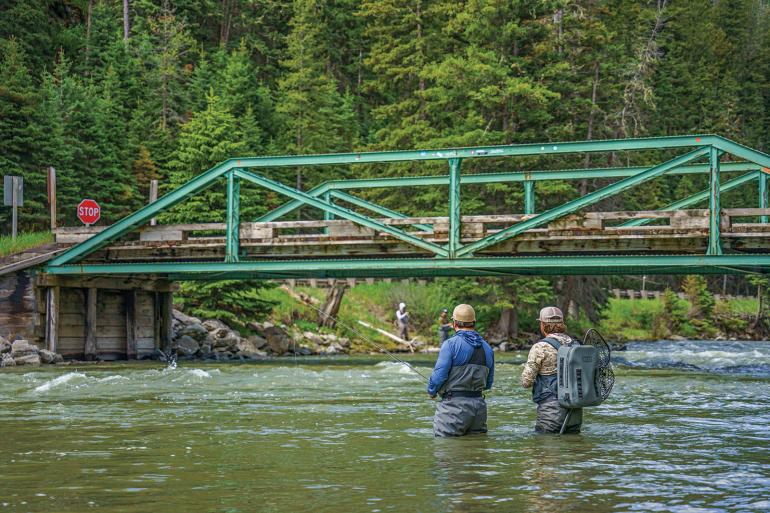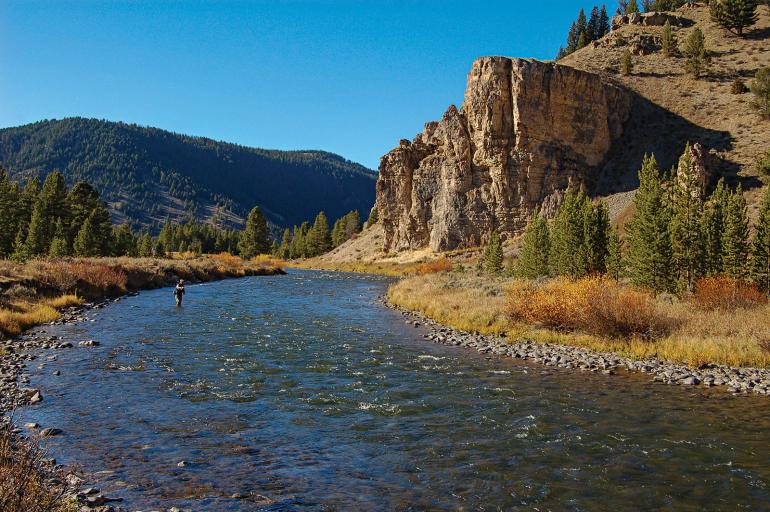

An angler’s overview of Bozeman’s backyard fishery.
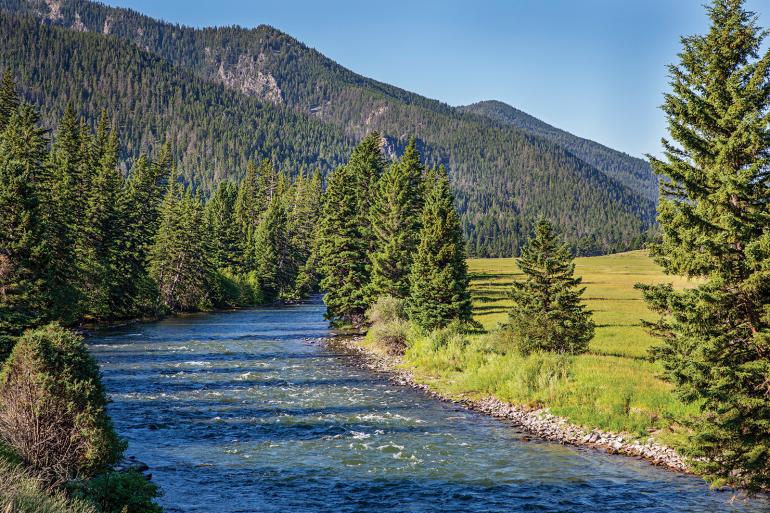
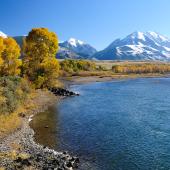
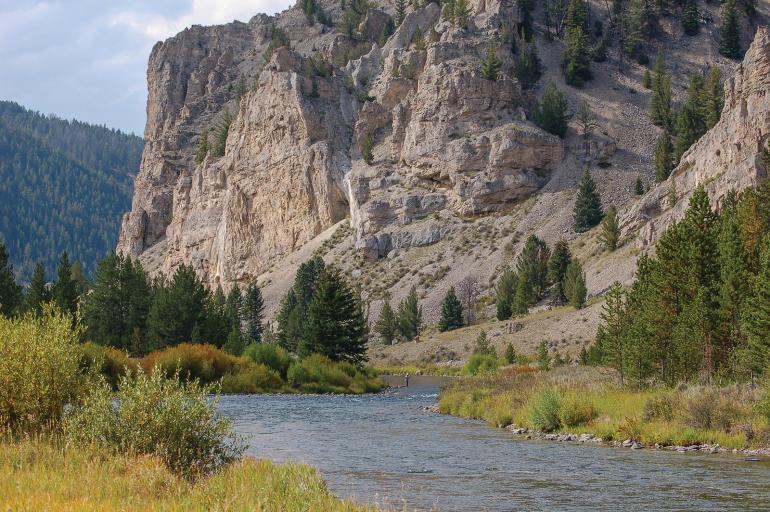
As far as local celebrities are concerned, the Gallatin River should rank number-one on every list. Used as the backdrop for several motion pictures and numerous commercials, the Gallatin has racked up more screen time than Kim Kardashian’s caboose. Named by Meriwether Lewis in 1805 in honor of the then–Secretary of the Treasury, Albert Gallatin, the river flows approximately 120 miles from source to mouth. Despite rampant development in Big Sky and irrigation pressures from the mouth of the canyon all the way to Manhattan, the Gallatin remains a relatively healthy wild-trout fishery, due in large part to the fact that its headwaters happen to be in Yellowstone National Park.
Public Access
The upper section of the Gallatin, from the canyon to Bighorn Pass, happens to have some of the best and easiest access of any river in the state. Running alongside the highway, pull-outs and trailheads are numerous, and almost too easy to get to. North of Gallatin Gateway, and all the way to the river’s mouth, access becomes more limited, and access points more crowded.
Streamflows
The average flow for the Gallatin can vary drastically from season to season and year to year. Flooding and high water are normally centered around the late-spring and early-summer months. Spring runoff leaves this river dangerously high and swift, with zero to marginal water clarity. In average years, the Gallatin usually becomes fishable by mid- to late June, but surprise thunderstorms can muddy it up quickly, and these muddy spells may take a day or two to clear.
When to Fish
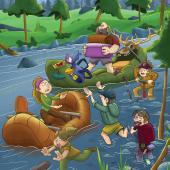
The Gallatin is a very good year-round fishery; however, late June to mid-July tend to produce the best dry-fly action. Due to its accessibility, high season can be difficult for the angler seeking solitude on this river. The canyon area sees the most pressure, and don’t be surprised to have a “splash and giggle” flotilla bobbing down your run. Late winter, pre-runoff in the early spring, and late autumn can be a better bet for those seeking fewer crowds. It’s sound advice to limit fishing times on this river during peak season to very early mornings, or late evenings—especially as the summer wears on, to avoid stressing fish in warmer water.
Fish Species
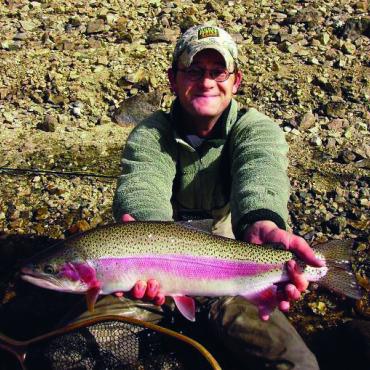
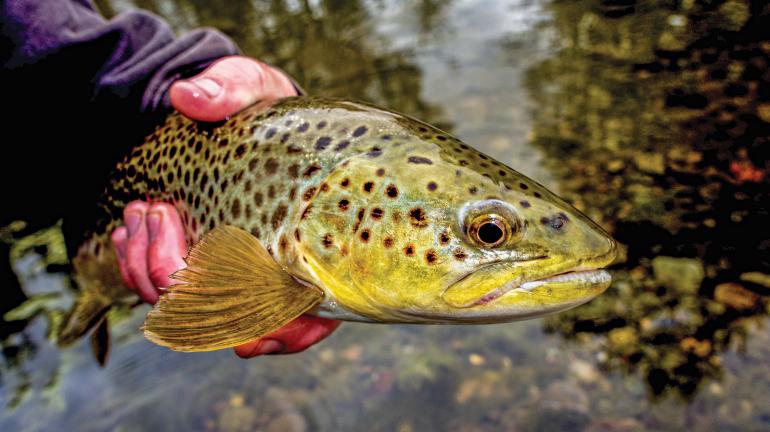
The Gallatin is home to brown, rainbow, brook, and cutthroat trout. The latter of the four are present mainly in the stretch that flows through Yellowstone National Park. While very rare, this portion of the river has a few grayling, as well. Native mountain whitefish are also found in this river for almost its entire length. Unfortunately, non-native northern pike and common carp have been found in the lower river, but as of now they don’t seem to be growing in population. Fish in this river tend to move if pressured heavily by anglers, water temperature, or depth fluctuations. Be prepared to hike a little to find better water.
Row vs. Wade
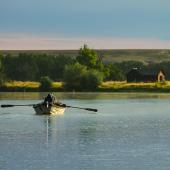
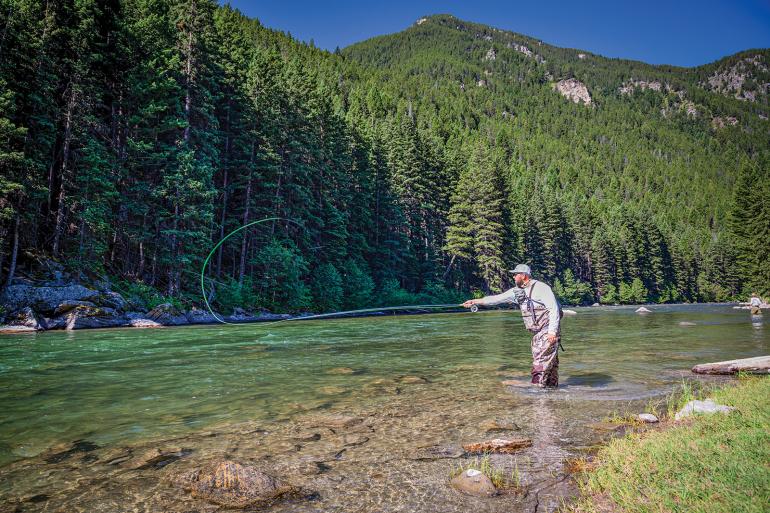
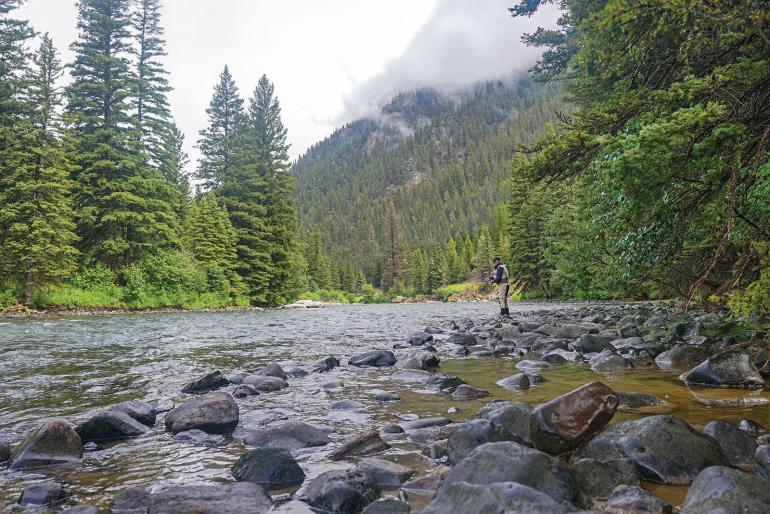
The Gallatin seems to have been designed with wading anglers in mind. While it’s a relatively easy river to wade-fish, large boulders and some slippery algae make a wading stick advisable. While recreational floating is allowed on the entire river, it’s illegal to fish from a boat for a goodly portion—from the source in the Park to the confluence with the East Gallatin in Manhattan. Float fishing is possible below this point, but don’t try it blind. Take several scouting trips in waders to evaluate whether your craft can complete the journey—and that you have the rowing skills to stay safe. Logjams, sweepers, strainers, and other obstacles, along with low flows and limited launch points, can make float-fishing in this lower portion difficult.
Regulations
Like most large rivers, the Gallatin is open to fishing year-round, at least the section outside Yellowstone Park. The area within the Park boundary opens the Saturday of Memorial Day weekend and runs through the first Sunday in November. A special Yellowstone Park license is needed to fish this part of the Gallatin; permits are available at most area fly shops and online at the Montana Fish, Wildlife & Parks website. Outside the Park, general regulations apply, with the “no-limit” exception on northern pike. For more information on state and federal regs, check out fwp.mt.gov and nps.gov.
Alas, given the booming population of Bozeman and the nationwide exposure of fishing in Montana in general, there are no longer any secret spots on the Gallatin, especially in the canyon where every access is visible from the highway. These days, the only way to avoid the combat crowd is to wear out some felt. During the heat of the summer, most fish will congregate in deeper holes, below swift water, and along shady banks. To improve your odds of catching fish, stay away from those highly popular “after work” spots, and try to avoid weekends and holidays.
Kurt Dehmer owns Durty Kurty’s Guide Service in Bozeman.