Bridging the Divide
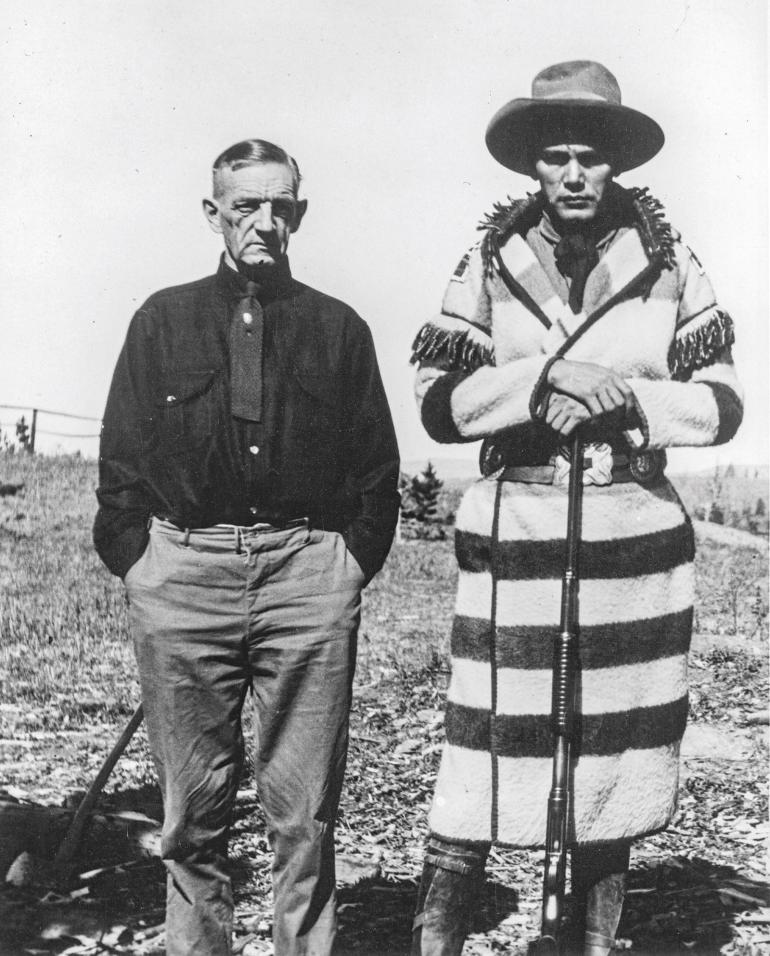
James Schultz & LoneWolf
How author James Willard Schultz revealed tragic truths in a time of massive cultural collision.
We’ve all seen the photos: two men standing on opposite sides of a cultural divide. One is white, hair cut short, wearing a cotton shirt with a collar and cuffs. The other is native, wearing buckskin, beads, and neat braids. The story of these two different men in one particular photo, however, is not one of division, but of connection, love, and humanity amid the chaos and violence that unfolded across the plains and mountain valleys around Bozeman in the 1800s.
The pair in this photo is actually father and son: James Willard Schultz and his son, Lone Wolf, who worked closely together to tell the stories of indigenous people living in Montana and the greater American West. Schultz shared a spark with many of us today, a curiosity that drives us to wander, explore, meet new people, and try to know this complex and beautiful world around us.
Unlike some adventurers of his time, Schultz did not aim to tell and sell his stories based on the allure and fear of foreign peoples and places on the frontier, a popular theme in many tales of the West. Instead, he immersed himself in Indian culture, particularly that of the Pikuni Blackfeet. He married into this tribe and was given the name Apikuni, meaning Spotted Robe, by Chief Running Crane. His stories of outdoor adventure among these people were not only vivid and entertaining, but also fostered empathetic, truthful insight into a culture that was often misrepresented by negative, harmful stereotypes. In his memoir My Life as an Indian and other archived writings, Schultz’s legacy shows the power of seeking understanding and connection amid cultural collision.
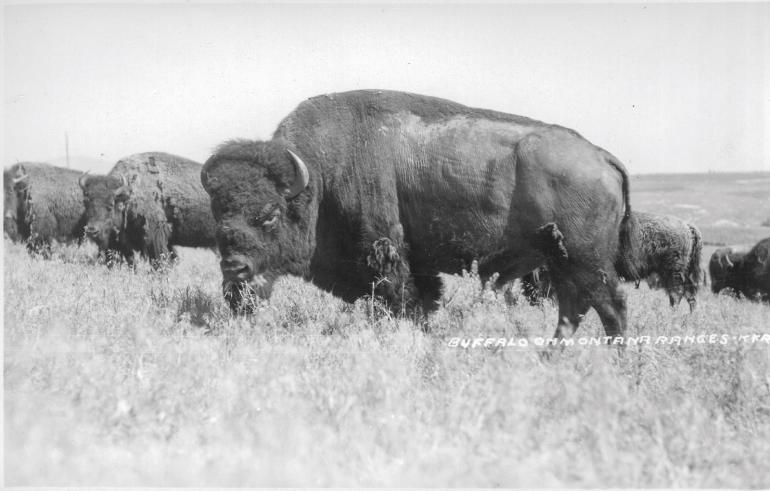
At 18, Schultz was initially drawn to Montana by stories of towering mountains, millions of wild bison on plains of golden grass, and picturesque valleys carved by the veins of the Missouri and Yellowstone rivers. He wanted to see the Wild West untainted by the destruction he knew was inching ever closer from the East. After asking his parents for $500 and promising to return at the end of the summer, he left New York and began to venture along the “backbone of the world”: the Rocky Mountains of Montana Territory.
In his early days, Schultz met many young men coming of age alongside him in this rapidly changing world. One of the first stories he shared is of helping his newfound friend, Wolverine, in his mission to take his girlfriend from a rival tribe. This young Blackfeet warrior and the girl, happily clinging to him, escaped on horseback toward the freedom of their forbidden love, the protective father chasing after them. Schultz captured this and other stories with such detail and care that the relationships and interactions he described feel uncannily modern and still captivate many readers today.
Schultz wrote not only stories of romance and war, but also quieter, somber ones of tradition. Tales of red-hot stones brushed with a wet bison tail to produce healing steam in a sweat lodge. Reminisces of the care bestowed upon him by Blackfeet elders when he was ill. He often wrote that in his culture out East, he felt disconnected from himself, but that out West these people healed him—not only of physical ailments like Rocky Mountain spotted fever, but also by showing him their wisdom and medicine for curing diseases of the soul.
It’s evident that these elders were willing to share their medicine with Schultz, something intimate and sacred within tribes, with the hopes that he could serve as a bridge to future generations. One of his writings, Blackfeet Tales of Glacier National Park, describes the elders’ discussion about letting this white man into their most sacred ceremonies. Schultz recorded one of the elders saying:
“The whites take our children from us and teach them false beliefs. But they teach them to read, and it may be that, after we have all gone on to the Sand Hills, they will read our brother’s writings and see us as we were, making our prayers to the gods, and, having read and seen the pictures of it all, return to the one true faith. I say, let the picture man come!”
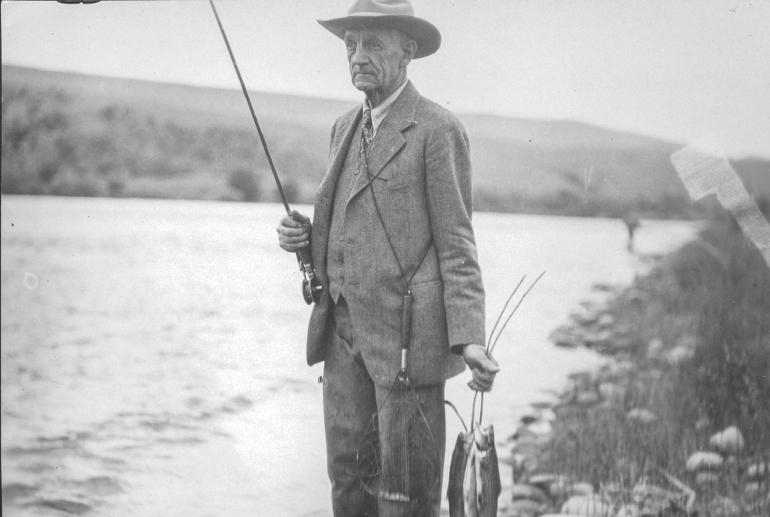
James Schultz Fishing
Perhaps the greatest medicine Schultz found among the Blackfeet was love. After breaking the promise to his parents and remaining in Montana Territory for two years, he met a young Blackfeet woman named Natahki, who later became his wife. His attraction to her wasn’t just a shallow interest in her indigenous identity; he truly wanted to know her and her story. He wrote many pages about her painful past: she was a survivor of the Baker Massacre of 1870, during which U.S. Army troops attacked a camp of Piegan Blackfeet in their sleep. Around 200 people were killed, the majority of them defenseless women and children suffering from smallpox, as most of the men were out hunting. Her story, and those of others Schultz documented, preserved evidence of the many tragedies American Indians faced.
Eventually, the hands of time ushered a cold breeze into the summer season of Schultz’s adventure. Natahki suffered from a heart condition and died in 1903, in her early forties. Schultz grieved not only the loss of Natahki but also that of her people, whose anguish and misery he witnessed. The once-abundant herds of bison that called him to this land were exterminated, and the livelihoods of the Blackfeet and other native peoples were left irreparably damaged. He personally witnessed the horrific suffering from starvation and abuse on reservations and in boarding schools. In this period of immense loss, Schultz poured his memories onto the pages of 37 published books. Having established a platform for his voice, he also published several articles in popular magazines and newspapers, detailing the plight of the Blackfeet and other tribes in Montana. He wrote about the importance of the bison to the people, not only as a food source but as a way of life. Through captivating storytelling, Schultz created a bridge for non-native readers to empathize with the suffering of a culture so different from their own.
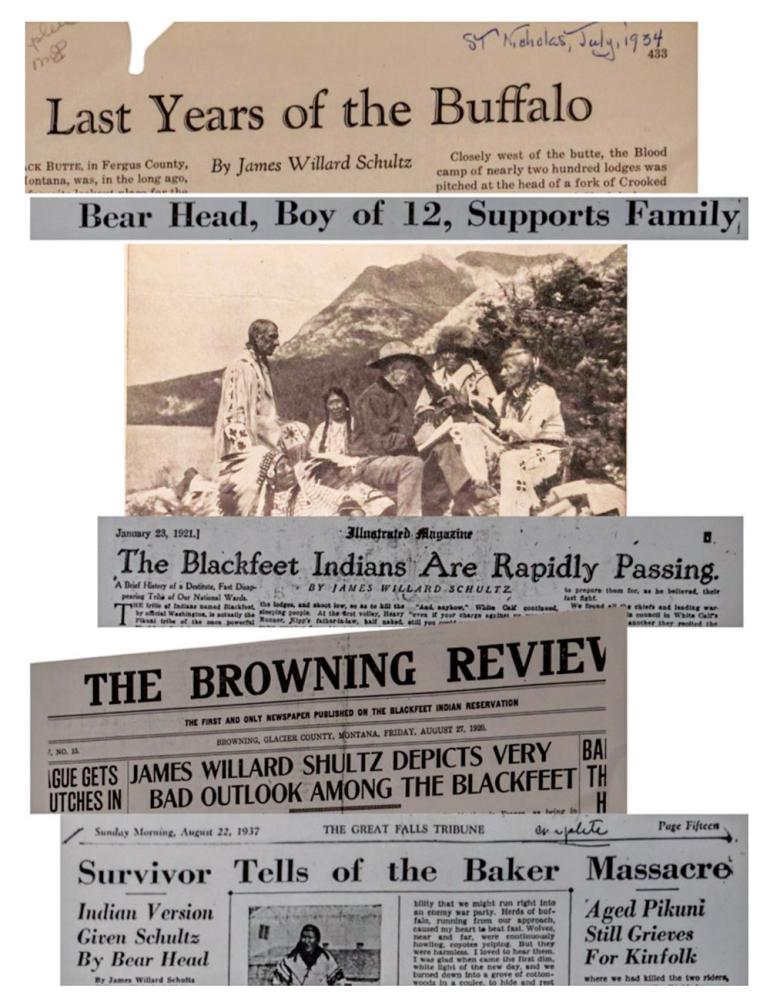
James Schultz news clips
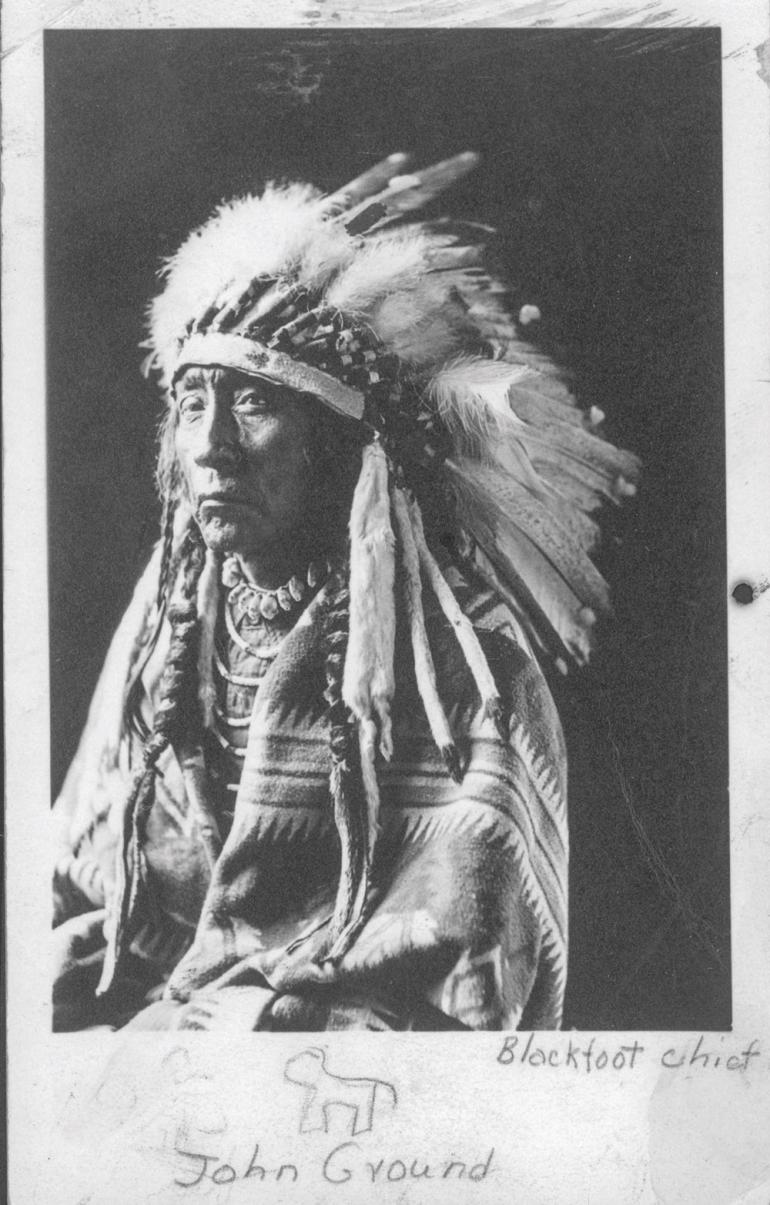
John Ground Blackfoot Chief
Schultz settled in Bozeman for a while and produced much of his work here in the late 1920s. While in Bozeman, he met his second wife, Jessie Donaldson, an English professor at what is now Montana State University. Jessie shared his interest in indigenous cultures, and she undoubtedly recognized the impact of her husband’s life. After his death in 1947, she laid him to rest next to Natahki on the Wind River Reservation and donated his articles and other writings to the Montana State University archives.
As I thumbed through the hundreds of pages she donated, I found a little green book, Something About James Willard Schultz, in which many little scraps of letters to the editor of The American Boy had been pasted. These letters, written by the magazine’s young readers, included requests for more stories from Schultz. One letter stood out among the rest. After sharing his love of Schultz’s stories and native American cultures, a young boy wrote:
“I become angry every time I read of the way the whites treated them. It seems a shame that such a race should be destroyed to satisfy the greed of our race. My one ambition is to travel in the West and live with the Indians although it is impossible nowadays. I would also like to travel elsewhere and plan to.” —Clifford Hampel, Minneapolis, MN
Schultz’s story is ultimately a love letter to Montana, Natahki, and her people who allowed him to know this time in history before it was lost. Schultz lived a life many of us dream of, venturing into a beautiful, flourishing natural world, though he also witnessed the cultural erasure of a people who held that world sacred. His writing not only gives us a portal into a time & place gone and mostly forgotten, it also offers an important message to those of us who are fellow wanderers, of both places and cultures: Knowing leads to understanding, and understanding bridges the distance between us. To know something deeply is to love it, and what we love, we do not willingly harm.
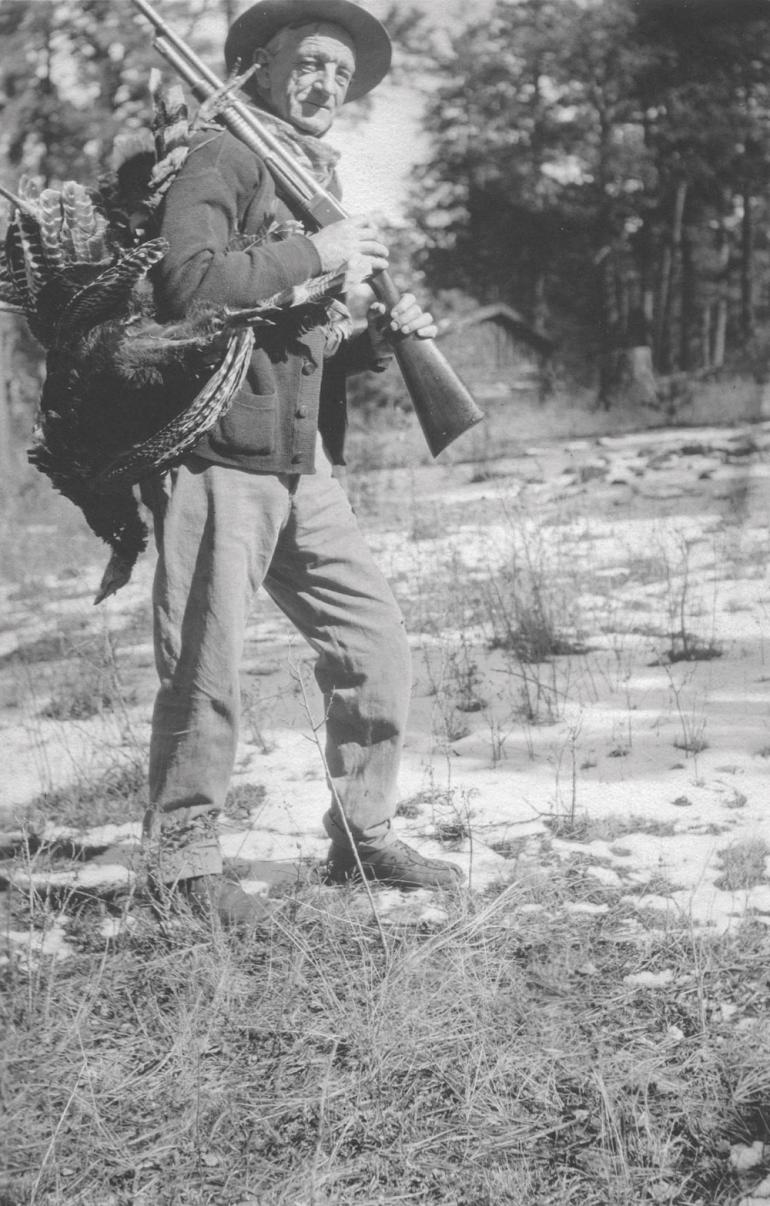
James Schultz Hunting