K-9 Care
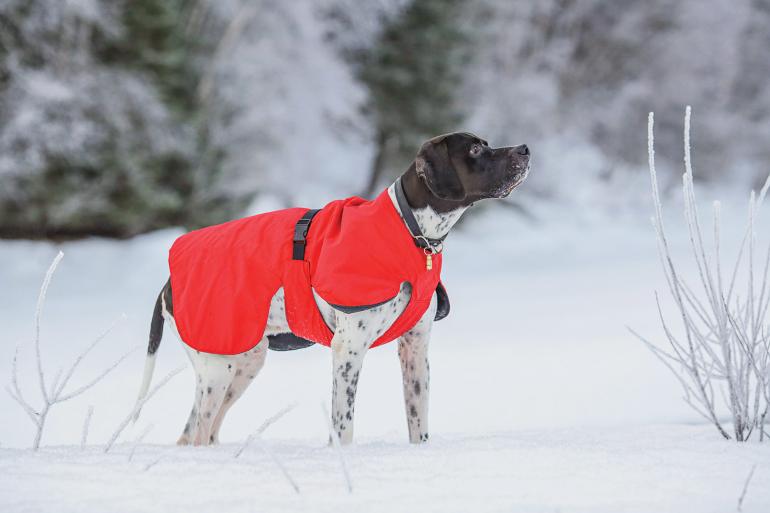
Considerations for cold weather.
As you prepare for winter, you may be wondering how to prepare your canine companion for the snowy weather. Here are two lists to help you and your dog stay safe this winter.
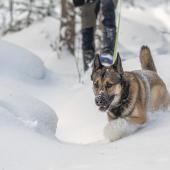
Playing in the Snow
Remember, although some dogs are better adjusted to lower temperatures and thrive outside in the winter, all dogs need to be closely monitored during cold weather. In general, if it is too cold for you to be out for a long period of time, it is too cold for your dog, too.
- When your dog comes inside after a walk, wipe down his or her feet with a moist paper towel or a hypoallergenic baby-wipe to remove salt and ice-melt. For even better protection, apply petroleum jelly to the paw pads.
- Monitor feet for snowball formation and gently remove the snowballs after time outside. Remove snowballs from belly fur and legs. Use a whisk to carefully loosen and knock out snowballs; never pull or rip snowballs from fur.
- For walks, runs, hikes, or playing in the snow, use well-fitting, waterproof booties. Always integrate a new routine, like using booties, slowly and consistently before you need to use them. Some dogs take longer to adjust than others.
- Investigate what’s beneath the snow before playtime whenever possible. Dangers such as glass, sharp sticks, and deep holes can lurk under the snow.
- Do not shave your dog’s coat in the winter unless necessary.
- For dogs with short coats or short legs (close to the ground), metabolic diseases (hypothyroidism, Cushing’s, diabetes), or that are older, use a well-fitting coat that covers the neck, back, and hindquarters to prevent excess heat loss. Some dogs need a coat just to take a bathroom break, and many need a coat for longer walks or playtime. When playing hard in a coat, monitor your dog for signs of overheating (excessive panting, lying in the snow and not getting up).
- Do not let your dog run too far away from you, especially in a new area. Snow hides scent, and dogs are more easily disoriented in the snow and can become lost.
If it is too cold for you to be out for a long period of time, it is too cold for your dog, too.
Indoor Activities
- Provide plenty of mental stimulation, especially when the weather is too bad to go outside for very long. Puzzle toys, interactive games, and training can all help keep dogs from becoming bored inside. Bored dogs get in trouble!
- Keep dogs away from space heaters, woodstoves, and baseboard heaters. They pose a burn risk for your dog but also a safety risk for your family.
- Clean up any antifreeze spills because the sweet taste hides a dangerous poison.
Keep trash cans covered and locked, kitchen counters clean, and cabinets closed to avoid toxin exposure to curious pups. - Provide a warm bed or blanket in a draft-free area, preferably off the floor, for a safe place to sleep.
Jessica Matlock, DVM, MPH, works at 360 Pet Medical. For more cold-weather safety tips, she recommends visiting American Animal Hospital Association (aaha.org), American Veterinary Medical Association (avma.org), and American Society for the Prevention of Cruelty to Animals (aspca.org).