Meat Market
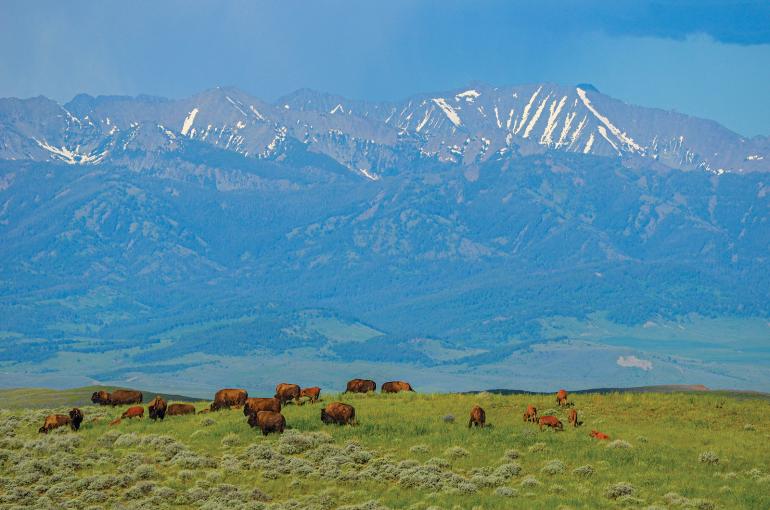
The benefits of beef and bison.
Whether you’re an active outdoor enthusiast or a committed athlete training for the Ridge Run, you’re no doubt on the lookout for food sources that provide the biggest bang for your buck in terms of nutritional and performance benefits. If you’re a meat-eater, beef and bison are secret superstars that get less credit than they deserve, with nutritional benefits providing much more than meets the eye.
Source Matters
The pinnacle for quality is regenerative, pasture-raised animals. There’s no contest when it comes to choosing meat from regenerative farms versus conventional feedlots. Aside from the vast nutritional benefits, you’re also supporting:
- Healthier soil. Rotational grazing rebuilds topsoil.
- Biodiverse and resilient ecosystems. Wildlife habitat is protected and carbon is sequestered in the soil.
- Local family-owned farms. This results in more secure food systems.
Many epidemiological studies often fail to discriminate between meat from livestock fed high-grain rations, as opposed to animals foraging on landscapes of increasing phytochemical richness. Therefore, results are oftentimes grouped together to point out potential health risks. But there is a stark contrast between the two systems.
The Skinny on Fats
Although nothing can replace “the king of healthy fats”—cold-water fish—pasture-raised animals forage on grasses and clovers, increasing Omega-3 (anti-inflammatory) fatty acids up to threefold in comparison to conventional meats, leading to a more favorable Omega-6 to Omega-3 fatty-acid ratio. This is significant because, although important in small quantities, Omega-6s are considered the “pro-inflammatory” essential fatty acids. For reference, the typical Standard American Diet (SAD) can contain up to 30 times more “inflammatory” Omega-6 sources than anti-inflammatory Omega-3!
Pastured lean meats contain all essential amino acids.
Although saturated fats are broadly generalized for raising “bad” cholesterol, not all saturated fats are created equal. Pastured red meat has a unique saturated-fat profile that conventional meat lacks. Pastured meat contains high levels of a specific saturated fat called stearic acid that actually lowers low-density lipoprotein (LDL) levels by converting to oleic acid, a heart-healthy fat. Conversely, palmitic acid, which elevates LDL, is low.
Pastured lean meats also contain high CLA (conjugated linoleic acid), which is known to improve lean muscle, cardiovascular health, and inflammatory markers. Along with its superior fatty-acid profile, pastured meat also:
- Is rich in antioxidants: vitamin A, vitamin E, glutathione, superoxide dismutase (SOD).
- Contains all essential amino acids.
- Contains high levels of B6, B12, vitamin D, iron, zinc, and selenium.
- Is a reliable source of creatine.
For athletes and avid outdoors folk alike, these super-nutrients provide countless, well-studied benefits to overall performance, including:
- Increased endurance and power, by delivering oxygen to muscles and improving mitochondrial function/protection.
- Reduced muscle soreness / lactic-acid build-up.
- Decreased fatigue.
- Less exercise-induced inflammation/oxidation during intensive training.
- Improved muscle protein synthesis and strength.
- Enhanced recovery.
- Reduced risk of illness/injury.
Whether you eat to support the environment, the American farmer, or your health, source really does matter. If you plan to bag Sacagawea Peak this summer and/or run the Rut, add regenerative, pasture-raised beef or bison to your training regime, and your body will be better for it.
Heather West is a Nutrition Therapy Master (NTM) and a candidate to become board-certified in holistic nutrition through the National Association of Nutrition Professionals. She uses markers such as stress, sleep, movement, lifestyle, and environment to offer individualized counseling. Heather proudly supports and promotes local regenerative farmers to her meat-eating clients. Contact her at 406-595-2595 or [email protected].