Op-Ed: Keep It Wild

Don't let them rescind the Roadless Rule.
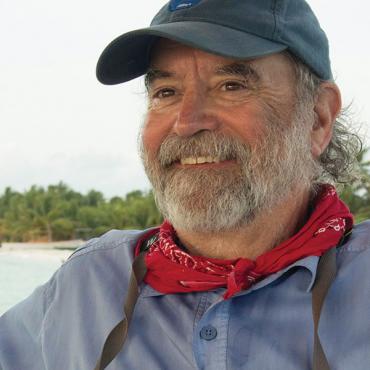
I’ll begin on a personal note, because discussion of this topic should focus on people as much as policy. I am a 78-year-old survivor of brain tumor surgery with Parkinson’s disease. I neither need nor want more road access into any of the wilderness that has brought me so much joy over the course of my life. (The need for more legal access is another matter.) I point this out not in search of sympathy, which I also neither need nor want, but because providing easier access to backcountry wilderness is one of many specious arguments proponents of rescinding the 2021 federal Roadless Rule use to justify their current assault on some of our greatest national treasures. Someone has to say it so I will, as long-time readers know I’ve delighted in doing before. Bullshit!
Supporters of repeal argue that it would benefit wildfire management, provide economic benefits to local communities, and improve access for outdoor recreationists—all justifications that prove specious upon scrutiny.
Now for some facts, which are necessary in even the most heartfelt opinion pieces. In 2001, Congress passed the Roadless Area Conservation Rule, now known simply as the Roadless Rule. This banned new road construction and most commercial logging on designated segments of public land managed by the Forest Service, which now include some 44 million total acres across the country, with over 2 million in Montana and most of the rest elsewhere in the West and Alaska. Predictably, it was controversial from the start and faced intense opposition from extractive industry and some Western states, although it subsequently survived multiple court challenges.
Given the Trump administration’s obligations to corporate interests and disregard for conservation and environmental values, few were surprised when, in August 2026, the USDA Forest Service formally proposed rescinding the Roadless Rule. Supporters of repeal argue that this would benefit wildfire management, provide economic benefits to local communities, and improve access for outdoor recreationists—all justifications that prove specious upon scrutiny.
People come to Montana to enjoy wildlife, clear rivers, and our spectacular scenery, all of which ultimately depend on intact wilderness.
Given the rapidly increasing frequency of major wildfire events, reducing their threat through better forest management seems politically attractive. In fact, optimal policies to prevent and contain forest fires have been controversial for years, with opinions differing widely among professional foresters. In support of rescinding the Roadless Rule, Montana Representative Ryan Zinke stated: “Not having the ability to get in there and fight a fire, the alternative is they just box them in and let them burn down the forest.” It’s not that simple. Many worry about the possibility that more roads might mean more fires. One study showed that 90% of all forest fires start within a half mile of a road.
Furthermore, if the administration were truly serious about the increasing wildfire problem it would be doing something about the underlying cause. However, White House ballrooms and triumphal arches have taken priority over our climate.
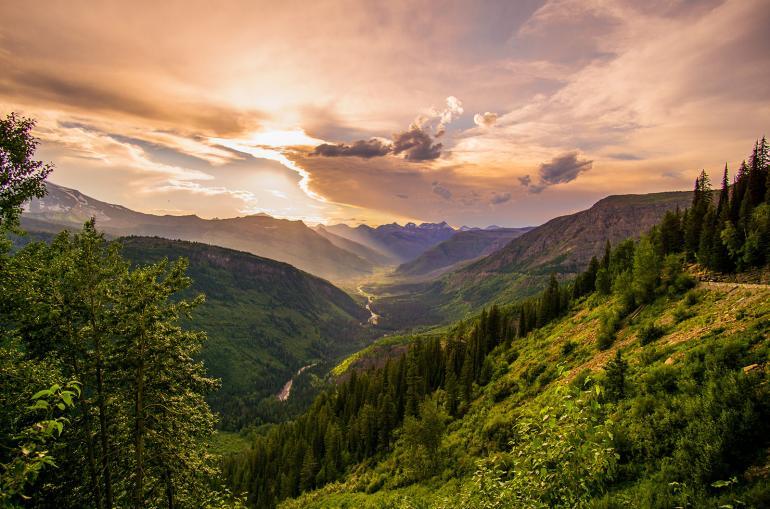
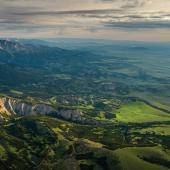
The economic arguments aren’t straightforward either. In Montana, tourism and outdoor recreation are second only to agriculture as drivers of the state economy. Visitors aren’t coming here to see clearcuts, gravel pits, and the extractive industry infrastructure that would inevitably follow more roads into our National Forests. They come to enjoy wildlife, clear rivers, and our spectacular scenery, all of which ultimately depend on intact wilderness. Numerous surveys show that most Montanans share these values.
While the “better access” argument may be designed to appeal to hunters like me, it’s a false flag. Numerous studies demonstrate that backcountry roads disperse and diminish populations of big game animals like elk. All the serious hunters I know would gladly walk the proverbial extra mile to enjoy more solitude and better hunting. Personally, I’d rather die knowing our wilderness is still intact than drive to one last elk hunt. I’ve spent decades traveling the world to write about the outdoors without finding anything better… at least for now.
Roads themselves may not sound threatening, but they are just the camel’s nose under the edge of the tent.
Last but certainly not least, we should consider the inherent value of wilderness for its own sake. Aldo Leopold famously wrote, “There are those who can live without wild things and those who cannot.” I am one of those who cannot, and most of the Montanans I know belong in the same category. That’s why we’re here.
As with all new proposed government policies, informed opinion requires understanding the motivation behind them and recognizing the potential winners and losers who would result from their implementation. Roads themselves may not sound threatening, but they are just the camel’s nose under the edge of the tent. The extractive industry and development interests to which the current administration is so deeply beholden will inevitably follow. They, not hunters, anglers, hikers, taxpayers, and local economies, will be the winners. Those of us who live here because of the state’s natural beauty, outdoor recreational opportunities, and the economic benefits they provide will not.
When the Roadless Rule was written, Lori and I were living on the Alaska coast in the heart of the Tongass National Forest, where commercial logging had driven the regional economy for years. The Roadless Rule brought an end to new logging operations, and dire predictions about the ability of small communities like ours to survive proliferated. However, in Alaska (reflecting a parallel situation in Montana) only the petroleum industry exceeds tourism and commercial fishing in economic importance. Both benefitted from the end of clear-cutting, and residents adapted to employment in sustainable businesses. Small rural communities didn’t collapse; they thrived.
There are those of us who cannot live without wild things, and, by extension, wild places.
Numerous organizations both state and national are currently battling the proposal to rescind the Roadless Rule. Please choose the one (or more) that best represents your interests and get involved. Those who don’t already have one in mind should consider contacting Backcountry Hunters and Anglers (backcountryhuntersorg). This group, whose membership and priorities are not limited to hunters and their interests, has been fighting effectively on behalf of public lands for years now and are well positioned to address the current threat effectively. I would gladly recommend others, but a complete list is too long for this space.
As Leopold reminded us, there are those of us who cannot live without wild things, and, by extension, wild places. Now we need to defend those values against a terrible idea advanced by people who have likely never spent a night alone in the wilderness.
So, I’ll say it once again. The proposal to rescind the Roadless Rule is bullshit.