Trigger Time

The basics of marksmanship.
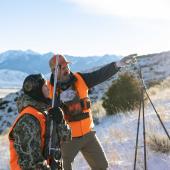
The culmination of a hunt could be months in the making, and when it happens, it boils down to a split-second moment. To achieve a clean and ethical kill under intense conditions, you’ll be required to rely on muscle memory. Unsurprisingly, those who practice the most see the best results. To ensure you hit your mark in the field, hit it at the range—time and time again.
Breath Management
To land your shot where you intend, develop a regimen where you squeeze the trigger at a specific time in your breathing rhythm. When you look through the scope at your target, you’ll notice that the crosshairs rise and fall with your breath. My process is to take full breaths until my heart rate has moderated. Then, I exhale halfway and stop. At this point, the crosshairs have steadied and I should be at my most accurate. If comfortable and on target, I squeeze the trigger here.
Squeeze the Trigger
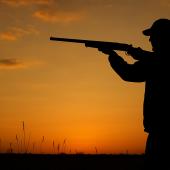
There is a difference between pulling the trigger and squeezing the trigger. In bird hunting, when your quarry flushes in a flurry, you have only a moment’s notice to bring the gun up, put the bead on the bird, give it a lead, and pull the trigger. With a rifle, the process is more delicate. Just the motion of bringing the trigger back can be enough to knock a shooter off target. Every rifle requires a slightly different amount of pressure to release the hammer. Practice finding it through dry-firing, lest you jerk the trigger or develop a flinch with the expectation of recoil, both of which can wreak havoc on your marksmanship.
Practice Like You Play
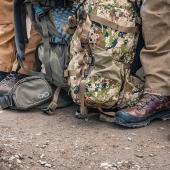
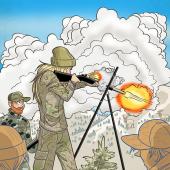
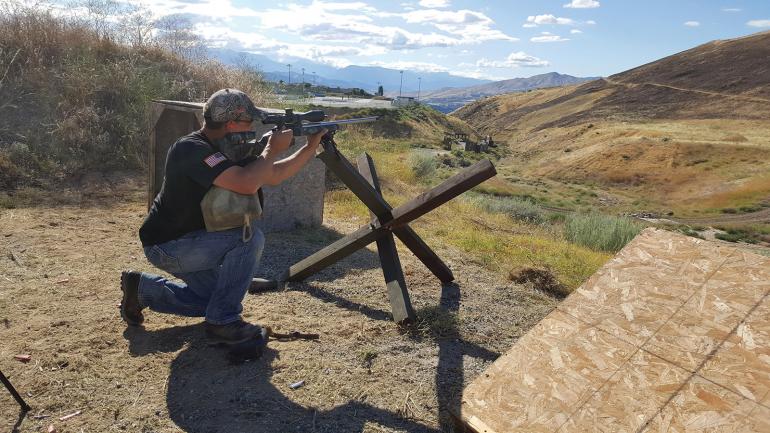
Your rest is never going to be as solid as it is at the range. You might not even get a chance to sit in a comfortable position or lie prone. Once you’ve sighted in your rifle using a sturdy rest and are shooting a tight pattern at 100 yards, see how you fare shooting in different positions. Use a bipod, your backpack, brace your elbows off your knees—whatever you consider a plausible scenario out in the field. Today’s ballistic charts are pretty darn accurate, but that’s no excuse to believe them blindly. Just because your rifle is charted to drop ten inches at 300 yards doesn’t mean it’s going to do that for you under field conditions. The bottom line is, if you plan to shoot out to 300 yards in the field, shoot out to at least 300 yards at the range.