Up in Smoke
Dashed hopes and second chances during muzzleloader season.
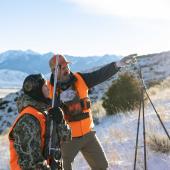
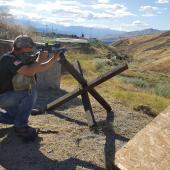
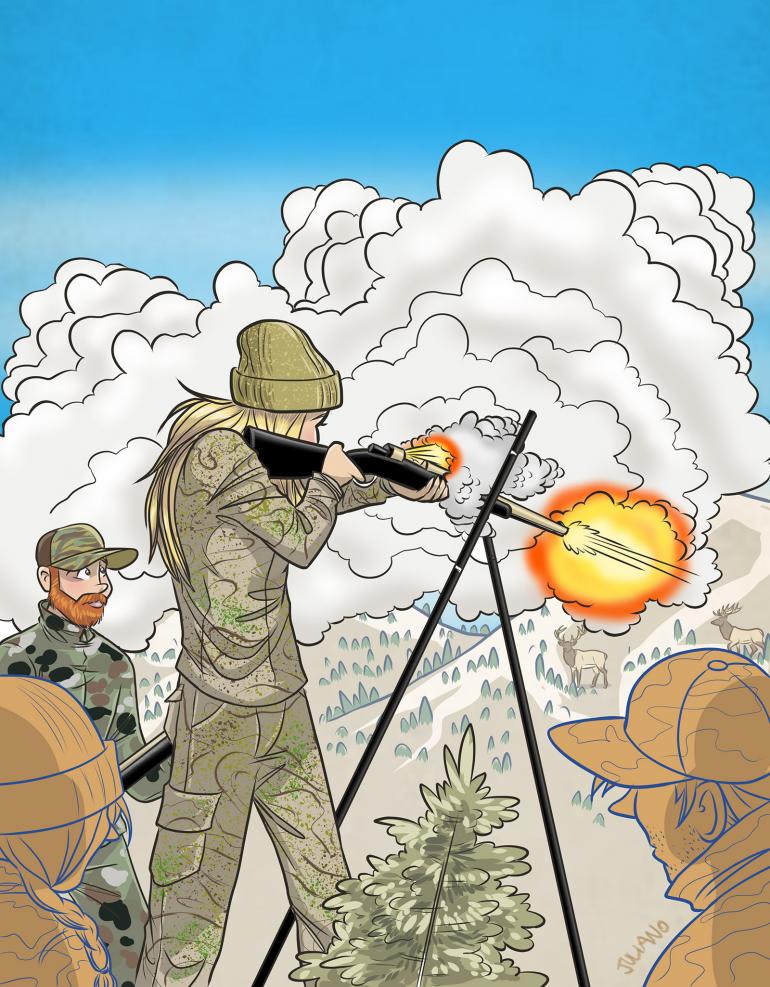
It was the first morning of my first elk hunt, and I was staring down the barrel of an open-site muzzleloader at two mature bulls—both of which were oblivious to my presence. I’d done my best to steady the gun, which rested in the crux of the shooting sticks as I knelt in a half-crouch, trying desperately to compensate for the uneven ground beneath me. Just a day earlier, I would’ve been thrilled to even see an elk—bull, cow, raghorn, anything. But that morning was full of pleasant surprises, and I’d found myself feeling both confident and selective.
I didn’t know how long we had before the bulls spotted us, caught our scent, or drifted uphill to reconvene with the rest of the herd, which we’d glassed earlier. What I did know was this: the far bull was much, much bigger, and I was waiting for him to turn broadside so I could squeeze the trigger.
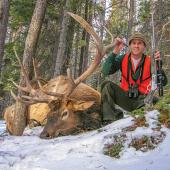
In my mind, it was already a done deal. I imagined the photo I would take while holding up those giant antlers. I could already taste the celebratory drinks we’d be sipping by noon. I could hear the sizzle of backstraps over the fire that evening.
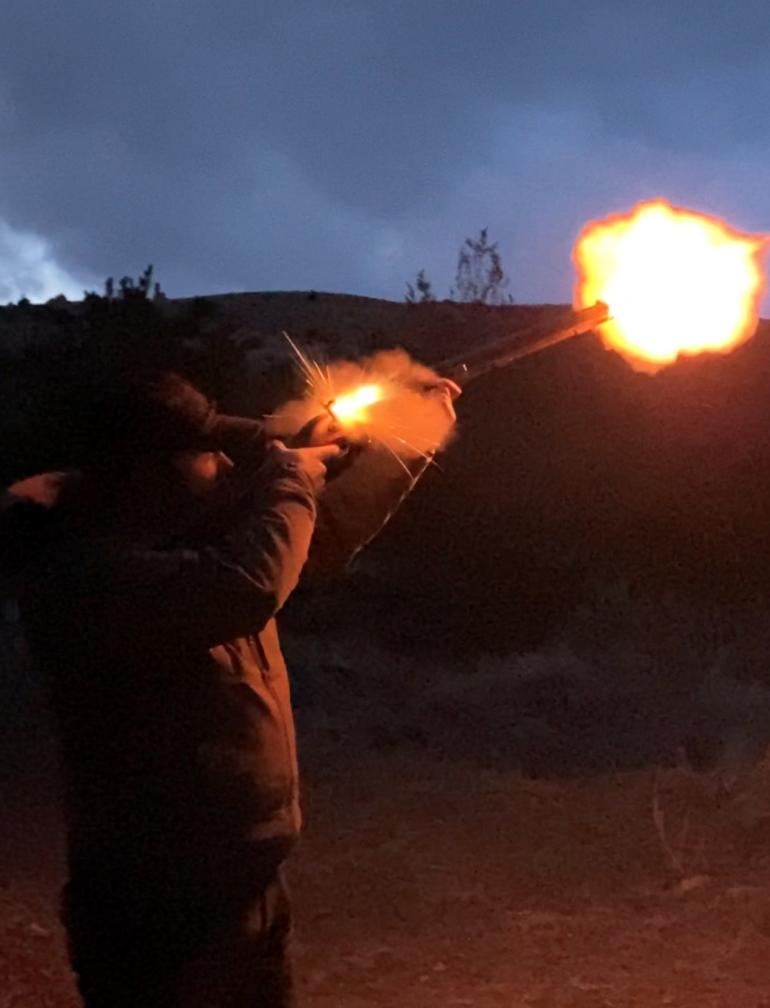
But I didn’t feel the kick of the muzzleloader, despite the bruises on my shoulder from the previous day’s target practice. I didn’t even see the flare of fire. I just saw two heads snap up as my shot echoed across the canyon. They looked around, almost confused, before making their way uphill. The last thing I saw was a massive set of antlers in the morning sun flashing one final time before vanishing over the ridge.
“I hope it’s not too easy,” I’d half-joked, insisting that shooting an elk on the first day wouldn’t make for much of a story. Little did I know how quickly I’d come to regret those words.
In some ways, it felt as though my entire life had led me to that moment. I’d spent my teenage years—and the entirety of my twenties—hunting whitetail deer in northern Wisconsin. Scouting, harvesting, tracking, and processing until the rhythm of the woods became second-nature. I was confident as a hunter, but I knew chasing elk in Montana was an entirely different ballgame—but one I’d eagerly prepared for after fulfilling my dream of becoming a Montana resident in my thirties.
Unfortunately, work and travel forbade me from capitalizing on my first archery and rifle seasons out west, so my boyfriend and I made plans with our good friend Carl and his wife for a group muzzleloader hunt in December. We figured it would be cold—perhaps even miserably so—but a laid-back introduction to elk hunting, nonetheless.
Instead, we stumbled into a situation that seemed almost too good to be true.
Just a few hours before the hunt, we made a last-minute decision to explore a new area based on a newspaper article about a man who had sold his property to the Forest Service—thereby opening up access to thousands of acres that had been previously landlocked by various California-owned LLCs. It was risky going someplace none of us had ever been, but the opportunity seemed promising. “I hope it’s not too easy,” I’d half-joked, insisting that shooting an elk on the first day wouldn’t make for much of a story. Little did I know how quickly I’d come to regret those words.
We braced ourselves for the worst as we approached the newly-public parcel—imagining there would be dozens of trucks parked along the road looking for action—but were relieved to find no vehicles, headlamps, or hunters in sight. Maybe no one reads the newspaper anymore, we laughed as we quietly exited the truck and fell into a single-file march through the foothills.
We were less than an hour in when the sun began to illuminate our surroundings. Just then, I heard a sharp whisper from behind. “Bull!”
Sure enough, a massive elk was moving uphill less than a hundred yards away—followed by another, then another, and another.
We followed them in disbelief, up until the moment of that fateful shot.
I couldn’t help but replay the events of the morning in my mind as we fruitlessly searched for the nonexistent blood trail. Eventually, Carl said the words I had been dreading. “Normally, I hear the impact,” he admitted. “But I didn’t hear it this time.”
I knew he was right. I’d shot high—clean over the bull’s back—and likely spoiled our lucky new spot, all in the first few hours of my first-ever elk hunt.
My soul was crushed, my ego was bruised, and it was difficult to stay positive in the days that followed. We explored other areas, found elk, but time and again failed to close the distance. We returned to our original spot only to find others had gotten wise to it. But thankfully, after another target-shooting session, we were able to diagnose that the shooting sticks I’d used had been too high, throwing off my sight picture. Once they were adjusted, I could drill the target dead-center. It was a devastatingly simple fix, but at least I could now stop wondering what had gone wrong and cancel my optometrist appointment.
On day five, we decided to give the spot one last try. I was still kicking myself for missing, and told my boyfriend to take the next opportunity. But he graciously refused, insisting that I try once more. “Just don’t blow it again,” he teased.
This time, I felt the kick of the gun and saw the flash of fire erupt from the end of my barrel. The elk turned to run as the rest of the herd quickly made their way up the mountain. But we all heard it that time—the impact, that is.
We arrived early, still half-asleep but cheering as we rounded the corner to find no other vehicles parked nearby. We’d seen this herd enough times to know their routine, and decided that hunkering down ahead of them would be our best bet.
I had my shooting sticks ready, steady, and at just the perfect height when daylight finally came. Just then, the first bull came into view about 80 yards away. I knew there were others behind him, but I was no longer feeling picky. When he stopped suddenly and turned toward us, I knew he had caught our scent—leaving me just a few seconds to pull the trigger.
This time, I felt the kick of the gun and saw the flash of fire erupt from the end of my barrel. The elk turned to run as the rest of the herd quickly made their way up the mountain. But we all heard it that time—the impact, that is.
The four of us celebrated quietly, and I felt so redeemed that I could have cried with relief right then and there. But the work had only just begun.
We spent the better half of the day tracking, quartering, and packing out the elk. By the time our shaky legs reached the truck, we were exhausted, hungry, and dripping with sweat, but happy as hell to have pulled it off.
We made a mental note to send a thank-you letter to the property owner who had made his land public for a fraction of what his neighbors would’ve likely paid to keep it private. We didn’t know the full story or the motivation behind his decision, but to us, he was nothing short of a modern-day Robin Hood.
I learned more than I had expected that week: the value of getting comfortable with a new gun, the importance of being in mountain shape, and the lesson of not letting greed get the better of me. It was an experience I didn’t take for granted, and in the end, I was grateful for good friends, public land, quality food, and a damn lucky first elk hunt.
Muzzleloader ABCs
by Daniella Beckwith
A — Always Know the Law
Before you load up or head out, make sure you understand what’s legal in your state. Here in Montana:
- Muzzleloaders must be .45 caliber or larger for deer, antelope, and mountain lion, and .50 caliber for elk, moose, and black bear.
- Must be loaded from the muzzle with loose black powder or an approved substitute with a plain lead projectile.
- Scopes are not allowed—open sights only.
- Ignition systems can be flintlock, wheel lock, matchlock, or percussion, but modern in-line muzzleloaders are prohibited.
B — Be Safe
Safety is the most important part of using a muzzleloader (or any firearm, for that matter).
- Never blow down the barrel to clear sparks or obstructions—it could ignite leftover powder.
- Keep the muzzle pointed in a safe direction at all times—always treat your muzzleloader as though it were loaded.
- Read the owner’s manual thoroughly, and practice firing and reloading your muzzleloader before you take it into the field.
C — Check for Conditions
Cold, snow, and moisture can all affect how your muzzleloader performs.
- Snow can plug the barrel—always check and clear it before firing.
- Moisture can wet the powder, leading to a misfire.
- Cold weather can freeze moving parts or cause the lock to malfunction. Keep your powder, caps, and firearm dry—and inspect your setup often while afield.