Seeing is Believing
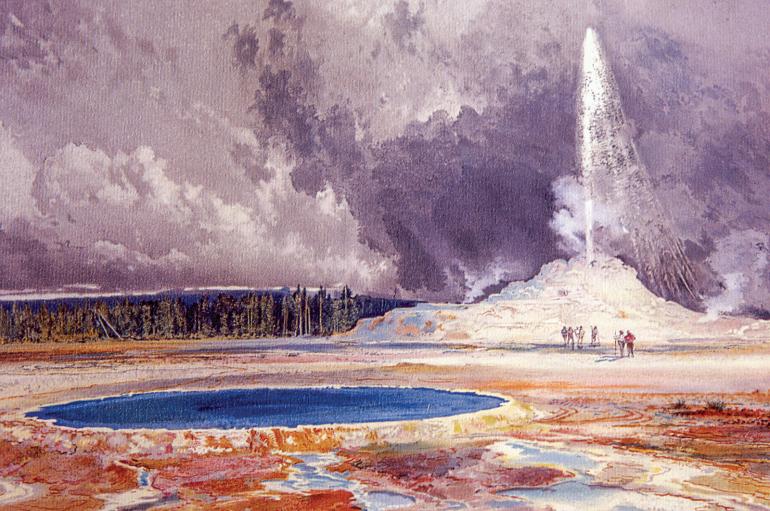
Painting by Thomas Moran
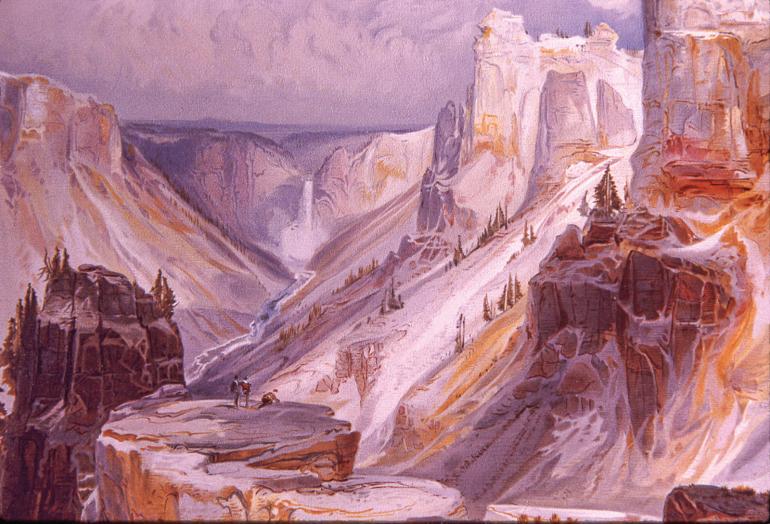
Grand Canyon of Yellowstone, Painting by Thomas Moran
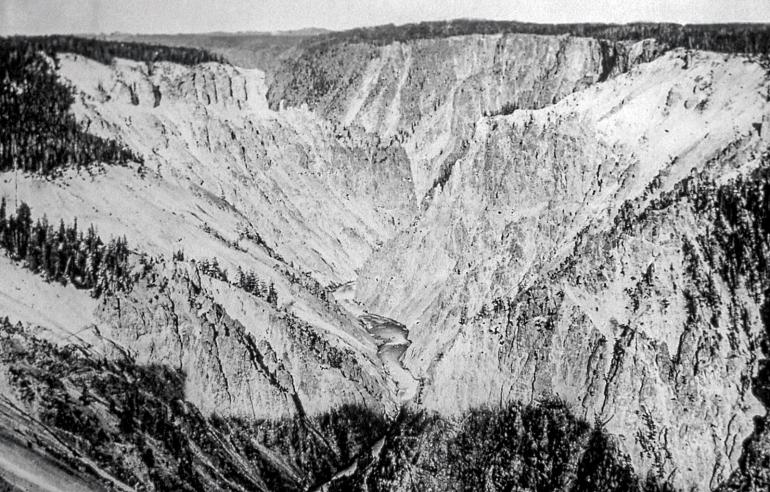
Grand Canyon of Yellowstone, Photo by William Henry Jackson
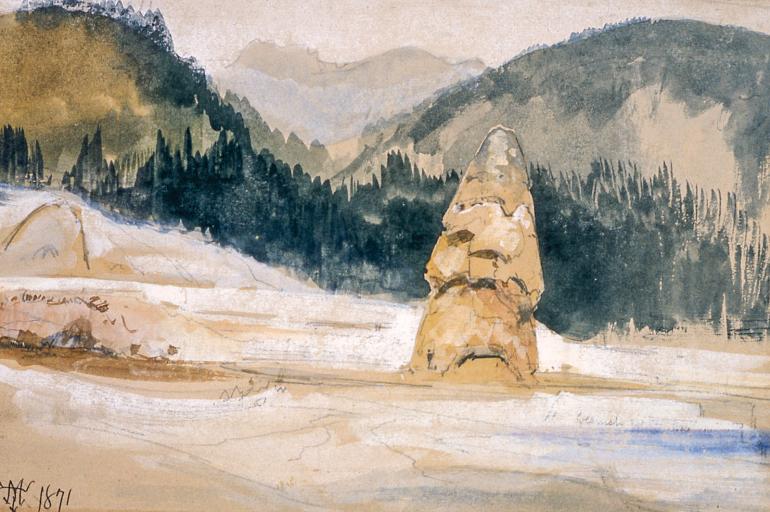
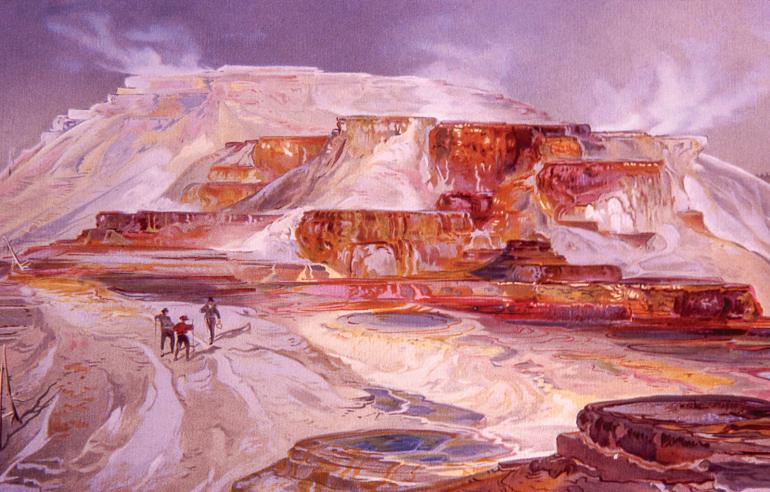
Liberty Cap, Painting by Thomas Moran
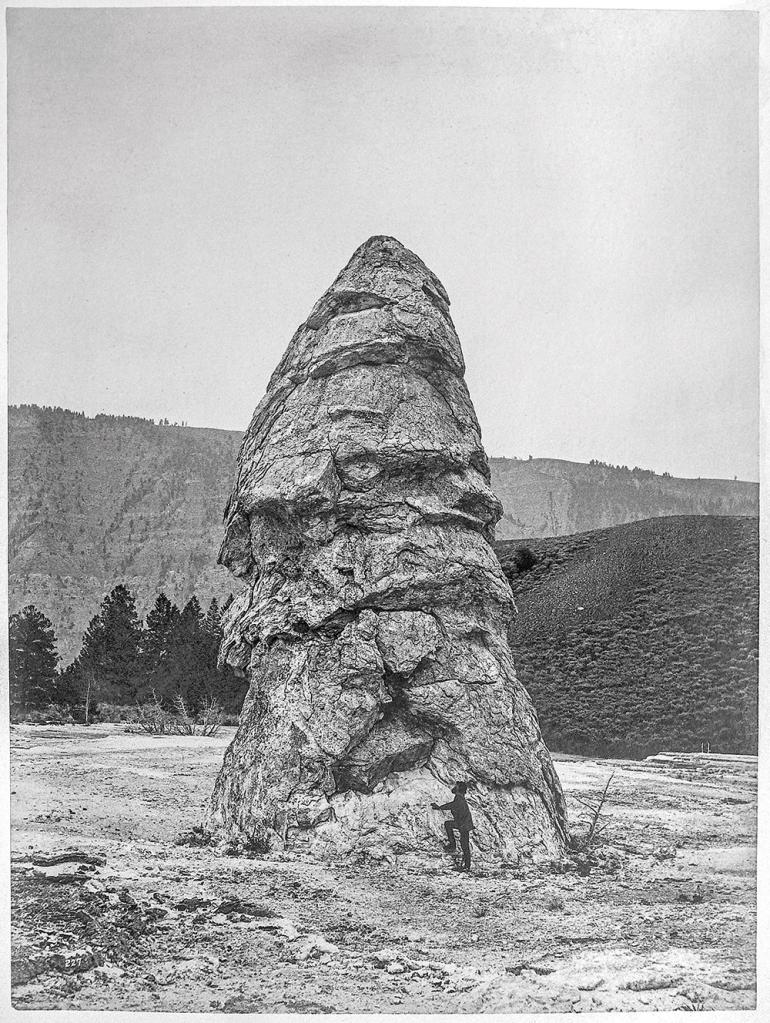
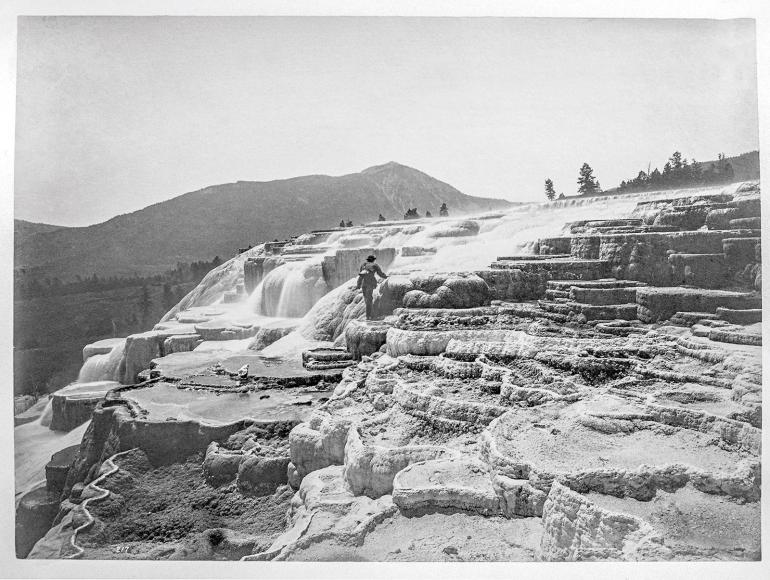
Liberty Cap, Photo by William Henry Jackson
How two early explorers helped establish Yellowstone Park.
In this day and age, it’s tough to imagine Yellowstone National Park needing an introduction. Nearly four million visitors pass through its gates each year. And if you don’t make your way through the gates, you can find its stunning thermal features in documentaries, coffee-table books, and Instagram feeds. We can see the Grand Prismatic Spring via satellite or watch Old Faithful erupt from our living rooms. But in 1871, Yellowstone existed mostly as hearsay among Americans.
As settlers pushed west, “Wow, that’s beautiful,” wasn’t exactly a riveting argument for leaving land untouched. Written accounts from prior expeditions were compelling, but words alone couldn’t fully capture a place unlike anything most Americans had ever imagined.
Landscape painter Thomas Moran and photographer William Henry Jackson joined the expedition with different artistic mediums, but a shared purpose: to capture Yellowstone in a way words couldn’t.
When the federally funded Hayden Geological Survey set out for Yellowstone in 1871, geologist Ferdinand V. Hayden knew scientific reports alone weren’t going to win over Congress. If lawmakers were going to make the call to preserve this landscape rather than divvy it up for development, they’d need to see it for themselves. Since that wasn’t possible, Hayden brought Yellowstone to them. Not through maps or measurements, but through art.
Landscape painter Thomas Moran and photographer William Henry Jackson joined the expedition with different artistic mediums, but a shared purpose: to capture Yellowstone in a way words couldn’t. The two men hadn’t met prior to the expedition, but they quickly developed an artistic alliance and friendship.
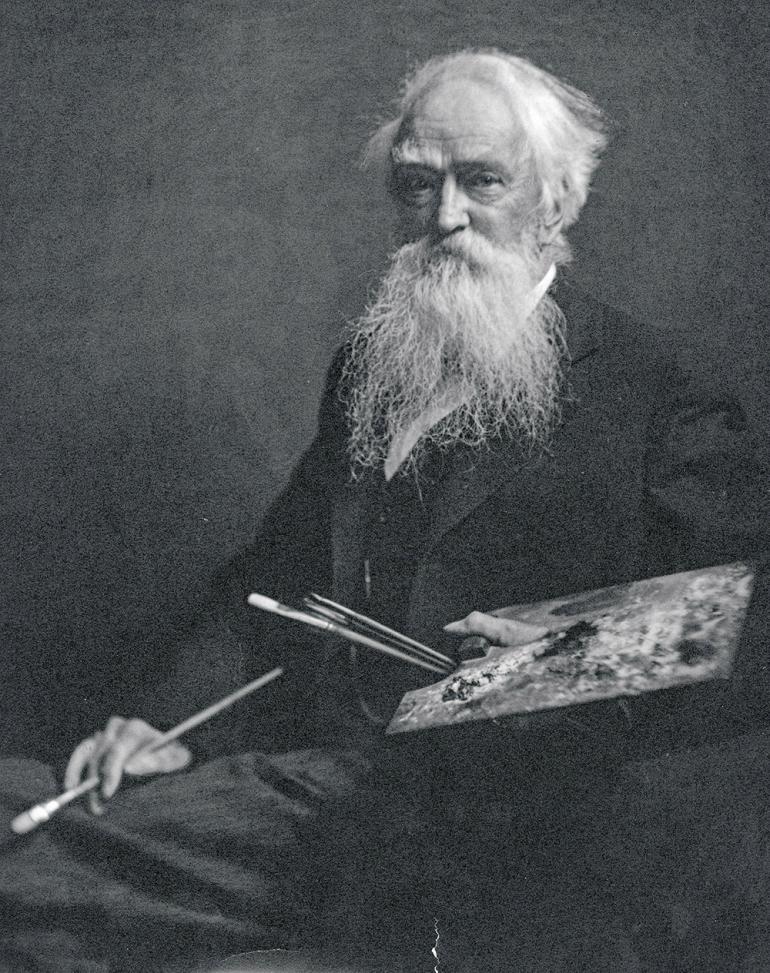
Thomas Moran, Circa 1910
Thomas Moran
Moran was an accomplished painter, known for his dramatic scenes inspired by the American West. But nothing in his portfolio prepared him for what was waiting in northwestern Wyoming.
When Moran stumbled up to the edge of what is now known as the Grand Canyon of the Yellowstone, he was met with a scene of the Yellowstone River plunging into a canyon, and a whole lot of colors. Brilliant yellows. Fiery oranges. Deep reds. According to those who traveled with him, Moran remarked that the canyon’s beautiful colors were “beyond the reach of human art.” He tried anyway. It’s a good thing he did, because his paintings became some of the most iconic landscapes in American art.
Today, Mount Moran in Grand Teton National Park carries his name, standing as a lasting tribute to the artist.
Since hauling large canvases into the backcountry wasn’t really practical or time-efficient, Moran filled notebooks with sketches and watercolors from more than 30 locations throughout Yellowstone. Those field sketches became the basis for the paintings that would later introduce Yellowstone to the world. One painting, in particular, stole the show.
The Grand Canyon of the Yellowstone, an oil-on-canvas painting he completed in 1872, stood nearly fourteen feet tall. Moran used dramatic light, saturated colors, and even small human figures along the rim to emphasize the scale of the landscape. It was later bought by Congress, making it the first landscape painting to be hung in the Capitol.
Moran didn’t stop there. He continued painting Yellowstone for decades, creating works inspired by the Lower Falls of the Yellowstone, Tower Falls, Mammoth Hot Springs, Castle Geyser, and Yellowstone Lake. His paintings appeared in books, exhibitions, and publications across the country. Today, Mount Moran in Grand Teton National Park carries his name, standing as a lasting tribute to the artist.
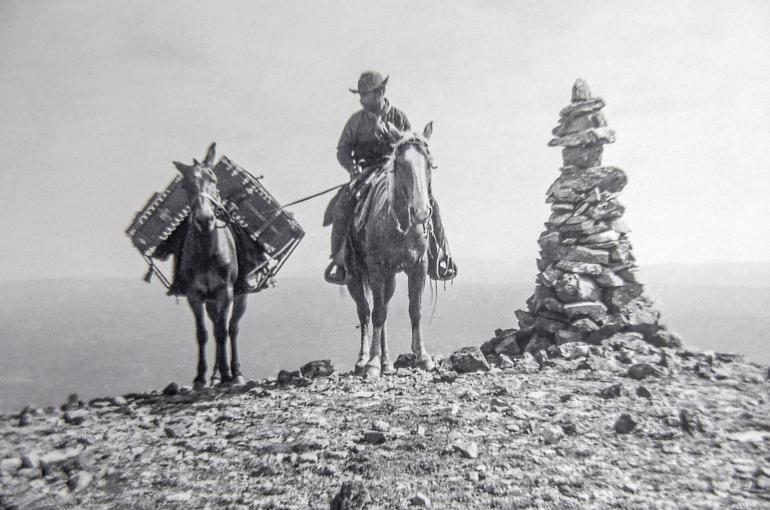
William Henry Jackson
Jackson, also a well-established artist in his field, had impressed Hayden with his work during an earlier western survey and was invited back—this time, to document Yellowstone. At the time, photography was still a relatively new technology. Jackson didn’t simply have a camera slung over his shoulder. He packed in nearly 300 pounds of gear by mule, with fragile glass plates, chemicals, and a portable darkroom. Every negative had to be developed shortly after it was exposed, and more often than not, under challenging field conditions.
The effort paid off. Documenting many of the same landmarks Moran sketched, Jackson snapped images of Old Faithful, the Lower Falls of the Yellowstone, Mammoth Hot Springs, Castle Geyser, and Liberty Cap.
Science helped explain Yellowstone. Art helped America fall in love with it.
Jackson’s photographs offered something powerful to skeptics and decision-makers: proof. For decades, stories of Yellowstone’s otherworldly features had been dismissed as exaggerated folklore. Jackson’s images showed the American public, and members of Congress, that these extraordinary landscapes truly existed.
Like Moran, Jackson’s connection to Yellowstone didn’t end with the Hayden Expedition. He returned to the Park throughout his life and went on to photograph much of the American West alongside Hayden, from Yosemite to Mesa Verde. His legacy eventually became part of the Park itself, with Mount Jackson in the Gallatin Range named after the man who helped show the world Yellowstone through a camera lens.
When the expedition returned east, Hayden hit the ground running. He quickly launched a lobbying and public-relations campaign to introduce Yellowstone to the nation, pairing his scientific findings with Moran’s paintings and Jackson’s photographs. Moran’s illustrations appeared in Scribner’s Monthly (a New York–based American literary periodical), while Jackson’s images were reproduced as stereographs. Audiences were eager for a glimpse of the West. He even presented members of Congress with an album filled with Jackson’s photographs, letting Yellowstone make its own case. With support from Northern Pacific Railroad financier Jay Cooke, who saw the region’s tourism potential, the expedition's discoveries reached far beyond the scientific community.
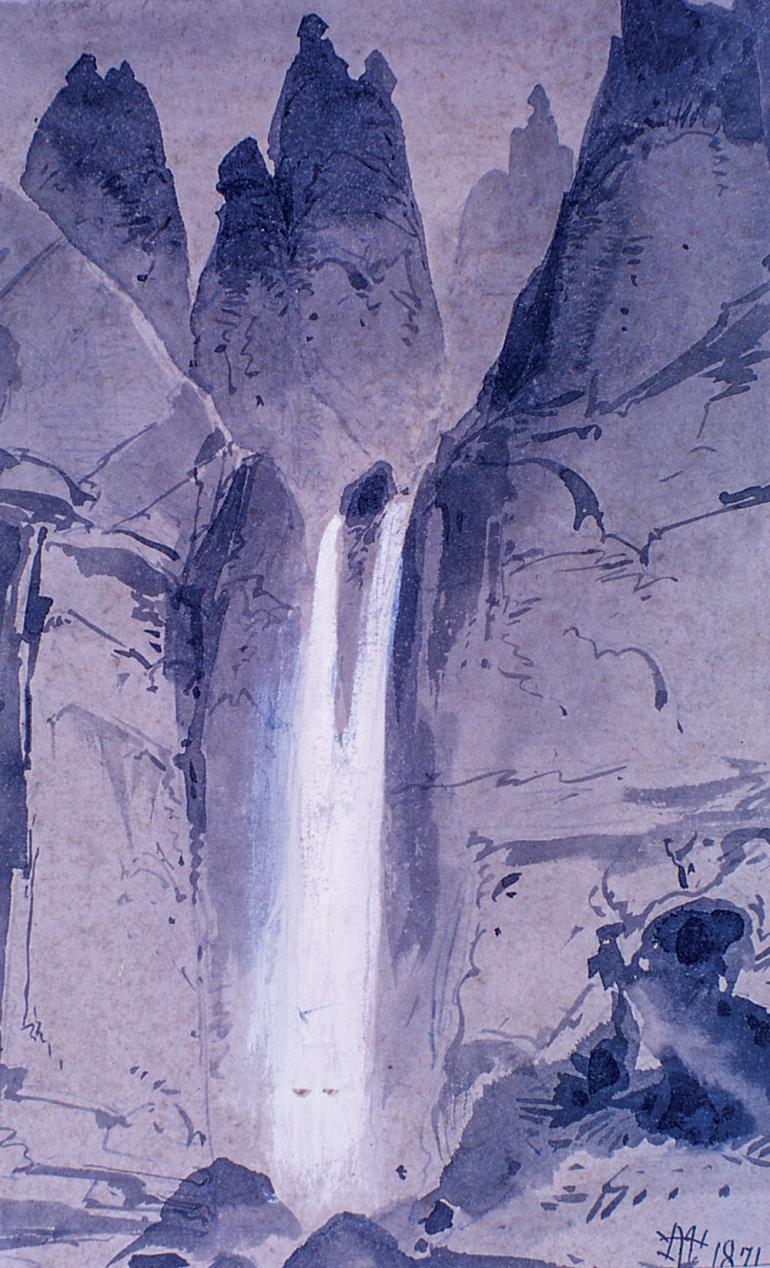
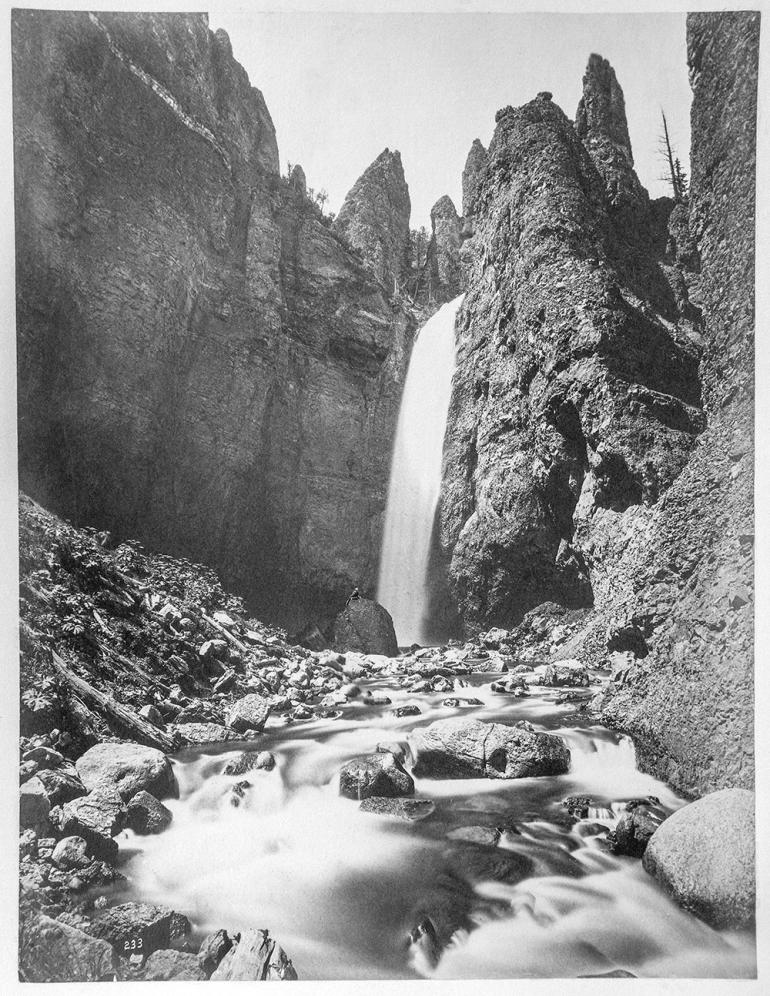
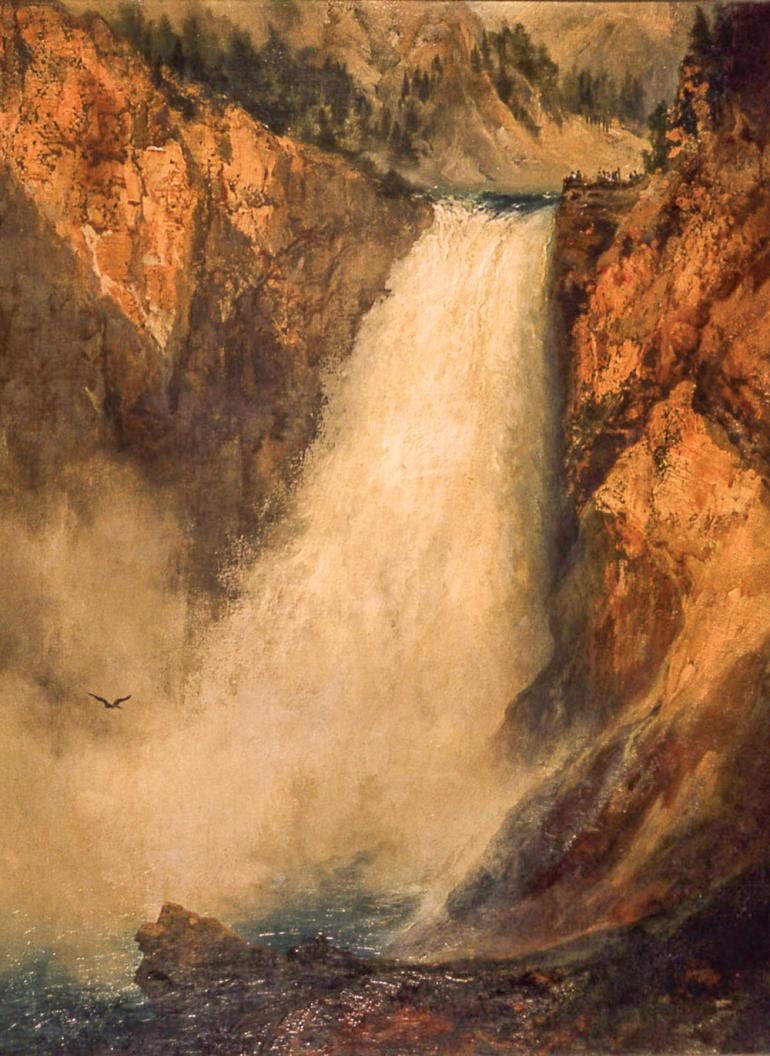
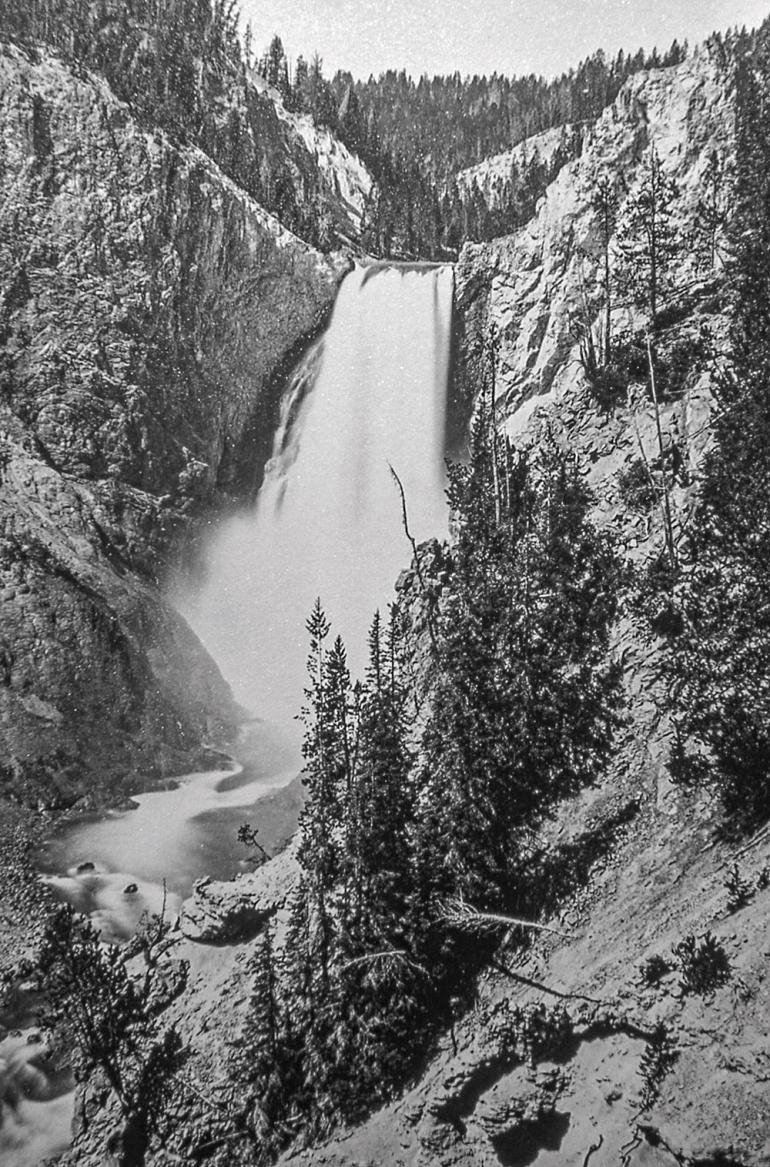
By the time the question of formally conserving Yellowstone reached Congress in late 1871, many lawmakers were already familiar with the landscape through Moran’s artwork and Jackson’s photographs. Less than a year after the Hayden Expedition returned east, in March of 1872, President Ulysses S. Grant signed the Yellowstone National Park Protection Act, establishing Yellowstone as the world’s first national park and protecting over 3,400 square miles of land in the Wyoming and Montana territories. It was a decision that forever changed conservation history. Science helped explain Yellowstone. Art helped America fall in love with it.
The work of Moran and Jackson proved that conservation isn’t driven by science alone. Jackson documented Yellowstone with accuracy, while Moran gave it emotion. Their photographs and paintings became more than widely celebrated works of art—they became powerful tools of persuasion, convincing lawmakers that some places were simply too extraordinary to develop. Instead, they should be protected.
More than 150 years later, Yellowstone’s core landscape hasn't changed much. Neither has the feeling you get when you see it live. The protection act didn’t just give the American people something to be inspired by. It gave them something worth saving.