
A long-awaited rite of passage on Mount Cowen.
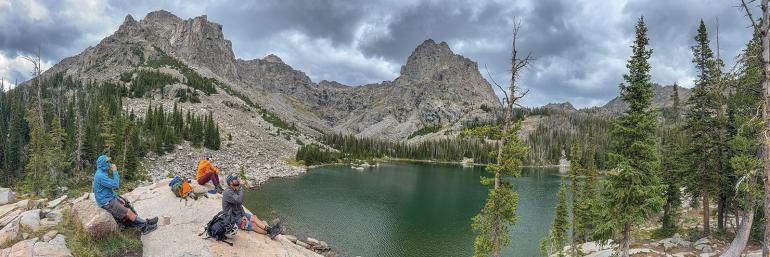
Made up of remarkable geology, stunning lakes, and awe-inspiring views along with fascinating flora and fauna, the Cowen Massif is an otherworldly high-altitude haven. Reaching the summit of Mount Cowen is without a doubt one of southwest Montana’s most alluring alpine objectives and a so-called rite of passage into becoming a valid Montana mountain man or woman. At least that’s how it felt to our crew of four last summer. We’d spent multiple decades each exploring the Northern Absarokas, yet only one of us had previously attained the magnificent mountaintop.
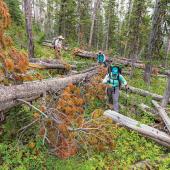
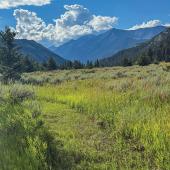
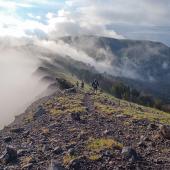
No adventure to Cowen’s pinnacle is to be taken lightly, nor is the seemingly never-ending slog to Elbow Lake, which is where most people set up basecamp and spend a night or two at one of Montana’s most aesthetic alpine lakes. Our group decided to skip technical and overnight gear and execute a fast-and-light round-trip up the southwest face and back down to the trailhead. While that certainly makes for a long, dawn-to-dark adventure, it’s hard to imagine a better place in Montana to spend a late-summer day.
The cirque’s unforgiving terrain can thwart experienced mountaineers, and stories of peril from the zone include severe injuries and death.
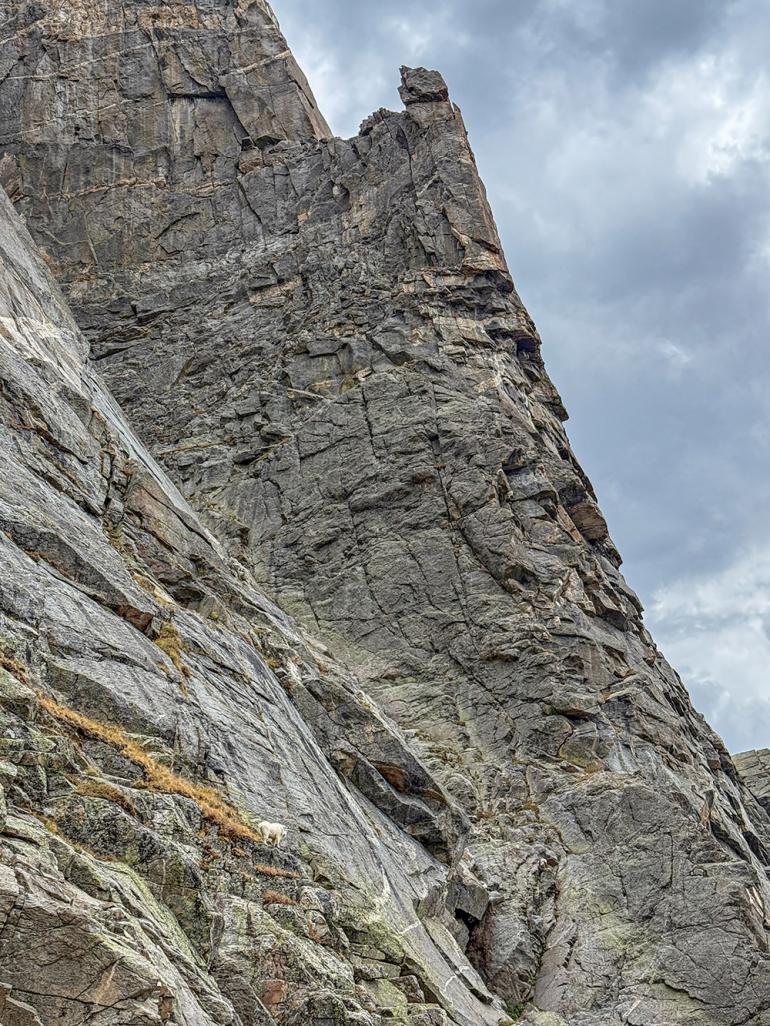
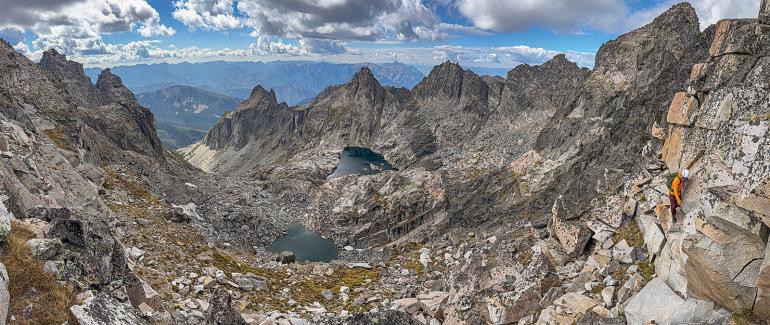
Once above the lake, there are a few routes up Cowen that vary in difficulty, making it appealing to both climbers and adventurous hikers. Most of the routes require ropes and climbing skills; all of them require comfort with exposure, especially during the last pitches to the top. There is plenty of risk no matter how one approaches the summit. The cirque’s unforgiving terrain can thwart experienced mountaineers, and stories of peril from the zone include severe injuries and death.
It’s no secret, either. For those of you Couch Coaches who think the beans are being spilled, think again. When we arrived at Elbow Lake around 9am on Sunday, there were multiple groups that had spent the night already milling about, including a group of young adults playing loud drinking games for breakfast. Empty bivy sacks and vacant campsites sprinkled the lakeshore, signs that there were already multiple groups ahead of us en route to the summit, or another route up one of the neighboring towers.
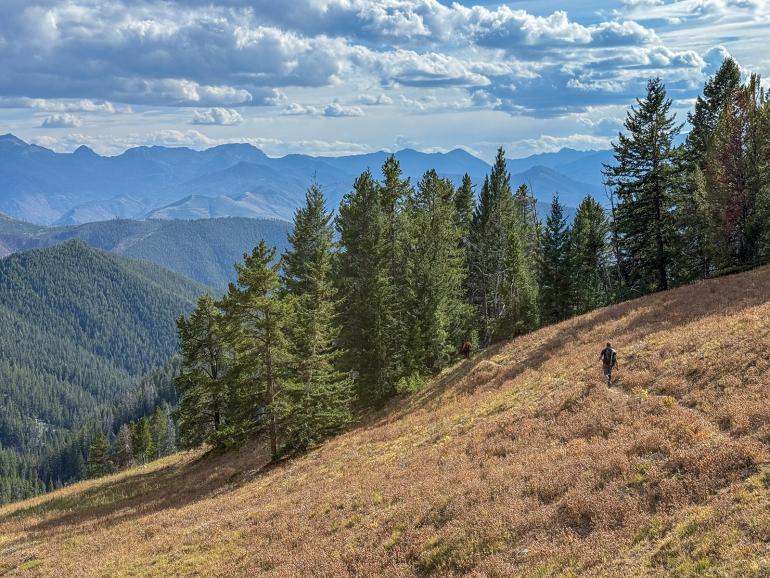
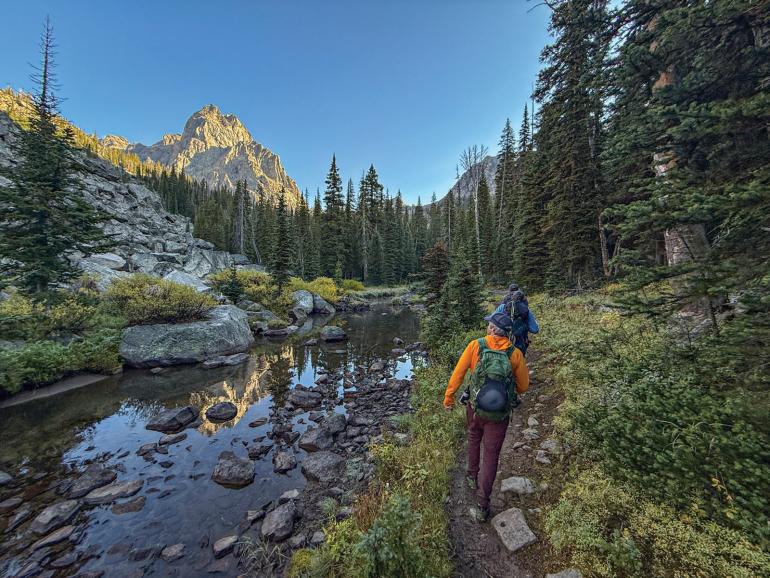
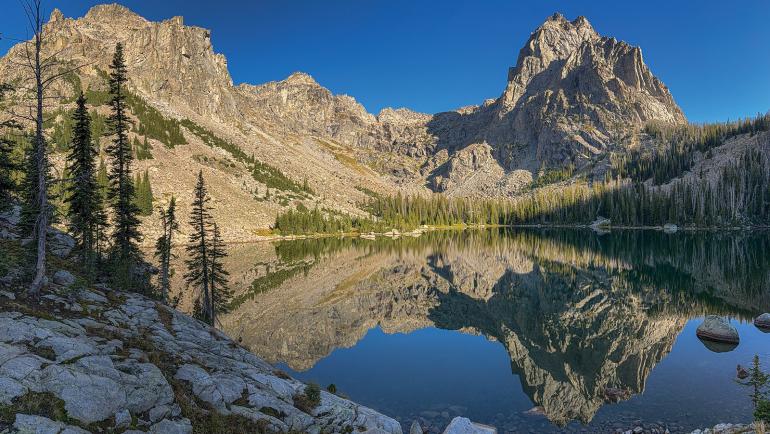
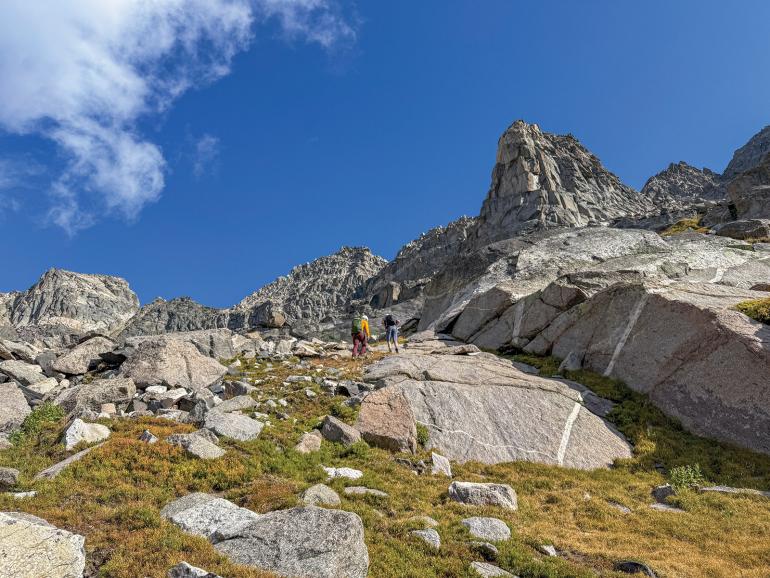
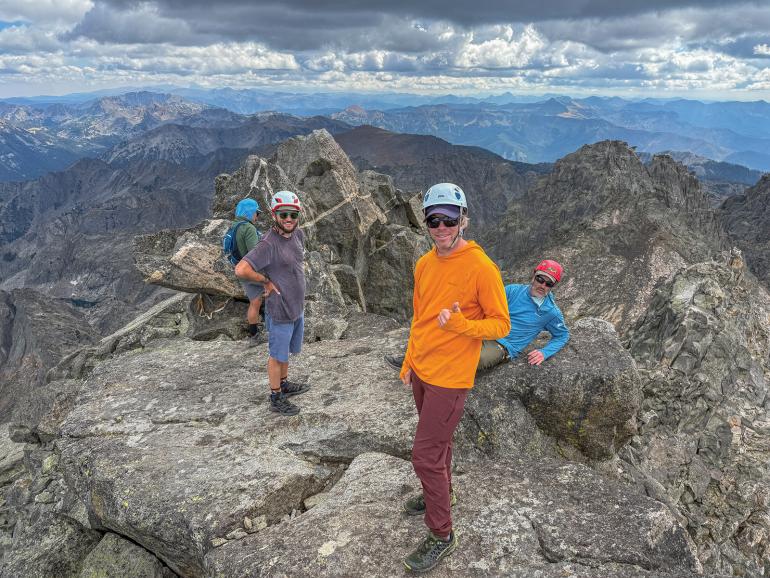
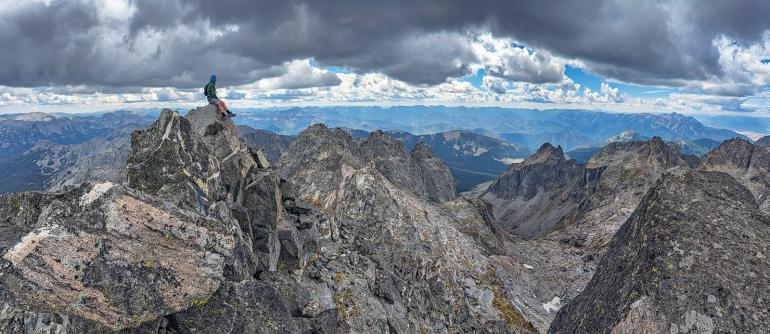
The climb up the cirque is outstanding to say the least, and the typical hiking route up the southwest aspect doesn’t reveal itself until one reaches a tiny lake at the head of the cirque and can make out the most beaten path up a narrow, short channel. Scrambling up the chute is straightforward, then the route-finding turns into a choose-your-own-adventure ascent up the rocky face. As our group joyfully wandered up slightly different paths, a solo hiker ghosted us and disappeared up a chimney. Eventually all five of us ended up at the final keyhole move where a party of two appeared, harnessing ropes. They had ascended the north face and seemed immediately disgruntled with our presence at the scene, as they had to wait in line and there’s not much elbow room on the upper precipice. Thankfully the annoyed climbers didn’t feel like sharing so after waiting for us to squeeze to the top, they quickly bagged it and bailed.
Despite Cowen being high on the radar, bagging the summit had eluded three of the members of our group, including myself, for over 60 years combined.
Gazing across southwest Montana from the summit of Cowen is a sight to behold and felt like looking at a visual journal from the past couple decades. As we named peaks in all the mountain ranges and reminisced about adventures near and far, the fearless solo hiker crawled around on the jagged, exposed boulders with spider-like fluidity and perched on a sharp crest of granite and gneiss. The exquisite details of some of the oldest rock on Earth only added to the elevated aesthetic and to Cowen’s acclaim.
Despite Cowen being high on the radar, bagging the summit had eluded three of the members of our group, including myself, for over 60 years combined. Initially it felt as though we had been doing ourselves a “wrong of passage,” so to speak—guilty of succumbing to the routines of adult life and letting a true gem slip to the backburner while we climbed, skied, and biked hundreds of other summits in the area. But, I do reckon that’s part of what makes living in this area so awesome. One can spend numerous years going for it and save some of the best for last—quintessential classics that keep the soul’s flame burning.
Mount Cowen By the Numbers
Location
East Fork Mill Creek,
Paradise Valley
Trailhead Elevation
5,740 ft.
Summit Elevation
11,212 ft.
Round-Trip Distance
25 miles
Elevation Gain
5,966 ft.
Gneiss Going
by Kyle Marvinney
The classic mountaineering question: what are these rocks underfoot and what story do they tell?
Similar to the neighboring Beartooth, the rocks of the Montana Absaroka are old metamorphic rocks… at least 2.5 billion years old for the stone around Mount Cowen itself, and pushing three billion in other parts of the range. For perspective, life on Earth falls into about the last 500 million years, so 2.5 billion is beyond ancient. Geologists refer to this eon of geologic time as the Archean.
Once in the Elbow Creek drainage, a hiker leaves the younger sedimentary rocks (limestones) behind and enters the Archean land of gneiss, a very hard, highly metamorphosed rock type that can have various mineral compositions depending on which rocks it derived from. Around Mount Cowen, much of the rock appears like granite, meaning it is rich in silica (think quartz, feldspars, and other light-colored minerals) and may well have originated as granite. These lighter-colored, granitic rocks are frequently cut by veins or dykes of darker rocks, made up of silica or amphibole minerals.
As theory goes, these rocks formed in the core of an Archean mountain range, some likely derived from sediments, others from igneous rocks that were intruded into the mountains as tectonic plates collided and the crust thickened. A possible modern analogy would be the coast of Washington, British Columbia, and Southeast Alaska, where land is accreting onto the North American plate, being heavily folded, faulted, and heated in the process.