Magic & Mystery

A few of Montana's unexplained natural phenomena.
There’s no denying the magic that surrounds Montana. For generations, artists, poets, photographers, and filmmakers have tried to capture its essence in places that feel timeless and often, a bit mysterious.
Sometimes that magic is easy to explain. It appears in the alpenglow at sunset, or in the mist that rises after a rain, hovering above foothills like smoke reluctant to leave the warmth of a campfire. Science can account for much of it: shifting light, changing temperatures, and the tricks our eyes play in vast landscapes. But over time, people have experienced occurrences that raise more questions than answers.
Could there be creatures so elusive they’ve escaped discovery? Were formations we consider random intentionally arranged long ago? Do strange sights originate from places beyond our understanding? We may never know, but what better time than fall to gather around a fire, share a few tales, and let our imaginations wander into some of Montana’s mysteries.
Rocks that Ring
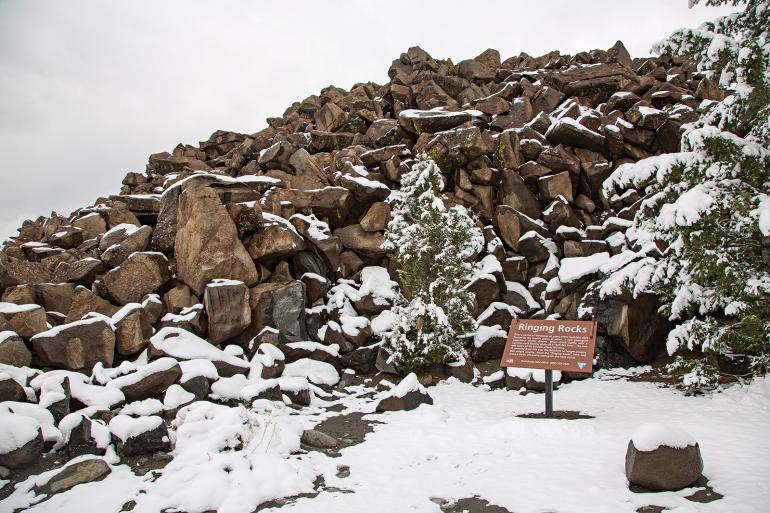
For those who need to see—or hear it—to believe it, one of Montana’s strangest physical mysteries lies about 18 miles east of Butte, near Pipestone Pass.
At first glance, it’s simply a field of volcanic boulders. But if you pick up a hammer and tap the stones, they ring like bells. Formed millions of years ago, these boulders are known as the Ringing Rocks, one of only a few places in the world that produce metallic tones when struck. The mystery becomes even stranger if you remove one of the rocks from the formation—it loses its ability to ring. Because of this, visitors should leave the rocks in place.
Scientists believe the phenomenon may be caused by a unique combination of the rock’s mineral composition, internal stress, and the air gaps between neighboring boulders. Yet no single explanation fully accounts for why some rocks chime while nearly identical ones remain silent.
The site was officially documented by Butte prospector R.T. Ogle in the early 1930s, though it’s likely that indigenous peoples and early settlers knew of the rocks long before then. It’s easy to imagine curious children wandering through the unique stone field, tapping boulders and laughing as they produced music.
Whatever the history behind these musical rocks may be, it’s fun to think that maybe someone—or something—left the arrangement for future discovery and amusement. And who knows, maybe ringing rocks around the world are connected in ways we have yet to uncover.
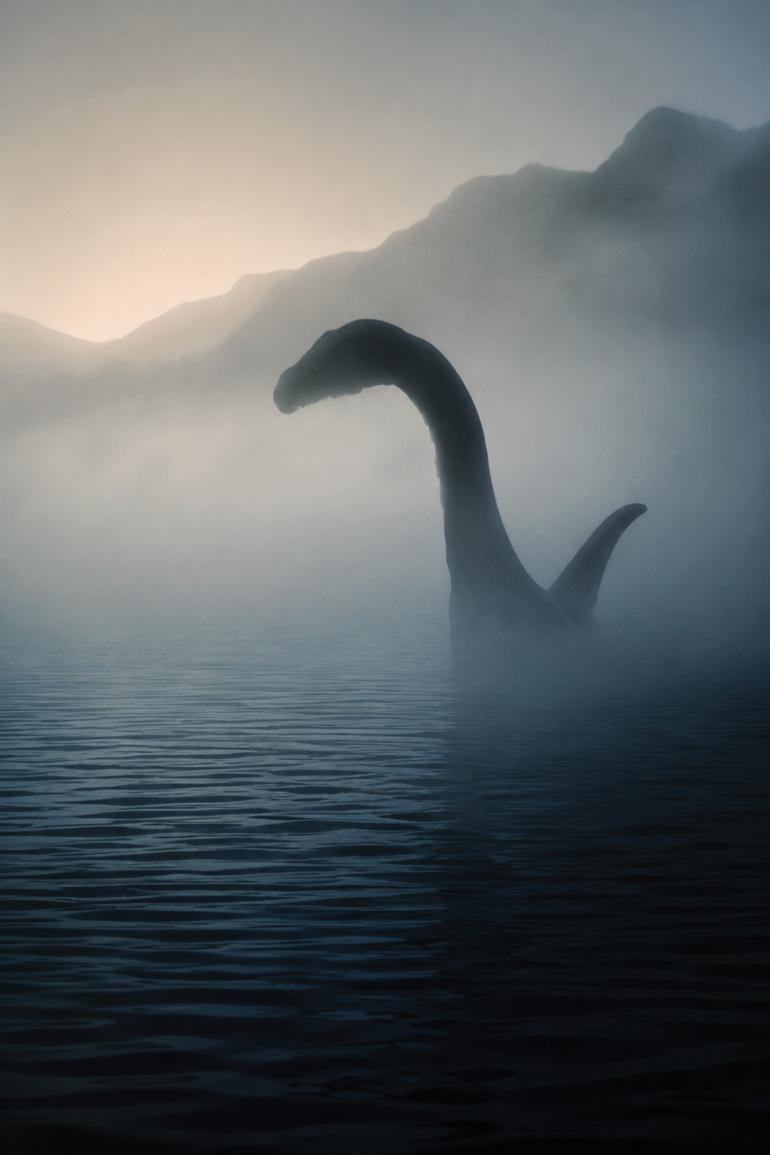
Flathead Lake Monster
If you’ve always dreamed of spotting a sea monster, Montana seems like an unlikely place to look. But millions of years ago, much of the state lay beneath an ancient inland sea, leaving behind fossils of prehistoric marine creatures—evidence that might make you wonder what could still be hiding in the depths of our lakes.
For more than a century, claims have been made about a massive serpent-like creature swimming through Flathead Lake. Known affectionately as “Flessie,” the legendary lake monster has become one of Montana’s most popular and lasting legends. Witnesses describe Flessie as an eel- or snake-like animal measuring anywhere from 20 to 40 feet long. The first widely reported sightings date back to 1889, and since then over 100 reports have come in from locals, visitors, fishermen, and children. Even earlier stories from the Kootenai people tell of a great creature inhabiting the lake’s deep waters and breaking through the ice during winter.
Though biologists say there are no sturgeon in Flathead Lake today, a seven-foot, six-inch white sturgeon was caught there in 1955, which could account for sightings prior to that time. Still, more recent sightings are harder to explain. Lake County Judge Jim Manley and his wife claimed they saw the creature while waiting for a ride after their boat battery died in the summer of 2005. Critics suggested the couple had witnessed an optical illusion, but the couple insisted the sighting was accompanied by loud splashing sounds, solidifying their belief in a Flessie encounter.
While solid evidence is lacking, the legend has a way of lingering in the imagination—especially if you find yourself knee-deep in Flathead Lake, wondering what lies beneath the surface.
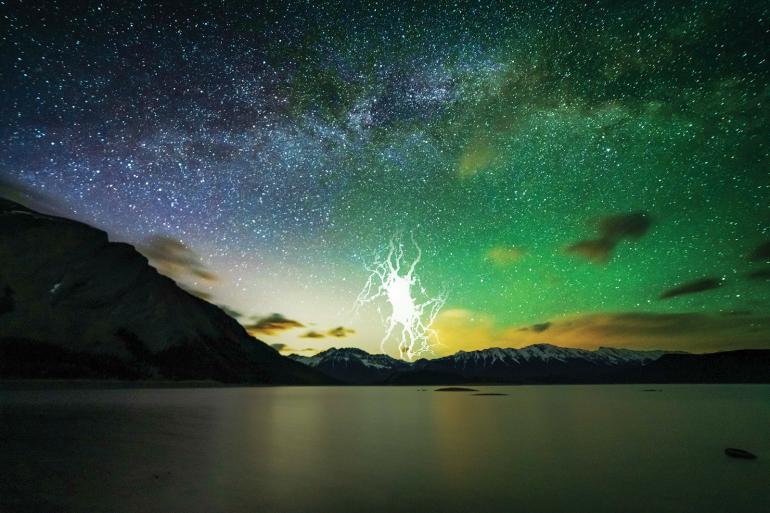
Geologic Disco Ball
While other states are more famous for earthquakes, thousands occur throughout Montana each year, with Yellowstone National Park experiencing between 1,000 and 3,000 annually. Though most go unnoticed, these earthquakes result from shifting tectonic plates, volcanic and geothermic activity, and stress building deep underground before releasing energy as seismic waves. But the lights that sometimes accompany earthquakes are harder to explain.
Witnesses describe glowing blue, green, or white flashes, orbs, sheets of light, or even flame-like glows appearing just before or during earthquakes. Some reports in Montana came during the devastating 1959 Hebgen Lake earthquake, creating what is now known as Quake Lake, when witnesses observed eerie blue and green lights illuminating the sky.
Those who study the phenomenon believe that stress release within certain rock types may create electrical charges capable of producing light. Others say atmospheric conditions may also play a role. But earthquake lights remain one of geology’s unsolved mysteries, though there have been several theories over time.
Cultures around the world described mysterious lights appearing before the earth shook. Some believed they were dragons crossing the sky. Others thought they were spirits, omens, or warmings from other beings. Today, the phenomenon attracts UFO enthusiasts who suggest the lights point to something beyond geology.
At the end of the day, maybe hidden creatures, sounds in nature, and mysterious lights are just puzzles waiting for science or hard evidence to solve. Or perhaps some things are better left beyond our understanding. Whatever the case, Montana continues to be a place where legends live on, and nature gives permission to believe in a bit of magic.