Freedom of the Hills

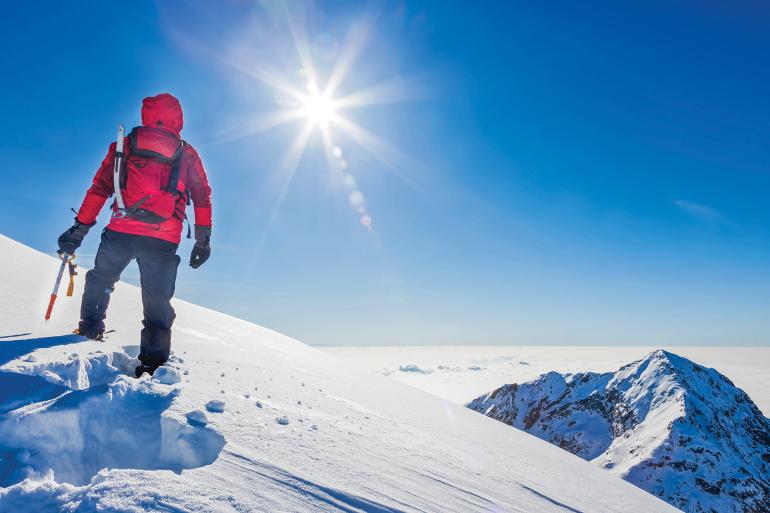
Getting back to the roots of climbing.
We looked up at two perfect pillars of blue plastic ice, one steeper, and another fully vertical. But off to the right lay a smear of yellow ice, meandering slowly over cracked and textured rock before spilling into the void left by a small overhang. We decided that the smear looked most enticing. Of course, the two pillars were named and rated, photographed nicely for the guidebooks and were the kind of thing a clothing company could use for an ad. The desire to climb the smear came from two ongoing themes in my climbing career: I’m fairly weak, and I really enjoy an adventure.
When climbing, it is always fun to challenge oneself and stick your neck out a little bit. The most common way someone who climbs might push him- or herself is to chase a harder grade, a steeper ice flow, or maybe a more physical boulder problem.
Safety should be paramount in the mountains, and I don't want to encourage bad decision-making, but to never roll the dice on unexplored terrain would be a tragedy as well.
After moving to Bozeman, I became enamored with the classic climbs of the town. The perfect uniform ice of Hyalite, the talked-about bolted climbs, and the granite splitters of the canyon. While fun, these climbs often didn’t scratch the itch of adventure I was looking for. Full of trails, people, and routes starting and ending in trees, it didn’t feel as inspiring as the enticing ranges of more mountainous regions local to town. Don’t get me wrong, lifetimes of adventure exist in classic venues such as Hyalite; but when parking lots are full, and 90% of the people climb 10% of the climbs, it seems natural to question why this is.
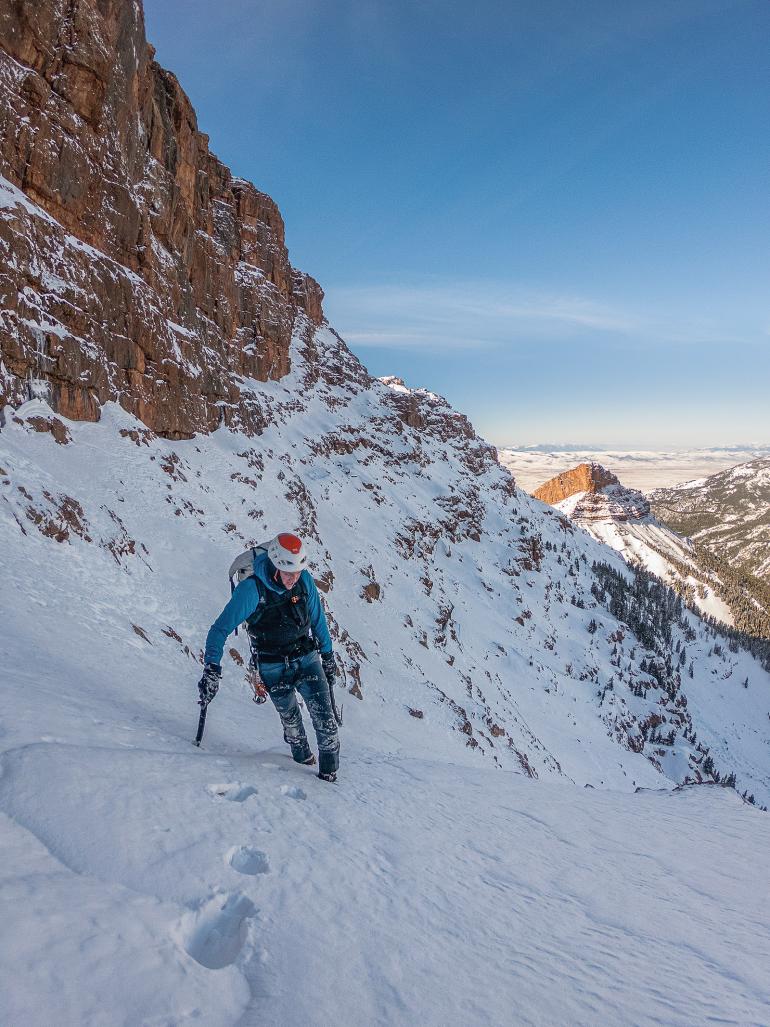
It seems as if adventure climbing has been pushed to the upper echelon of climbers. Climbing and mountaineering are sports with origins in exploration, hiking, and simply the pursuit of the freedom in the hills. Yet for the average climber, they have become an endeavor barely more adventurous than gymnastics or climbing a ladder while doing housework. It is an unfortunate phenomenon that exploration seems to be less inviting than a well-trodden path. There is something magical about the mountains, how they always seem to give us a path to the summit. Oftentimes it may be difficult beyond comprehension, but that doesn’t mean the line doesn’t exist. Of course, safety should be paramount in the mountains, and I don’t want to encourage bad decision-making, but to never roll the dice on unexplored terrain would be a tragedy as well.
I implore anyone new to climbing to choose their own path, look around corners and bends, and explore.
All of this comes down to a general mindset change in our current working definition of a good climber. Many of the great climbers of the past were not training constantly and thinking about their next project. Guys like Doug Tompkins, Rick Ridgeway, Yvon Chouinard, and more, were all amazing and creative climbers, but they also kayaked, fished, sailed, hiked, and were thrilled by the idea of adventure, not a grade or the status symbol of sending a specific climb. Many of the original explorers of North America’s largest objectives never even climbed a 5.11, let alone projected a scrappy 5.12.
Aside from—strangely enough—bouldering, it seems as though there is a slow degradation in new development and exploration at the beginner’s level. I implore anyone new to climbing to choose their own path, look around corners and bends, and explore. Try not to lose sight of the objectives: to make memories, to enjoy a little risk and uncertainty, to return down from the climb a better person, and to have great sunset photos for Instagram. Hmm, maybe we should re-think that last one, too.