Open Range
Enhancing both control and freedom with superior electronics.
The invention of barbed wire may have ended the open-range era of the American West, but “virtual fencing” might just bring it back. Cows fitted with GPS collars can now be confined to certain pastures without a single strand of wire, and cowboys can manage boundaries with their smartphones. Which means fewer fences, more open space, and greater freedom of movement, for both cattle and wildlife.
This new technology isn’t limited to livestock. Pets can now be controlled with GPS collars, too—and the applications are extensive. I tried two very different products: a virtual fence, for corralling my pup when at home and keeping him off private land while afield; and a virtual leash, for improved distance-management when hunting. Both offered hands-off control for me, and leashless freedom for him. Win-win.
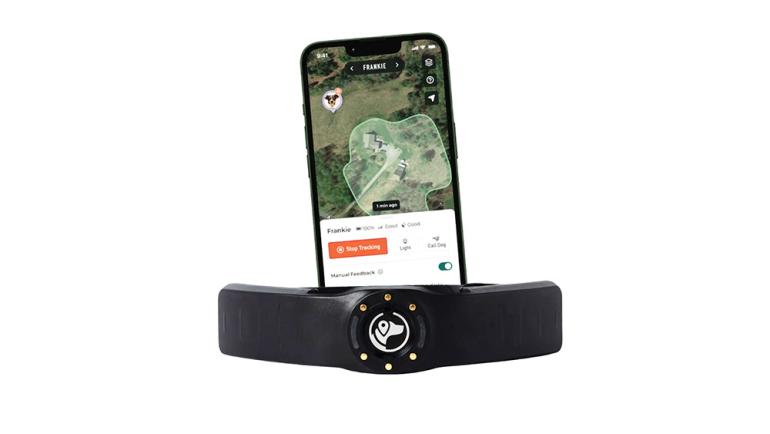
SpotOn Virtual Dog Fence
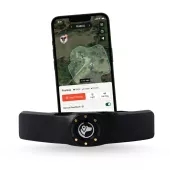
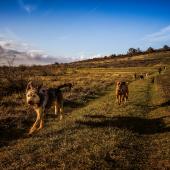
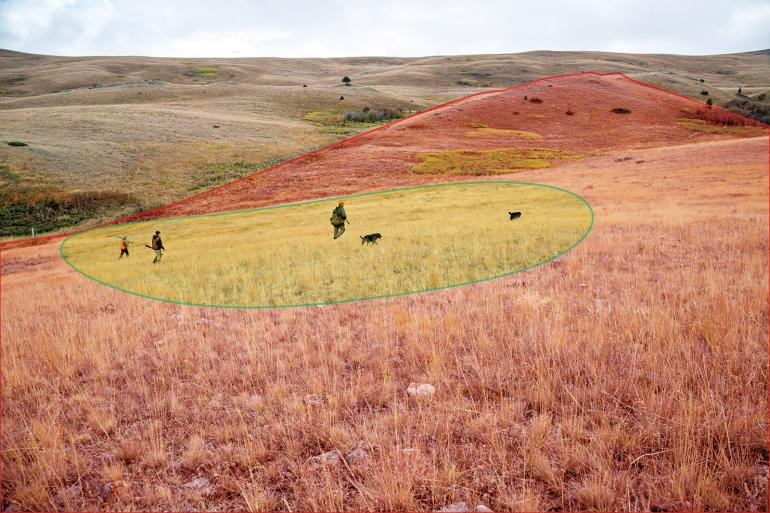
A marvel of modern satellite communications, the SpotOn GPS Dog Fence ($999) allowed me to set up a virtual fence around my yard, as well as two larger neighborhood fences—one for day, one for night—to define allowable boundaries and keep my dog safe from both traffic and unfriendly neighbors. When hunting familiar areas with a mix of public and private land, I was able to align the fence with public boundaries. The result was much-needed peace of mind: no longer did I worry about my dog running onto private land, chasing cattle, and—God forbid—getting shot by a rancher.
It works like this: for smaller areas, and where precision is important, you walk the perimeter, setting the boundary as you go. Then you can save it, test it, and make adjustments as needed. Larger areas can be defined using an interactive map, with the same testing and adjustment process for an accurate, customized boundary. You can save multiple fences, and even create a smaller fence within a larger one. The possibilities are vast, to account for whatever scenario you may encounter, as a landowner, hiker, hunter, or horse rider.
An important note: for optimal results, a dog must be properly trained on how the collar works. When approaching the boundary, it gives an alert, followed by a warning, and ultimately an optional shock—so the dog needs an introduction to the system, lest he barrel through the alert right into the shock, and wind up scared and confused. To that end, SpotOn provides clear, extensive instruction, and even offers live calls with on-staff trainers to ensure the best outcome for you and your dog.
The SpotOn collar sets up in minutes, fits most dogs over 15 pounds, and requires no paid subscription.
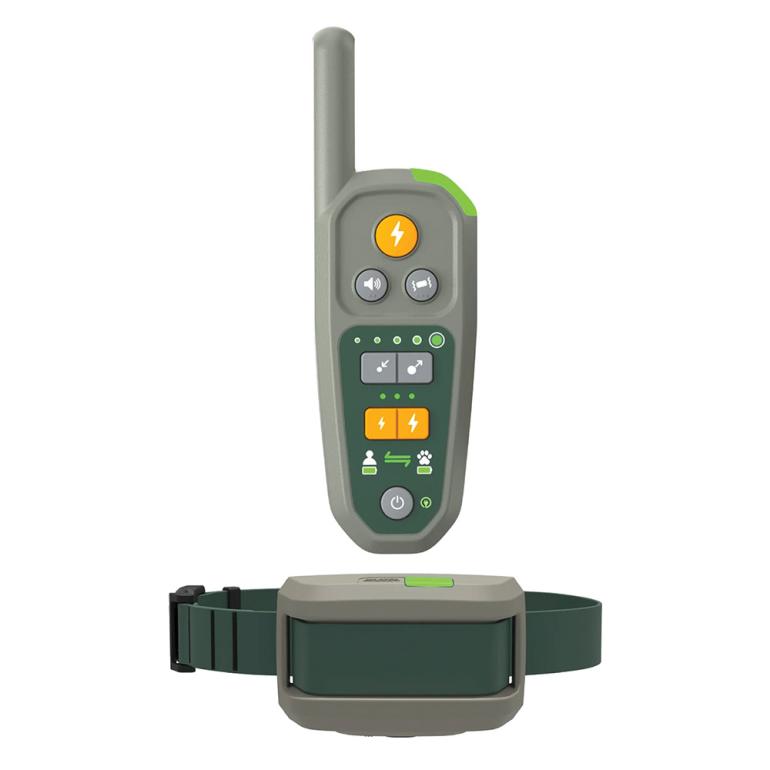
Roam Virtual Dog Leash
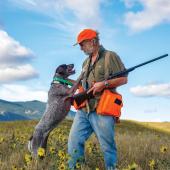
Although designed for distance-control while running, hiking, biking, and camping, Heel’s Roam 350 Virtual Leash ($399) also solved my woes when upland-bird hunting. I tried a traditional shock collar, but my dog mostly behaves—only once in a while does he get excited and range too far. In these rare moments, when my hands are on my shotgun and he suddenly bolts, by the time I dig out the transmitter, it’s too late—he’s already flushed a bird out of range.
Another problem is terrain. In the dense forest, I want him close, while out in the open, he can enjoy a little more distance. But he doesn’t know how to adjust on his own, so as the landscape features change, I’m constantly calling to him—often yelling at him—which degrades the experience of being out in nature. Delivering constant beeps would put my hand not on the shotgun, but on the transmitter, so I’d invariably end up missing a bird or two—no net gain.
With the Roam 350, however, I just set the max distance—from an intimate 10-foot radius up to a whopping 750 feet—and it’s done. I can choose from tone, vibration, and shock (or a combination thereof), and can also deliver a single warning or correction if needed—say, should my dog encounter a skunk, snake, or porcupine within the allowable distance.
Both the collar and remote are waterproof, and the same remote can be used with additional collars ($249 ea.), so you can set distances for two or three different dogs simultaneously.