
Cool Runnings

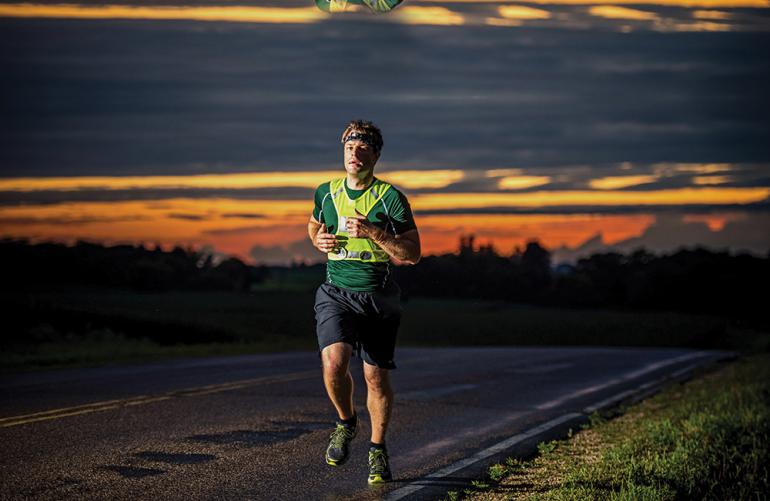
How to adjust your marathon training during hot weather.
It's 6am in July, already 24 degrees Celsius (75°F), and the plan on the fridge says 8 x 1 km at goal marathon pace. Twenty minutes in, the target splits are gone, the heart rate is 12 beats above where it should be, and the session has quietly turned into something else. That plan was written for conditions which will not return until October, and the fix is to adjust the numbers while holding the effort steady.
Pace Adjustments by Temperature
Above roughly 15 degrees, every additional degree costs time. Faster runners lose about 1 second per mile per degree Celsius, while runners in the 7:25 to 10:00 per mile range lose 4 to 4.5 seconds per mile for the same rise. Across a full marathon that is minutes, not seconds.
The practical response is to run summer sessions by effort and heart rate, with pace treated as an output. If a tempo run should feel like 7 out of 10, hold that feeling and accept whatever the watch reports. Analysis of thermal perceptions of runners in the London Marathon found that the runners most affected by warm conditions were the slower ones in the field, which is worth remembering before comparing a July session with a target set in spring.
Session Timing Across a Hot Week
Move the hard work to the coolest hours available. Dawn is usually 6 to 10 degrees Celsius cooler than mid-afternoon and carries lower solar load, and the difference in a threshold session is obvious inside the first kilometer.
Evening running is the second choice. Air temperature drops after sunset, though ground and pavement continue radiating stored heat for hours, so a 21:00 run through a city is warmer than the same run through a park. Anyone locked into a lunchtime slot by work should convert that session into easy running and move the quality work to a day when the schedule allows an early start.
Salt Losses and Fluid Planning in Heat
Summer changes what a runner carries as well as when they run. Sweat sodium concentration varies enormously between people, from around 200 to over 2,000 mg per liter, which is why two runners doing the same session can have completely different needs.
Plenty of runners work this out by trial across a few weeks, testing a plain bottle on one long run and something with salt in it on the next, and comparing how the last 5 km felt. Options range from salted food before a run to oral rehydration sachets and electrolyte powder for hydration carried in a flask, and the useful test is what gets used consistently rather than what tests best in theory.
Heat Acclimation Over 2 Weeks
The body adapts to heat faster than most runners expect. Plasma volume expands within the first 5 days, heart rate at a given pace falls, and sweating starts earlier and at a higher rate. The full set of adaptations, particularly the sweat changes, takes 10 to 14 days of regular exposure.
A workable protocol is 5 to 8 easy runs of 45 to 60 minutes in the warmest part of the day the runner can tolerate, spread across a fortnight, with every hard session still moved to the early morning. Someone starting a summer block in a cool spring climate can begin this 3 weeks before the heat arrives by adding a layer of clothing to a couple of easy runs, which produces a smaller version of the same stimulus without the sun.
This argues for consistency rather than avoidance. Training through the first hot fortnight at reduced intensity produces a runner who handles August far better than one who moved every session indoors. Treadmill work has its place in extreme conditions, though a block spent entirely in air conditioning leaves the adaptation unbuilt and the first warm race unpleasant.
Long Run Modifications in Summer
Loops beat point to point routes in July. A 5 km loop past a parked car or a fountain turns a 30 km run into 6 manageable segments with cold fluid available at each pass, and it removes the risk of being 12 km from home with an empty flask.
Splitting is the other option. Two runs of 90 minutes on the same day, one early and one late, produce more usable training in a heat wave than a single 3 hour effort in full sun. The single long run is still the better session in principle, and the split version is the one that gets completed when the forecast says 33 degrees Celsius.
Warning Signs of Heat Illness
Cramping and general discomfort are ordinary in summer running. Confusion, stumbling, chills or the disappearance of sweat are not, and each is a reason to stop immediately rather than push to the end of the block.
The distinction between heat exhaustion and the more dangerous condition matters here. Heat exhaustion involves heavy sweating, weakness, nausea and a rapid pulse, and it responds to shade, fluid and cooling. Heatstroke involves a core temperature at or above 40 degrees along with altered mental state, and it is a medical emergency where minutes of cooling change the outcome. Runners who train alone in summer should carry a phone and tell someone the route.
Reading Conditions Before the Run
Air temperature alone is a poor guide. Humidity limits how much sweat can evaporate, and evaporation is what actually removes heat, so 28 degrees Celsius at 80% humidity is far harder work than 32 degrees in dry air. Many sports organizations use wet bulb globe temperature, which combines air temperature, humidity, wind and solar radiation into a single figure, and several weather apps now report it.
Clothing follows from the same logic. Light colors, loose weave fabric and a cap that can be soaked at a fountain all help. Sunscreen is not optional at 07:00 in July, and a runner who ends a summer block sunburnt has been losing sleep quality along with skin.
What a Hot Block Costs If You Ignore It
Forcing spring paces through a summer costs a fortnight of accumulated fatigue, then a missed long run, then a plan that no longer matches the calendar with 6 weeks left before an autumn race. Runners who adjust early keep the block intact and arrive in September fitter than the ones who spent July proving a point to a watch. Heat is temporary and the training block is not, so let the summer sessions be slower and keep them all.