Silver Metal
Summertime solitude at Grayling Lake.
Walking down the trail, in the pale light of a fingernail-clipping of a moon, I swatted the head-high spiderwebs weaving across my path. I’d forgotten my headlamp, again. My hands waved at the invisible silk threads in the dark, as if searching for the light switch in my bedroom.
Soon, my face and torso were covered. There can’t be this many spiderwebs, I thought. Sure enough, the light of my phone illuminated thousands of silkworms hanging from the pine canopy. Their small, slender bodies inched down my arms, my legs, wondering where the hell their silk strands had taken them. I brushed off what I could and picked up the pace, accepting my silk-thread cloak eight miles from the trailhead.
Graying Lake, a small puddle in comparison to its larger and deeper neighbors, resides in an unsuspecting basin in the rocky folds of the Lee Metcalf Wilderness Area. My assumption that it held fish was solely based on its name, and my inquiry was the reason I was covered in small worms in the middle of the night. The lake’s size suggested that it may freeze solid in the winter; however, given the eponymous nod to Thymallus articus, it was a bet I was willing to take.
But why, you may ask, would I hike and bushwhack several miles to a lake that may or may not hold fish whose white boney flesh is less appetizing for some anglers than the soles of their shoes?
I sought something different, even if it meant failure.
For the past few weeks, I’d fished for trout on the Gallatin and Madison and had become a little fed up with the crowds. I sought something different, even if it meant failure. An exploratory off-trail hike—guided by intuition, a compass heading, and maybe a polite suggestion from the terrain—is often the only reward one needs when the destination is a shadow of doubt. Day-trips like this generally involve a level of discomfort that turns most people away, but those who do put forth the effort reap the benefits of blissful solitude.
In the lower 48, arctic grayling are native to Michigan and Montana. Where they once “lay like cordwood” in the streams of Michigan, they’re now extinct due to destruction of habitat from logging. They survive in pockets throughout southwestern Montana, and flourish up north in Alaska.
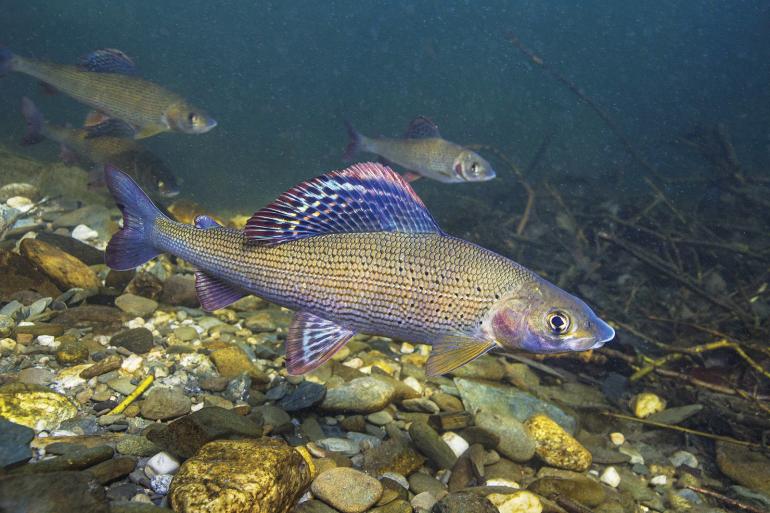
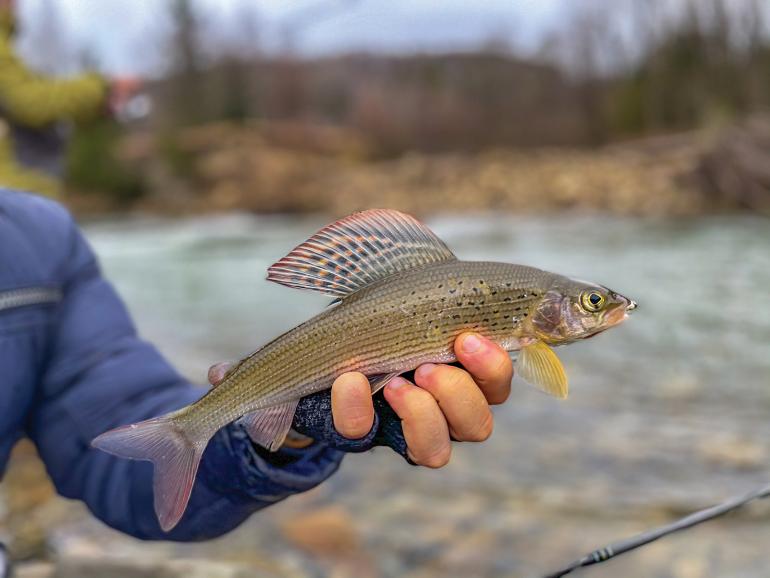
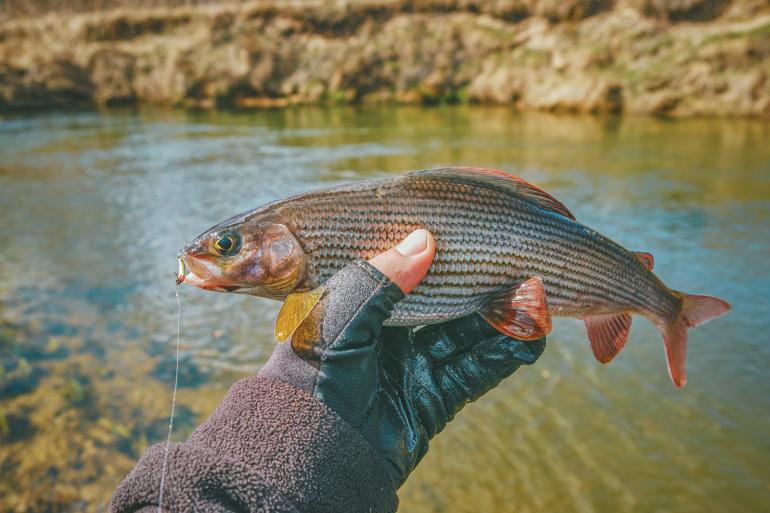
Not terribly hard to catch, a grayling rewards even the lousiest angler and roll-caster with its brilliant anatomy: a large, sail-like dorsal fin down the length of its back; a slate-gray body shimmering in the sunlight, in sharp contrast to the red-and-orange pelvic fins. Opalescent scales gleam with a magnificent display of colors the angler can’t help but admire before releasing it back into the wild whence it came.
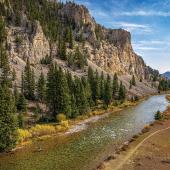
The approach to Graying Lake starts out on a well-established trail that stiches its way through fragrant pine forests. A small stream trickles out of Graying Lake and eventually feeds into the larger and tumultuous Hell Roaring Creek. This outlet stream crosses the trail and is the best clue as to when to turn right and begin bushwhacking to the west.
The scramble through dense overgrowth and mossy boulders was the only proof I needed that most people just don’t care to catch these grayling. The outlet stream gains elevation quickly and dribbles under think deadfall and combative understory growth. It continues—the bushwhacking, that is—for a few miles, and eventually plateaus on the sub-alpine rocky shelf where Grayling Lake nestles.
I startled a moose as I rounded the last few contours of my hike. It splashed alongside the shoreline and disappeared into the forest, the splashing stirring up a lot of fish, and not just any fish—grayling, darting silver shadows beneath the still water that reflected the evergreen boundary.
I selected a #16 King Prince, not out of experience, nor extensive research on grayling food sources, but just ’cause it looked like something these fish might eat. It worked: I edged my way around the lake, snatching small but lively silver bodies out of the water.
Perhaps the reward of catching fish after clawing one’s way to their aquatic abode mingles with subconscious atavistic instincts, instincts we once relied on for survival. Therefore the hike to get there is part of the atavistic experience, insomuch as if there were no fish, the journey elicits the same response: happiness.