Where There's a Will, There's a Way

Solutions for inaccessible public lands.
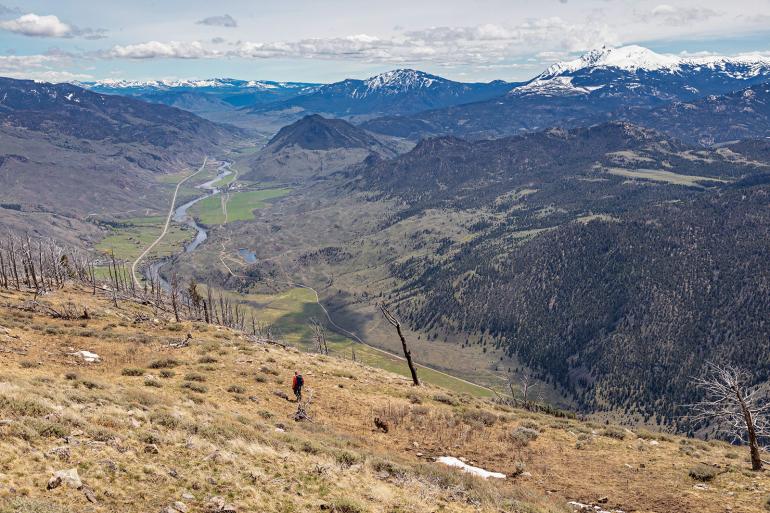
Montana’s 33 million acres of public lands are where we hunt, fish, camp, hike, and otherwise recreate. These acres fill freezers and clear minds. For many Montanans, they’re why we live here.
Yet Montanans can’t access 3.1 million acres of those lands—roughly 10% of our public estate. This is unacceptable.
While not a new predicament, it's no longer out of sight, out of mind. Digital mapping technology and heightened attention have brought this issue front and center.
The good news: Montana already has some solutions. Landowners who are compensated to voluntarily allow access have opened roughly 20% of landlocked lands. That’s to be applauded. Yet these programs are annual agreements; they’re temporary. And 80% of inaccessible lands remain inaccessible. Again, unacceptable.
Here are some existing, under-utilized tools to address the problem of inaccessible public lands while also respecting private-property rights, along with areas needing improvement.

Land Banking
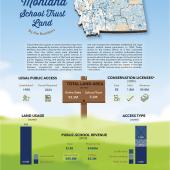
When the Department of Natural Resources & Conservation (DNRC), which administers state school-trust land (see p. 32), sells inaccessible and underperforming state lands—which it often does—Montanans are led to believe that the money from the sale will go into the Land Banking account. Those funds are then supposed to be used to purchase new, accessible, and revenue-generating state lands, turning the sale into a net access benefit for Montanans rather than a loss. Unfortunately, while land sales continue, not a penny from these transactions has been spent on new state land purchases since 2018. The account balance is over $40 million, which could buy a lot of land, and access to it. But if the money from each transaction isn’t used in 10 years, it gets diverted to other uses. Montanans must demand that these funds be utilized as we were led to believe—to purchase new, accessible state lands—and quickly, before any 10-year terms expire.
Land Exchanges
When done properly and truly in the public’s best interest, there’s real potential for land swaps to consolidate land ownership and expand public access. The Montana Land Board’s new land-exchange rules are worrisome, though; hence the legal challenge brought by the Montana Wildlife Federation (MWF), the Public Land & Water Access Association (PLWA), and the Montana Sportsmen Alliance (MSA). The recent swap in the Crazy Mountains is also coming under legal fire; see page 96 for details. All Montanans need to stay vigilant to ensure we’re getting a square deal on any land swaps.
Public Access Land Agreements
Known as PALAs, these compensate landowners who let the public walk across their land to access adjacent, under-accessible public land. The program’s glaring limitation is that it prohibits landowners from participating if they don’t have the grazing lease on the adjacent public land. But leaseholders don’t have or pay for exclusive access to public land, so why should they be able to control who gets to access it? These are public lands. And while the public being on public land that a leaseholder is used to treating as his or her own ranch is probably an inconvenience, is that a fair reason to block access?
Block-Management Access Corridors
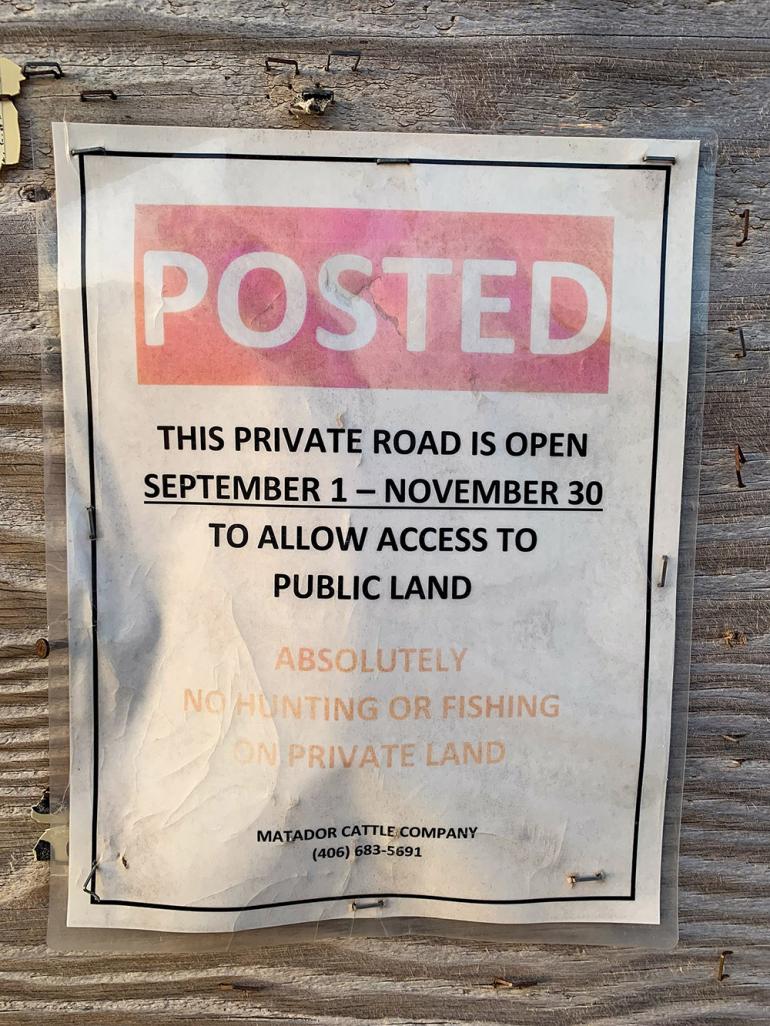
This is a brand-new tool that doesn’t have a leaseholder limitation; any public-land-adjacent landowner wanting to open access can participate. These agreements also pay more than PALAs (up to $25,000 instead of being capped at $15,000). Inexplicably, however, the new program has received little promotion from FWP and seen zero use from landowners.
Habitat Montana–Funded Conservation Easements
These compensate landowners for agreeing to conserve their lands and allow some amount of public access. However, compensation is largely based on conservation acreage, not access acreage. If landowners could also be compensated for what they open to the public, we could both see more interest from landowners and more of these inaccessible acres being made available permanently.
Corner Crossing
While badly needed legal clarity could potentially open some 871,000 acres—or a quarter of Montana’s inaccessible public lands—lawful corner crossing would still be an imperfect form of access. Concerns about real trespass near corners, especially at unmarked or hard-to-find corners, are legitimate; private-property rights need to be upheld and respected.
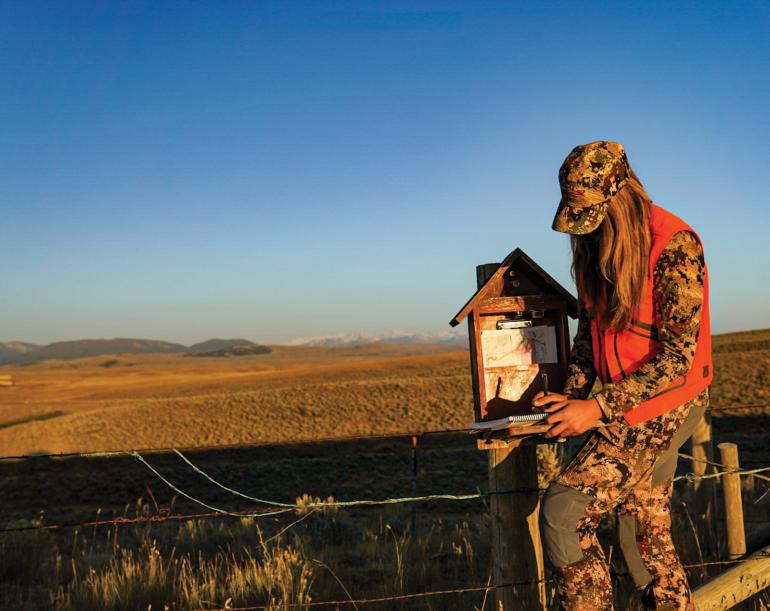
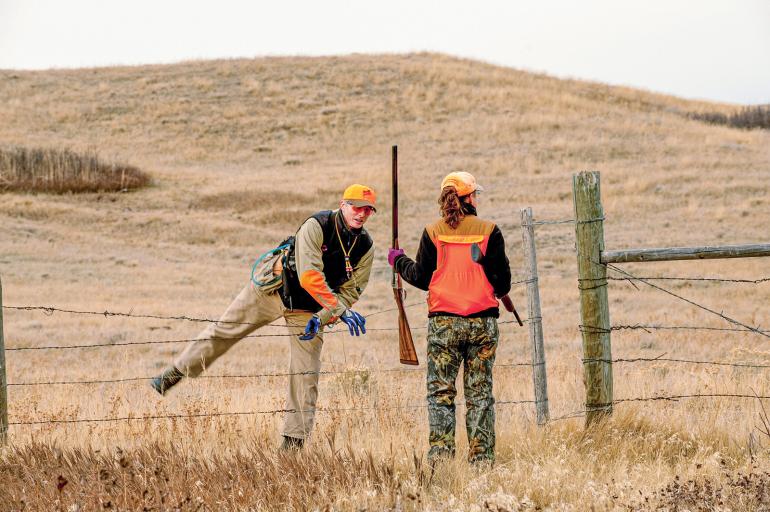
However, using the ambiguity of a corner’s precise location as a prohibition to allowing public access seems insincere; we should instead work together to survey, stake, and sign corners to help minimize conflict and lessen landowners’ legitimate concerns of real trespass, while also enabling legal and respectful public access. Montana’s “Access Public Lands” program has funding available specifically for projects like these.
Another potential option to improve public access at corners is the Block-Management Access Corridors mentioned above. The obvious benefits of corridors are not just clearly-marked access channels, but also being wide and inviting enough to accommodate game carts, sleds, pack animals, or hunters with their bird dogs entering into checkerboarded lands, none of which are necessarily options if required to step over a precise corner pin.
In the end, we can’t force access and we need to be willing to sit down and work on mutually beneficial solutions—be that voluntary access agreements, land swaps or targeted acquisitions, or perpetual easements. But by slightly tweaking and utilizing the tools we already have at our disposal, we can continue to make progress in accessing landlocked public lands.
Kevin Farron is the conservation director at the Montana Wildlife Federation, a conservation organization that’s worked to protect our state’s fish & wildlife, public lands, clean waters, and fair-chase hunting & fishing heritage for the past 90 years.