News & Notes: Fall 2026
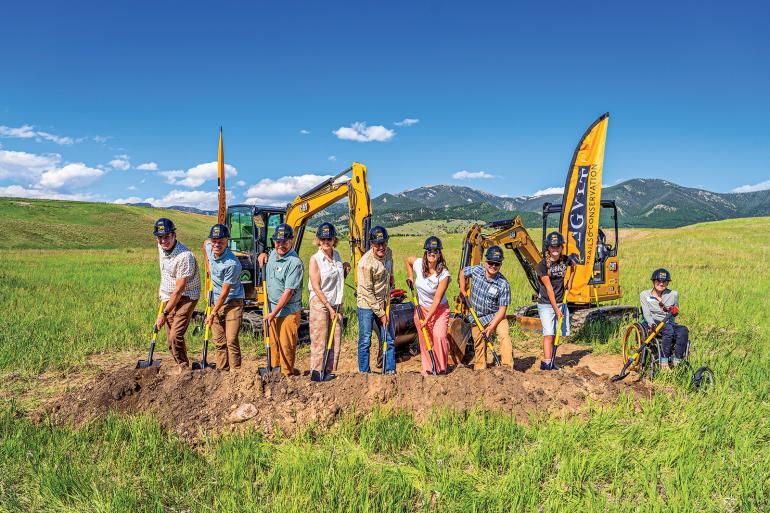
Breaking ground at Bikefill Park in Bozeman
Setting the wheels in motion.
In keeping with their mission to expand trail access for all users, Gallatin Valley Land Trust (GVLT) broke ground northeast of town this summer, officially launching construction on Bikefill, a free community bike park designed to welcome riders of all ages and skill levels. “This has been a dream for 15 years,” says GVLT’s Katie Sproles. “It’s so exciting to our team, all of our partners, the Dirt Concern, and the City of Bozeman, to see it become a reality.” The 66 acres adjacent to the Snowfill Recreation Area (co-inspiration for Bikefill’s name, along with being beside the old city landfill) will be transformed into a world-class bike park. This will help relieve congestion on multi-use technical trails year-round and offer a variety of terrain for beginner through advanced riders. Bikefill is currently on track for a ribbon-cutting next summer. In the meantime, Katie encourages the community to subscribe to the GVLT newsletter and follow updates at gvlt.org. —Georgia Bobo
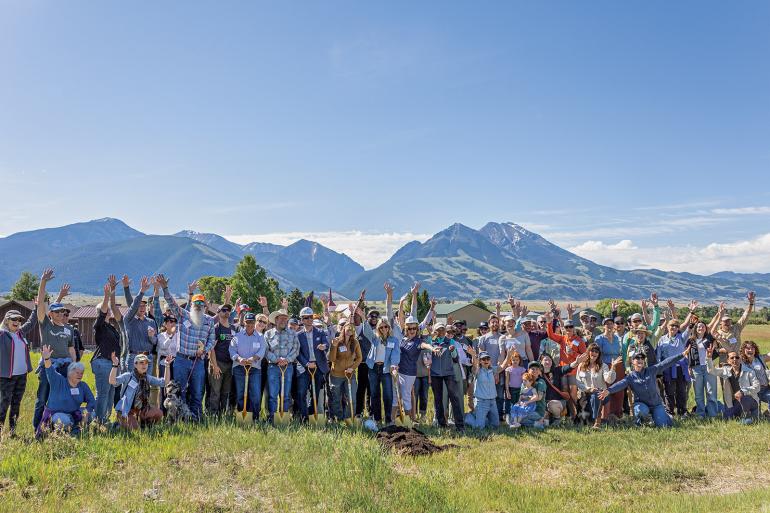
Celebrating the start of the Yellowstone Heritage Trail in Paradise Valley
Connecting the dots.
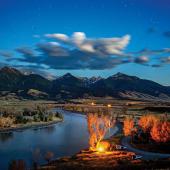
A new trail is taking shape in Paradise Valley, with plans to connect local communities, public land, and the northern gateway to Yellowstone Park. The Yellowstone Heritage Trail is a long-term effort to turn an abandoned rail corridor into a multi-use path connecting Livingston, Emigrant, Gardiner, and the Park’s north entrance.
Led by the Trust for Public Land (TPL), Park County, and local partners, the project aims to create safer space for walking and biking while improving access to public land, close-to-home recreation, and the communities that visitors often pass through on their way to the Park.
The first three-mile segment in Emigrant broke ground in June, marking an early step in a project more than 15 years in the making. According to TPL, the trail, once planned for 56 miles, has since expanded to 61 miles as the overall vision has taken shape. Once complete, it will link residents, visitors, river access, local businesses, and historic landscapes. The trail is also expected to support safer travel, broader outdoor access, and long-term community connection throughout the valley. —Jori Husted
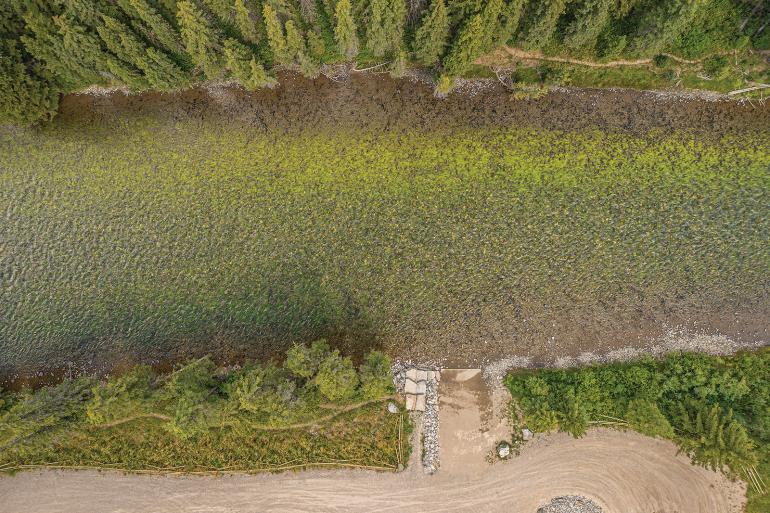
Algal blooms on the Gallatin River near Big Sky
Unnatural enemies.
This past spring and summer, Montana saw several important lawsuits regarding both conservation and public recreation. Surprisingly, on each side are entities generally thought to be allies, or at least share the same goals: the protection of land, water, fish, wildlife, and access. Unfortunately, governmental entities don’t always operate in the best interest of the people and the landscape. Which is where our state’s scrappy nonprofits come in. To wit:
In May, Backcountry Hunters & Anglers (BHA) and the Public Land & Water Access Association (PLWA) filed a complaint in Lewis & Clark County District Court seeking to clarify the legality of corner crossing in Montana and preserve access to approximately 871,000 acres of public land. This case challenges Montana Fish, Wildlife & Parks’ (FWP) recent declaration that corner crossing is unlawful, and its explicit direction to wardens to cite individuals who access public land via shared corners. Despite disagreements over this policy, both BHA and PLWA have emphasized that the lawsuit is not an attack on FWP itself and note that they will continue to work collaboratively with FWP on a range of other public-access issues.
Also in May, Upper Missouri Waterkeeper (UMW) filed suit against the Montana Department of Environmental Quality (DEQ), focusing on water-quality protections in the Big Hole River. Clean-water advocates claim that DEQ failed to properly regulate pollution and protect the river from degradation. And while DEQ has since formally agreed to list the river as impaired, concern persists about the agency’s pattern of delay tactics.
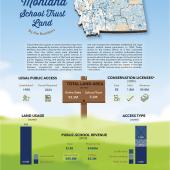
In June, PLWA, Montana Wildlife Federation (MFW), and the Montana Sportsmen Alliance (MSA) filed a case against the Montana Land Board. The nonprofits argue that exchanges of state school-trust lands for private lands should include opportunities for public input and protections for public access, in the hopes of reducing the loss of public lands to private ownership. The lawsuit emphasizes the importance of transparency and ensuring that land exchanges benefit Montana citizens.
These lawsuits demonstrate the current pressures facing Montana’s public lands and waters.
In July, UMW filed a 60-day Notice of Intent to Sue against the U.S. Environmental Protection Agency for failing to act on Montana’s 2022-2024 Water Quality Integrated Report within the deadline required by the Clean Water Act. UMW argues that delays by state and federal regulators have stalled the identification of impaired waterways and pollution cleanup efforts, allowing water-quality problems to worsen while undermining protections for Montana’s rivers.
Close to home, tensions surrounding the Yellowstone Club continue to rise. This fall, the Ninth Circuit Court of Appeals hears argument on whether the Big Sky Water & Sewer District (W&SD) committed fraud by misrepresenting sewage-leakage volume into the West Fork of the Gallatin River. The case is being argued by John Meyer on behalf of Cottonwood Environmental Law. The Ninth Circuit Court will also decide whether the district court erred by instructing the jury to consider whether all pollution in the West Fork came from a leaking condo complex, rather than from golf-course wastewater.
Together, these lawsuits demonstrate not only the current pressures facing Montana’s public lands and waters, but also how legal action can influence conservation policy, protect natural resources, and preserve public access for hunting, fishing, and other outdoor recreation. They also highlight the importance of public engagement, encouraging citizens to stay informed and make their voices heard—either directly, through written comments, or indirectly by donation or membership in one of the aforementioned groups. —Daniella Beckwith