Carbound Connection
Replacing monotonous highway hours with something to remember.
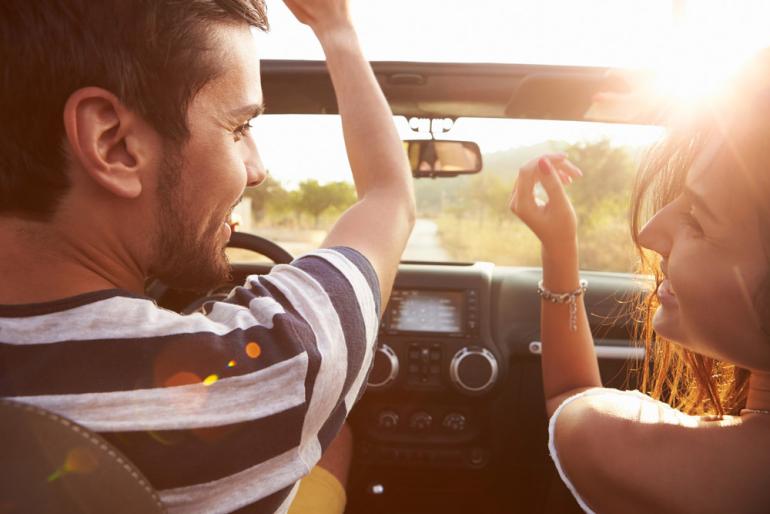
A long drive with your significant other can unfold in one of two ways. You spend six hours arguing over music, snacks, directions, where & when to stop for coffee, and what activities to do when you get there. Or, you turn it into an adventure.
The difference is mostly attitude. If the destination is a few hours away, those hours are part of the trip too. And in Montana, where a quick drive can mean crossing two mountain ranges and watching the landscape change three times, there’s plenty to work with. So, load up the car, throw your bikes on the rack, fill the tank, and give yourselves a reason to enjoy the miles in between.
Take the Long Way
The fastest route is rarely the most interesting one. Montana is full of roads that make a compelling argument for adding an hour to the itinerary, sometimes three. There's plenty of worthwhile detours along the way, like spontaneously checking out a fishing hole along the highway, or a short hike to a hot spring you've been itching to check out for a while.
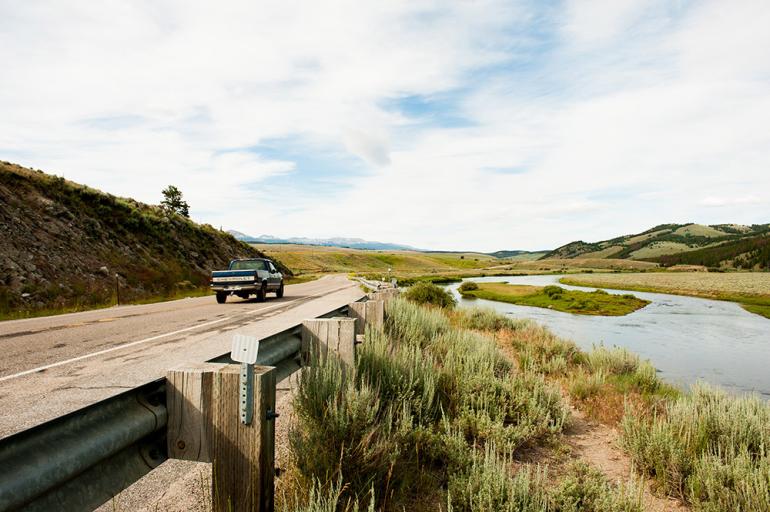
Head east from Bozeman, and the mountains flatten into rolling hills and river bottoms, under a sky that runs a lot further than you expect. Go west, and everything tightens up instead, into forested valleys under big peaks.
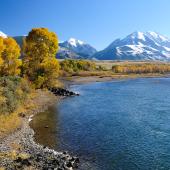
If you want somewhere to start, US 89 south through Paradise Valley puts the Absarokas on your left the whole way to Gardiner. US 191 does something similar through Gallatin Canyon, tracking the river toward Big Sky. The Beartooth Highway out of Red Lodge is the one people plan whole trips around. It climbs to almost 11,000 feet, and there's still snow beside the road in July.
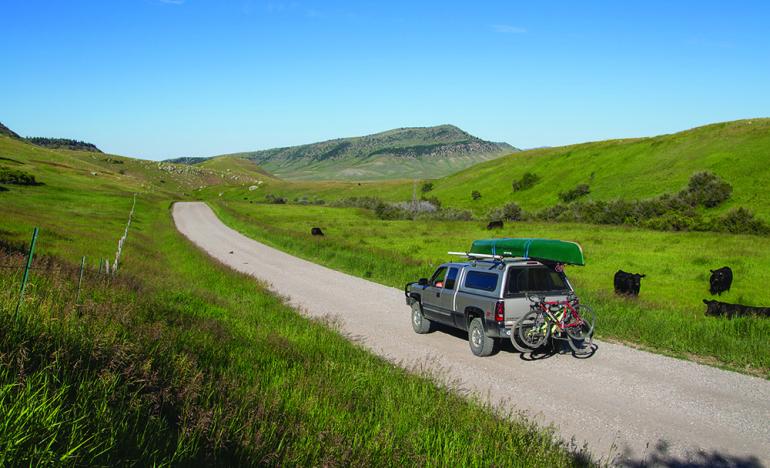
That last one closes for the winter. It usually opens again in late May, and several other high passes run on a similar calendar, so check before you count on it. Paradise Valley and the Gallatin stay open year-round, though in January the drive is different than in July.
That change of landscape is part of the payoff. So rather than treating every stop as a delay, pick a few places worth pulling over for. You might stretch your legs beside a river, walk to a viewpoint, or find a little cafe in a town you’ve never heard of. If the light hits the mountains just right, pull over. The schedule can survive a ten-minute detour. Some of the best Montana road trips are built around exactly this idea: the drive itself is the attraction.
Make the Car a No-Phone Zone
Sure, you might need it for navigation, weather, and the occasional emergency Google search to settle whether that was a mule or whitetail deer. Download maps before you pull out of the driveway. Out here the signal can drop for an hour at a stretch, and a saved map doesn't care.
Tell each other the dumbest thing you did as a teenager. Debate which Montana town you’d move to. Pick the trail you want to hike next year. Or you might not talk at all.
While you're at it, pull up anything else you want on hand. A love reading on Nebula, opened before you lose service, gives you somewhere to go around hour two, once you've done work and the dog and you're both scanning for a new topic. Then put the phones down.
Talk about the places you’d go if you had an unlimited summer. Tell each other the dumbest thing you did as a teenager. Debate which Montana town you’d move to. Pick the trail you want to hike next year. Or you might not talk at all. There's a big difference between an awkward silence and a comfortable one. A few miles of windshield time, good views, and nothing that needs saying can bring you closer than talking would.
Build the Playlist Together
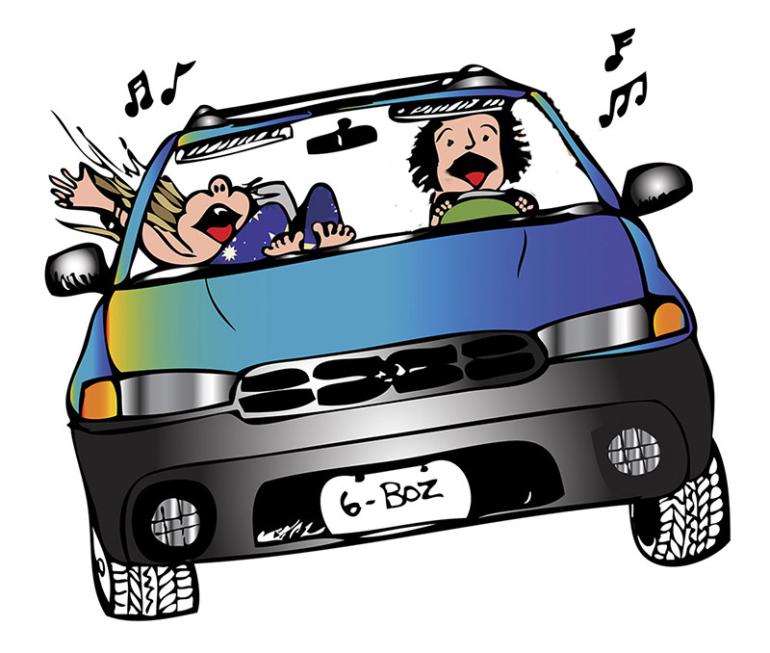
One person controlling the stereo for eight hours is how relationships end. Build the playlist together instead. Give each person a few songs to contribute: a favorite from high school, one that reminds you of the other person, a guilty pleasure, a song for driving through the mountains, and one guaranteed sing-along.
Then accept that you’re likely to disagree. Maybe your companion thinks a song you consider objectively terrible is a masterpiece. You'll survive letting it play. Years from now, that one song may bring back a particular stretch of highway, a thunderstorm over the Crazies, or the time you both skipped the turn because you were singing too loudly. That's what a good road-trip soundtrack does.
Have the Conversations You Keep Putting Off
Many people find that sitting side by side makes hard conversations easier to start. Nobody's staring across a restaurant table waiting for eye contact after every sentence. The scenery keeps moving, making the big stuff feel a little less intimidating.
Talk about the countries you want to see and what you picture your life looking like in five years. Find out whether your sweetie would rather live in the mountains, near water, or somewhere with fewer tourists and better pie.
This is where that reading you saved earns its place. Compatibility questions are a low-stakes way into bigger ones, and you get something new to argue about besides who controls the aux cord. Keep it light, though. This is a road-trip, not couples therapy at 75 mph. If a topic turns heavier than either of you expected, say so and park it. In a car, neither of you can walk away. That helps with hard conversations right up until it doesn't. Come back to it over dinner.
Trade the Keys
Switching seats changes the rhythm of the trip. Whoever's driving has one job. The other one gets to look out the window, work the camera, pour the coffee, or just stop pretending they enjoy sitting bolt upright for four hours.
Make decisions together. One person picks the route, and the other picks lunch. One finds the trail; the other books the place you'll sleep.
Worth knowing if the car is a rental: most coverage only applies to drivers named on the agreement. Add the second one at the counter.
Share the other decisions, too. One person picks the route, and the other picks lunch. One finds the trail; the other books the place you'll sleep. Making decisions together keeps the trip from becoming one person's carefully planned expedition with a reluctant passenger tagging along.
Expect Something to Go Wrong
At some point, you’ll miss a turn. Someone will get hungry. The GPS will send you somewhere ridiculous. You'll discover that a quick stop turns into a 40-minute detour. One of you will want the window open while the other is freezing. That’s how road-tripping goes.
Take a quick hike, go for a swim, or stroll the riverbank to get the blood flowing, clear the head, and change the mood.
The goal is keeping one bad moment from taking over the entire day. Usually the fix is a pause, a coffee, and something to eat. If you’re genuinely irritated with each other, try not to force a big relationship conversation in the middle of a construction zone or a hunt for a gas station. Get food first. You'll be surprised how many problems disappear once everyone's eaten. If you're miles from a decent cafe, no worries—take a quick hike, go for a swim, or stroll the riverbank to get the blood flowing, clear the head, and change the mood.
Leave Space for the Unexpected
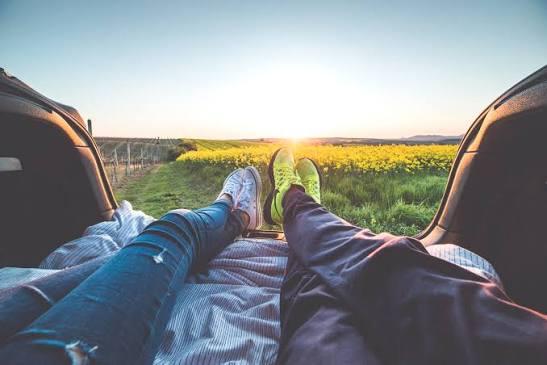
A long drive makes room for things you couldn't have planned. A moose steps out of the willows. A dirt track turns out to go somewhere worth the mud on the doors.
Years later you'll remember the song you both screamed with the windows down, a roadside snack that probably shouldn't have been legal to sell, and a conversation that started outside Livingston and was somehow still going at dinner.
Before your next long drive, have each of you pick one question you've been meaning to ask. Save them for the flat stretch, somewhere around hour three, when the scenery is quiet and the words come more easily. You left home for the destination. The drive is the part you'll talk about later.