Montana’s Rivers Belong to All of Us
And it's up to us to keep it that way.
Montanans are fortunate to enjoy something increasingly rare across the American West: public access to our rivers and streams. Whether it’s the Gallatin or Madison rivers, the famed Missouri, the Big Hole or the Yellowstone, access is what creates experiences and opportunities for us on those rivers.
For many, that access is a normal part of living in Montana. We rarely stop to think about the right to be on those waters, or the ability to get there. We pull into a fishing access site, launch a boat, wade a river, take our kids swimming or float with friends. We believe these opportunities will always be there. We shouldn’t.
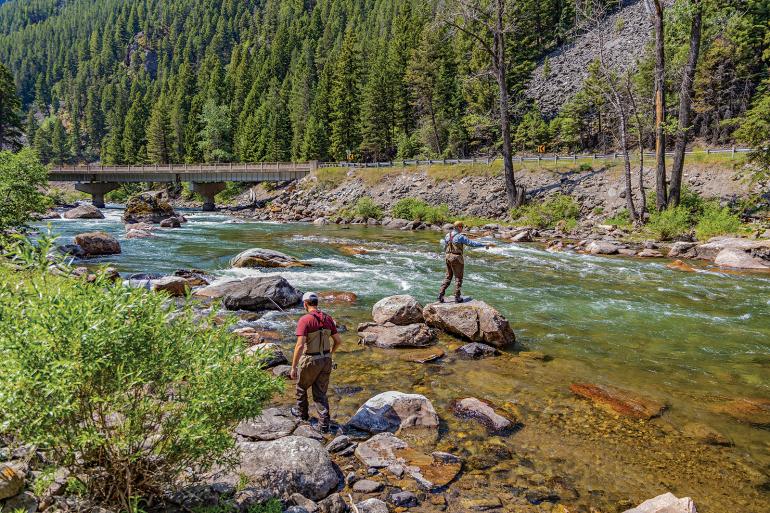
Montana has some of the strongest stream-access protections in the country, often described as the gold standard for public-water access. Our state recognizes broad public recreational-use rights on qualifying waters up to the ordinary high-water mark, regardless of ownership of the underlying land. The law also protects private-property rights, and public water doesn’t give anyone the right to trespass across private land to reach it. That balance of strong public-access rights coupled with respect for private property is something Montana got right, and a reason that our stream access laws are such a valuable piece of our way of life, and outdoor economy.
The important lesson in the history of stream access is that every generation of Montanans has had to defend it. Ours is no different.
Our current rights aren’t in place by accident. They come from decades of work by Montanans who were willing to organize, go to court, show up at the Legislature, and fight for the fundamental principle that our rivers should remain available to the public. Landmark Montana Supreme Court decisions affirmed broad public recreational-use rights on Montana waters, and as a result, the Legislature passed the Montana Stream Access Law in 1985. When disputes later arose over access at public bridges, Montanans again organized and fought for their rights, resulting in additional legislation and court decisions protecting public access.
The important lesson in that history is that every generation of Montanans has had to defend public access. Ours is no different.
This matters for reasons that extend far beyond fishing. Public access to public water allows families to float rivers, kids to see their first salmonfly, hunters and birdwatchers to experience wild places, and residents from every walk of life to enjoy resources that belong to all of us. It is also an economic engine. Guides and outfitters depend on access, but so do fly shops, sporting-goods manufacturers and retailers, hotels, restaurants, shuttle operators, campgrounds and countless other Montana businesses. River recreation in Montana—primarily driven by angling, boating, and guided floating—adds roughly $149 million in direct value-added GDP annually to Montana's economy, with total economic output from angling alone exceeding $1.35 billion when factoring in trip-related expenditures and indirect business multipliers.
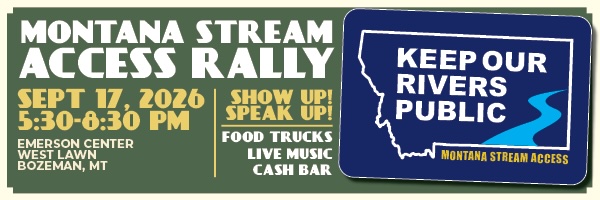
As leaders of Montana outdoor businesses, we understand the inherent value in how rivers contribute to our way of life, and believe the economic value cannot be overlooked. As anglers, we live that connection every day. People come here from around the world every year because Montana offers something increasingly difficult to find: extraordinary natural resources and the freedom to experience them. The consequences without access extend beyond the riverbank.
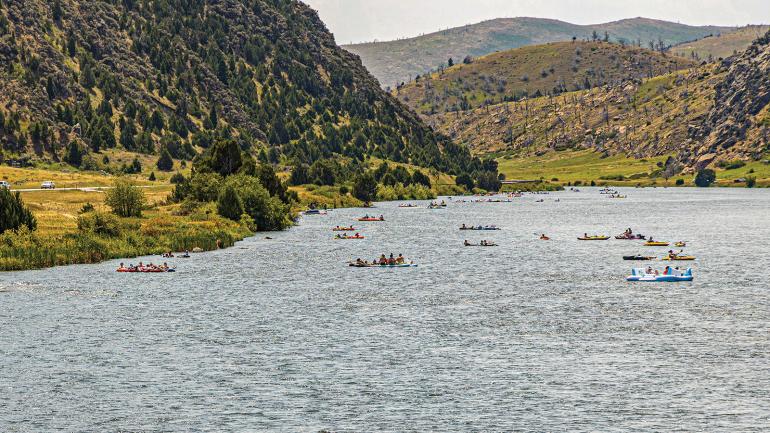
Other western states show us the alternative, with limited or legally contested river-access rights, making incredible stretches of water effectively inaccessible to ordinary citizens. Public access can be weakened one small piece at a time with changes to laws and legislation. Court interpretations can change, challenging public roads and access points. Development and changing land ownership creates new pressures, and well-funded interests can exert enormous influence over decisions involving resources that belong to the public. We cannot allow Montana to move in that direction.
Strong public-access rights and respect for private-property rights are not competing ideas. In Montana, they have long gone hand in hand.
Complacency presents the greatest threat to Montana’s Stream Access Law. As Montanans, we have a responsibility: to know our decision-makers in Helena, to pay attention during legislative sessions and question candidates’ stances on public access, to contact elected officials about access legislation, and to support organizations doing the difficult work of protecting public lands and waters. To show up when necessary.
Montana’s stream-access allowances are both a right and a privilege. Private property must also be respected to protect that privilege. Close gates. Pack out trash. Respect landowners and other river users. Every one of us who benefits from public access has an obligation to use that access responsibly. Strong public-access rights and respect for private-property rights are not competing ideas. In Montana, they have long gone hand in hand.
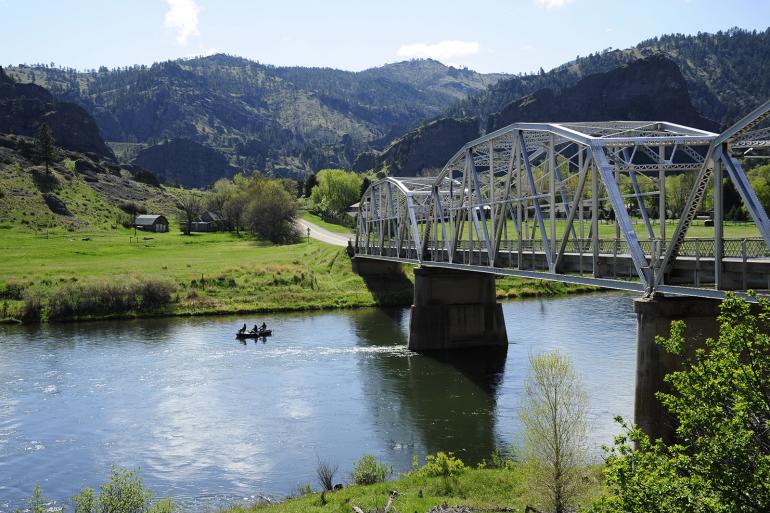
Fishing the Mighty Mo, near Cascade
On September 17th, Montanans will gather at the Emerson Lawn in Bozeman for the Montana Stream Access Rally to celebrate one of our state’s greatest traditions, but more importantly, to demonstrate that Montanans are paying attention. This is not a partisan issue. This is a Montana issue.
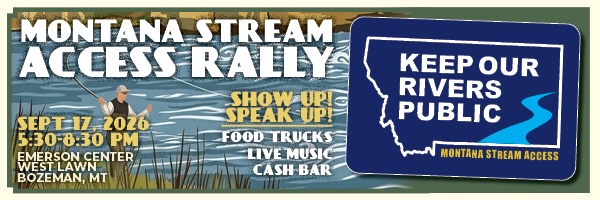
Previous generations fought to establish these rights, and to defend them. Now it’s our turn. Because when it comes to public access, one lesson should be clear: It is far easier to protect what we have than to get it back after it is gone. Pay attention. Speak up. Show up. And let’s keep Montana’s rivers public.
Jim Klug, Yellow Dog Fly Fishing
Kevin Sloan, Skwala Fishing
Andy Wunsch, R.L. Winston Rod Company