Wild Abandon
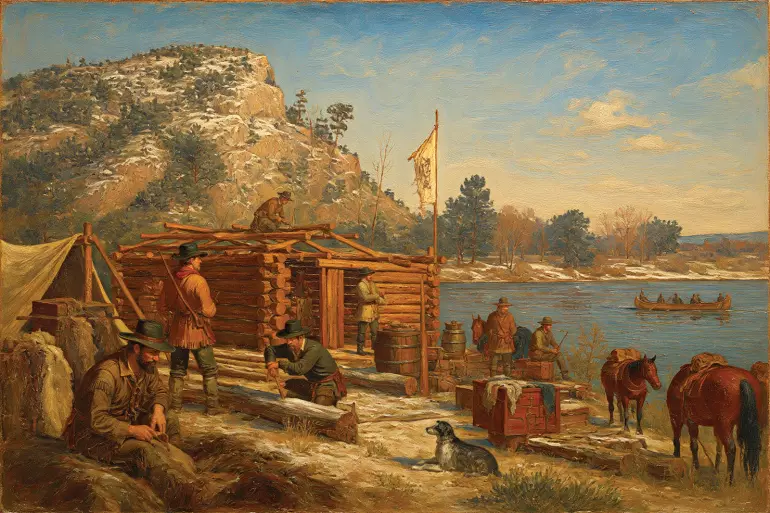
A failed fort at Three Forks.
Stand today at the confluence of the Jefferson, Madison, and Gallatin rivers, where the three streams come together to form the Missouri—the same convergence Lewis and Clark traveled through and described in 1805—and it’s quiet enough to hear the current change pitch as it becomes one river instead of three.
There’s a state park here now, interpretive signage, and a gravel lot. It takes some imagination to picture a few dozen men standing on this same bank in the spring of 1810, hauling timber and sinking posts, racing to get a fortified trading post standing before the season turned.
The men worked for the Missouri Fur Company, a partnership stitched together by Manuel Lisa, William Clark, Pierre Menard, and Jean Pierre Chouteau—men with money and ambition, pushing into a country that Americans had only recently begun to know firsthand. Leading them into the Gallatin Valley was Menard, who brought a party of some 32 trappers west from Lisa’s post at the mouth of the Bighorn River, over present-day Bozeman Pass, and down the Gallatin to the Three Forks, reaching the confluence on April 3. Among the crew was George Drouillard, a veteran of the Corps of Discovery who already knew this stretch of river as well as any American alive.
Two years earlier, another Lewis & Clark veteran, John Potts, had met his death in this same country—shot from a canoe on the Jefferson River by a Blackfeet war party while trapping alongside John Colter, who escaped only by outrunning his pursuers across five miles of open plain, naked and unarmed. It was a story every man walking into Three Forks in 1810 would already have known.
Within months, the remaining trappers abandoned the post rather than risk finding out the hard way whether they could make it through to spring.
What a fur company needed to get through a winter in this country wasn’t a mystery. Trade goods, ammunition, food, and other necessities that couldn’t be produced on-site. Meat hunted and preserved through the fall to see men through long, cold months when travel and resupply were essentially impossible. Whether Three Forks ever got that far is another matter. The stockade itself, reported at roughly 300 feet on a side, was by any reasonable measure a serious undertaking for a few dozen men working with hand tools alone, a structure built more in hope of a long stay than in certainty of one. Regardless, the post at Three Forks never got the chance to find out if its walls, or its stores, would hold.
The same beaver-rich bottomland that made this site valuable also sat squarely inside Blackfeet hunting territory, and the Missouri Fur Company was entering country where Blackfeet had already demonstrated, in blood, that American trappers were not welcome. The men had barely finished a defensible structure before that hostility made itself known directly. On April 12, groups that had split off to run traps up the Jefferson and down the Missouri were attacked, and five men were killed in that assault alone: Hull, Cheeks, Ayres, Rucker, and Freehearty, according to Pierre Menard’s own account.
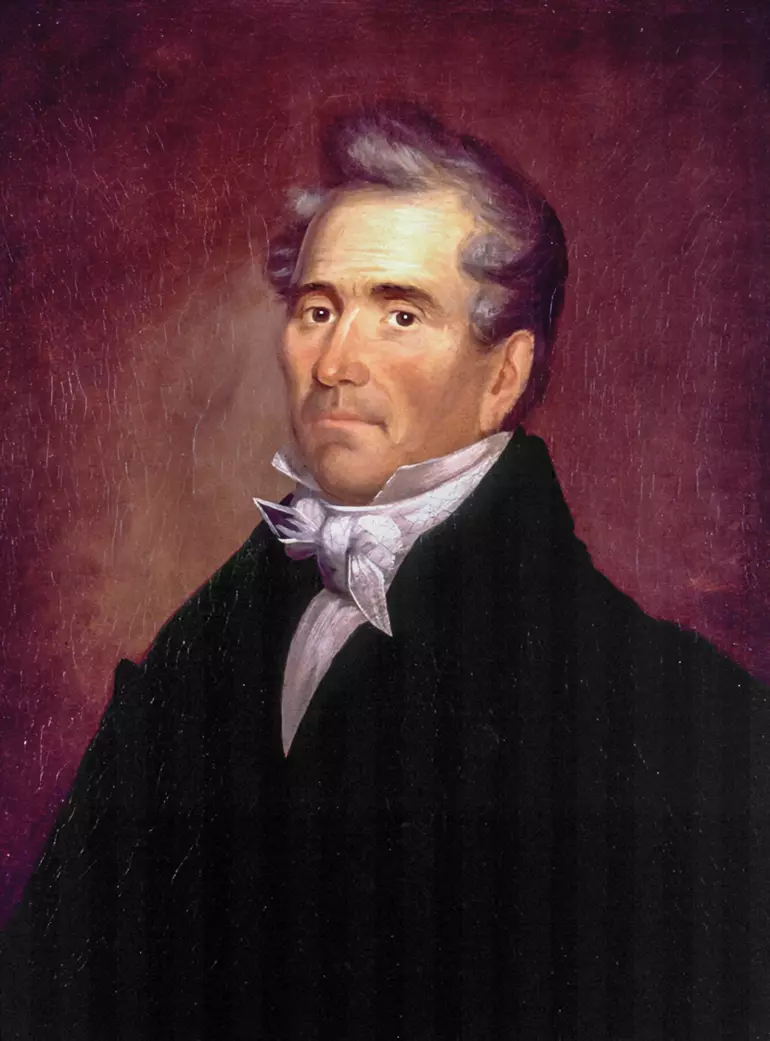
Manuel Lisa
Drouillard was killed separately, weeks later, on a trapping trip up the Jefferson with two companions. He’d reportedly been warned against going out in such a small group and brushed it off, confident in his own experience in Blackfeet country. A search party eventually found what was left of him: his body mutilated well beyond what the other men had suffered, a message as much as an attack.
By the time the losses were tallied against what the post could still muster, whatever had been gathered wasn’t enough to gamble a winter on. Within months, the remaining trappers abandoned the post rather than risk finding out the hard way whether they could make it through to spring.
And so instead of wintering at Three Forks, the survivors did something arguably harder: they crossed the Continental Divide on foot and horseback with the season already closing in behind them, and put up a second camp—a few rough log shelters—on Henry’s Fork of the Snake River, near present-day St. Anthony, Idaho. History would later dignify the spot with the name Fort Henry.
What stays interesting, more than two centuries on, isn’t really the fighting. It’s the shape of the failure.
There, unlike at Three Forks, the company spent the winter, and it went badly. Game was scarce, resupply was nonexistent this late in the season and this far off any established route, and by spring the company was starving.
It’s a strange kind of local history—a fort remembered less for what happened inside its walls than for the winter it was built to survive and instead handed off, unfinished, to a hastier camp two mountain ranges away. Three Forks moved on without it; a townsite rose near the same confluence decades later, in 1862, chasing a different kind of rush entirely, and today the Missouri Headwaters sit as a state park a short drive from Bozeman, their interpretive signs the main trace that a fortified trading post—built, however hastily, for a Gallatin winter—once stood there for one unfinished season.
What stays interesting, more than two centuries on, isn’t really the fighting. It’s the shape of the failure: preparations that turned out to be unnecessary in one place, and desperately insufficient in another, separated by 150 miles and a few hard months. Built for a Gallatin winter, provisioned for one only in theory, the post at Three Forks never got tested at all, and the men who built it found out what a Rocky Mountain winter demanded somewhere else entirely.