Safer Sanitation

BUM's the word.
As Montana’s population continues to skyrocket, wildlife safety has become increasingly important. Most residents are already familiar with the mantra, A fed bear is a dead bear, which calls to mind the unfortunate euthanization that occurs when scavenging bruins become too comfortable around people. Consequently, bear-proof garbage bins are now de rigueur in many small towns around the state. In bustling Bozeangeles, however, there’s a different kind of dumpster-diver: the Bozeman Urban Marauder, or BUM. Mild winters and improved overnight habitat have caused a surge in the local BUM population, with conflicts increasing ten-fold in some areas. As more and more dumpster raids occur in neighborhoods and behind local businesses, city officials are desperate for a solution.
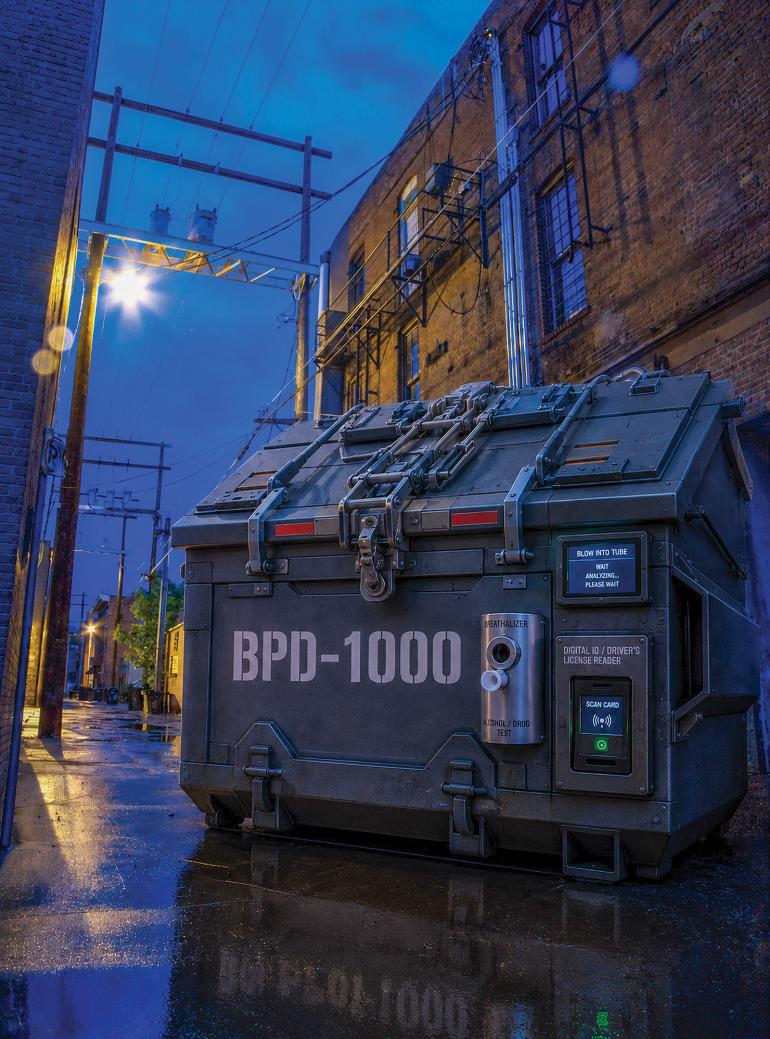
Enter the BUM-Proof Dumpster 1000, a revolutionary receptacle designed to be virtually impossible for a BUM to open, while remaining accessible to people who work for a living. First off, any would-be dumpster user must blow into a breathalyzer tube, designed to detect abnormally high levels alcohol during daylight hours. Second, the user must solve a digital puzzle akin to putting shapes through the correct holes. Third, an ID scanner verifies Montana residency.
The city hopes that widespread BPD installation will eventually push migrant BUMs back to their native habitat.
To further reduce conflicts and educate the public, the city has rolled out a PR campaign with the slogan A fed BUM is a lead BUM—meaning, once they receive a reward, they tend to “get heavy,” or remain in the same location, instead of moving from town to town, which is their natural behavior. “The worst possible outcome is that they become too comfortable around employed people,” says outreach director Les Hoboz. “That’s when the real trouble begins.” Test units have been deployed at several locations around Bozeman, primarily behind restaurants, dispensaries, and high-end subdivisions where waste is a sign of status. So far, officials report 100% success—no BUM has gained access to a single dumpster. Unfortunately, neither have some weed-shop interns and Triple Tree day-drinkers trying to take out the trash. Regardless, the pilot program is considered a rousing success, with cleaner streets around town and fewer food-poisoning reports from drunk college students scooping up half-eaten burritos on their way home from the bar.
The city hopes that widespread installation will eventually push migrant BUMs back to their native habitat, while resident BUMs can work toward a token-based cleanup program, picking up trash in exchange for dumpster access—a feature slated for the BPD-2000, due out next spring. The ultimate goal, officials say, is to transform dumpster-diving into a work-and-reward system that inspires change not only in the community, but in the work ethic of the BUMs.