How Dry Am I?
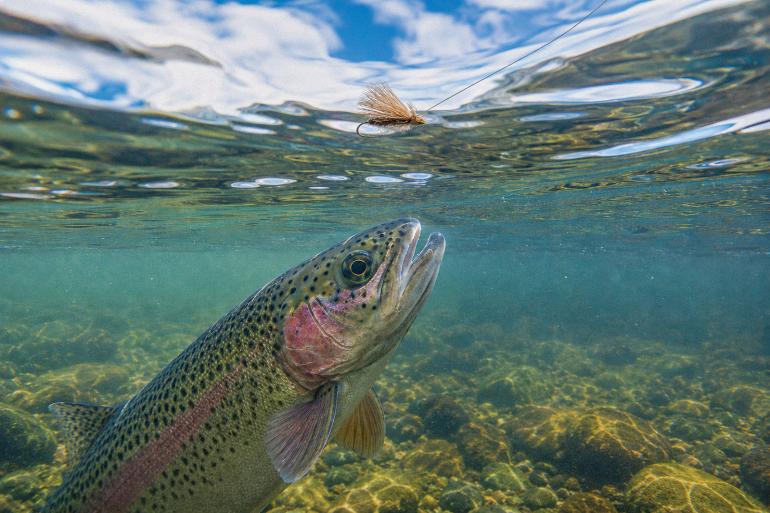
Taking on the topwater trope.
We all know an I only person. You know, I only drink craft beer, I only eat grassfed beef, I only read nonfiction. Flyfishing has its own version of this affliction: I only fish dry flies. Anyone who’s spent time with a fly rod in hand has encountered this breed. The condition is quite common and is often self-diagnosed as “purism.” Of course it’s not snobbery, but can be construed as snob-adjacent. And to be fair, the sight of a chunky rainbow engulfing a well-presented dry is a thing of beauty. So no, this isn’t an anti–dry fly rant, more of a reality check.
Last season, a friend invited me on a guided float of the Madison. It was a treat since I didn’t have to row and had the luxury of the guide’s knowledge of the river. Would you believe, his mantra was, we only fish dries. Admittedly, it was great fun, as the fish were feeding on the surface. What surprised me, though, was the guide’s constant commentary on the boats drifting by—other guides with clients who were fishing nymphs and indicators. “That’s not fly fishing,” he lamented. “Those people aren’t learning how to fly fish.”
True, most of those folks were not seasoned fly anglers. They were mostly looking for a nice day on the water and an enhanced opportunity to catch a few fish. Most novice anglers aren’t capable of laying out a 30-foot cast and perfectly dead-drifting a size-18 caddis. However, they had fly rods in their hands, with flies on the end of their lines; they knew how to mend and how to cast in the right direction; and they were catching fish. Sure seems like fly fishing to me.
I received some interesting insight from one of my non-fishing friends who inquired, “Why are they called dry flies when they are on the water? Don’t they get wet?”
And that drifts us into another level of esoterica. Is a pheasant tail less noble than a PMD? Do only dry flies have a soul? Just because a nymph rides below the surface and into the feeding zone of potentially hungry salmonid, should that put it lower on the fly-fishing hierarchy? At least it imitates a form of aquatic insect. (Let’s not even talk about streamers!)
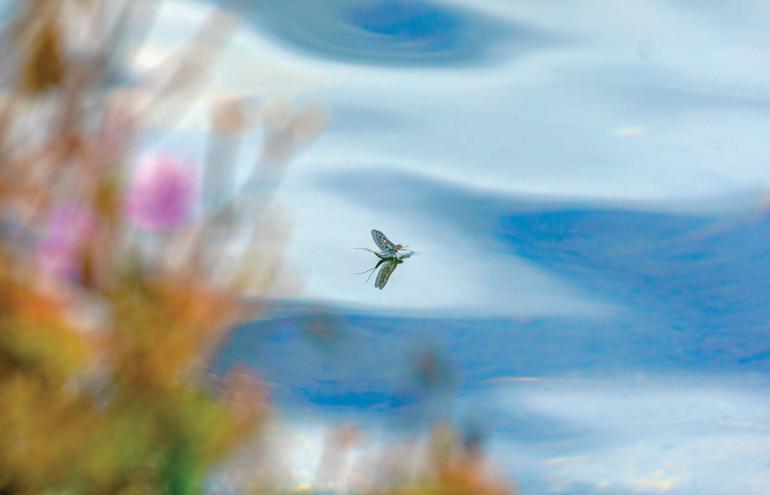
A question for the purist: What if the fish aren’t rising? Now that’s a true I only conundrum. Do you just keep flogging that parachute Adams, hoping for a miracle, waiting hours on end for the next hatch, or just head home and try again another day? If you’re a guide, what about your clients, are they expected to forgo a productive day on the water in the interest of moral superiority?
In the hopes of understanding this dry dilemma, one of my fly-fishing buddies (who is not an I only) suggested that perhaps the dedicated I only guys and gals were not completely focused on catching fish. I get it; being in a beautiful environment is a reward in itself. But if that were my main motivation, I would just go for a boat ride or a hike along the river and not wear my sweaty waders. If I wasn’t really fixated on catching fish at that particular time, I would more likely have a 5-iron in my hand instead of my trusty 5-weight.
I’m not a hater of dry flies, and actually use them when it makes sense. I just don’t subscribe to exclusivity.
I received some interesting insight from one of my non-fishing friends who inquired, “Why are they called dry flies when they are on the water? Don’t they get wet?” I pondered this profundity for quite some time and came to the realization that the only time dry flies are truly dry is when they are in the midst of a false cast and not in any position to actually catch a fish. The word “false” may have a deeper meaning in the definition of the heavily worshiped dry fly.
So where does that leave me? I’m not a hater of dry flies, and actually use them when it makes sense. I just don’t subscribe to exclusivity. Well, maybe I will acquiesce and admit that I do flirt with the I only crowd on occasion. I only flyfish—don’t you?