From Fender to Freezer
What to do when wildlife and vehicles cross paths.
“It’s not the deer that is crossing the road, rather it’s the road that is crossing the forest.” —Unknown
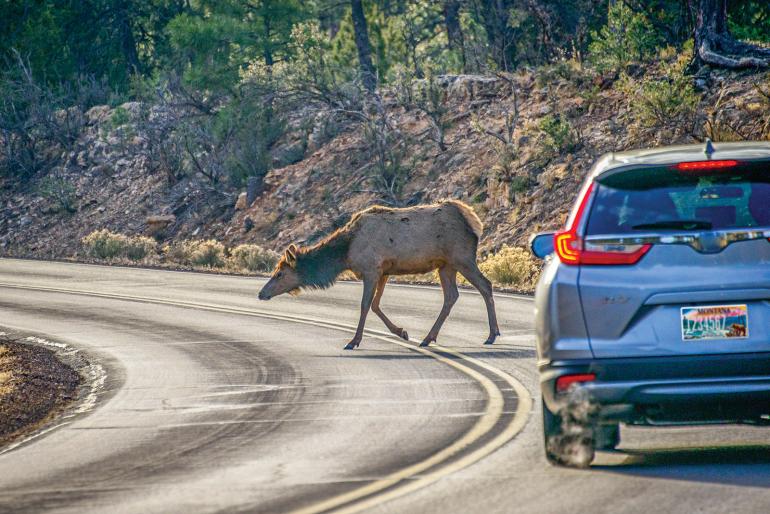
Sharing the road with wildlife is part of living in Montana. Sometimes that means slowing down to admire a herd of elk. Other times, it means an animal suddenly appears in your headlights. Wildlife collisions are an unfortunate reality, with roughly 13% of reported crashes in the state involving an animal. Knowing what to do before and during a collision can be valuable in keeping you (and Bambi!) safe. Moreover, if an impact does occur and the animal doesn’t survive, Montana has a program that allows you to legally salvage the meat and prevent it from going to waste. Here are some tips for driving among the animals this season.
Forewarned is Forearmed
- Be alert, especially at dusk and dawn
- Scan roadsides and ditches for animals
- Watch for wildlife-crossing signs
- Use your brights when there’s no oncoming traffic
- If you see one animal, expect more.
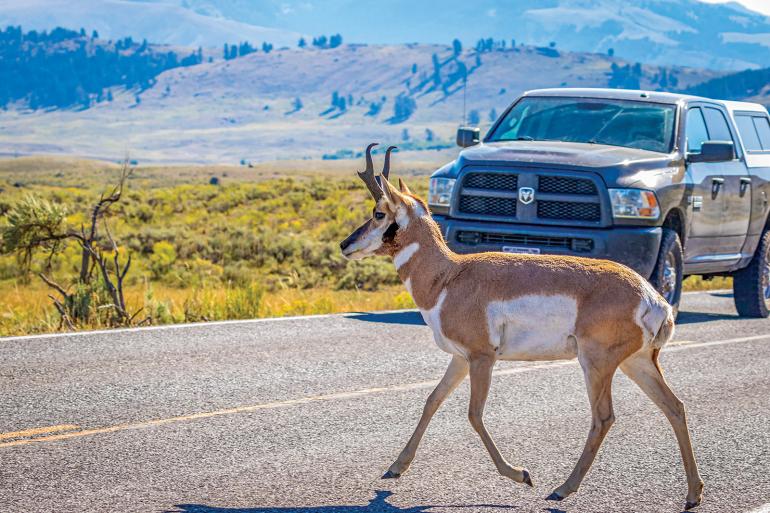
- If an animal steps into the road, use controlled braking, stay in your lane, and honk your horn or flash your lights if you have time.
- After passing wildlife on or near the road, signal oncoming traffic by turning your lights on and off. (Note that this is also the universal signal that a cop is near; but the action is the same: slow down and proceed with caution.)
- If a collision is unavoidable, don’t swerve. A surprise meeting with an ungulate is unfortunate. A surprise meeting with a ditch, guardrail, or oncoming vehicle could be much worse.
If You Hit an Animal
Do
- Pull completely off the roadway and turn on your hazards.
- Approach the animal carefully (it may not be dead).
- Drag the animal to the shoulder or into the ditch.
- If the animal is creating a hazard and you can’t safely move it yourself, call 911 or the Montana Highway Patrol (855-647-3777).
Don’t
- Assume the animal is dead. A scared, wounded animal can be quite strong.
- Linger in the roadway or otherwise obstruct traffic.
- Wander onto private property to retrieve an animal without permission.
- Assume that it’s okay to put an animal out of its misery with your rifle. It should be, but Montana law prohibits discharging firearms from a public roadway. (Note: There’s no law that we know of against using a knife.)
Montana’s Roadkill Salvage Program
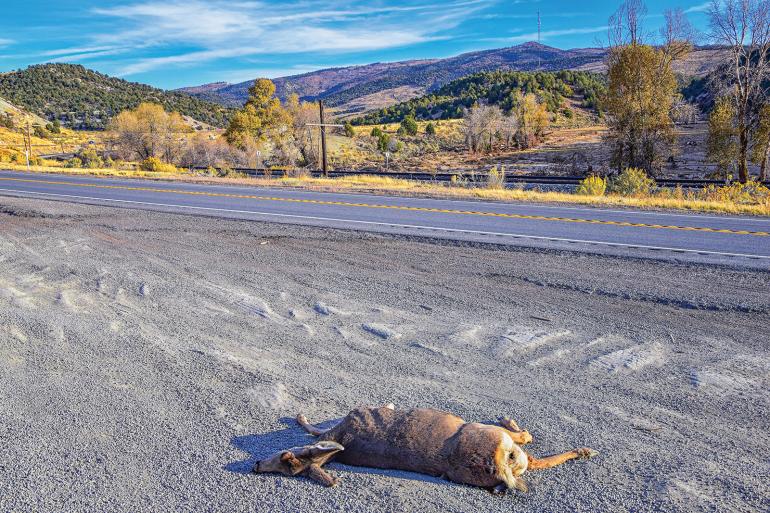
While there’s no silver lining to losing an animal, you can at least turn an unfortunate encounter into a few organic, all-natural meals. Montana allows the salvage of mule and white-tailed deer, elk, antelope, and moose killed in vehicle collisions. You’ll need a free Roadkill Salvage Permit from Montana Fish, Wildlife & Parks (FWP), which you can get online. If you’re out of cell service, you have 24 hours after salvage to obtain the permit. These permits help FWP track wildlife mortality, and any animals recovered through the program need not be tagged with a standard license, nor do they count toward annual harvest limits.
Before You Toss It in the Truck
Fresh is best.
If the animal has been sitting in the sun, smells questionable, or shows signs of bloating, let it go.
Know the damage.
Animals hit in the legs or chest may still provide plenty of usable meat, while severe abdominal trauma can spoil meat quickly.
Come prepared.
Gloves, a sharp knife, game bags, and a cooler can turn a roadside recovery into a much smoother process.
Respect property boundaries.
Most landowners are supportive of salvage efforts, but you can still be cited for trespassing if you cross a fence without permission.
Be sure to remove the entirety of the animal from the roadway, including the guts (gross, yes; use a stick if necessary to minimize nausea).
Not a butcher? Check with a hunter friend. Someone may be happy to help put the meat to use.