Time Lapse

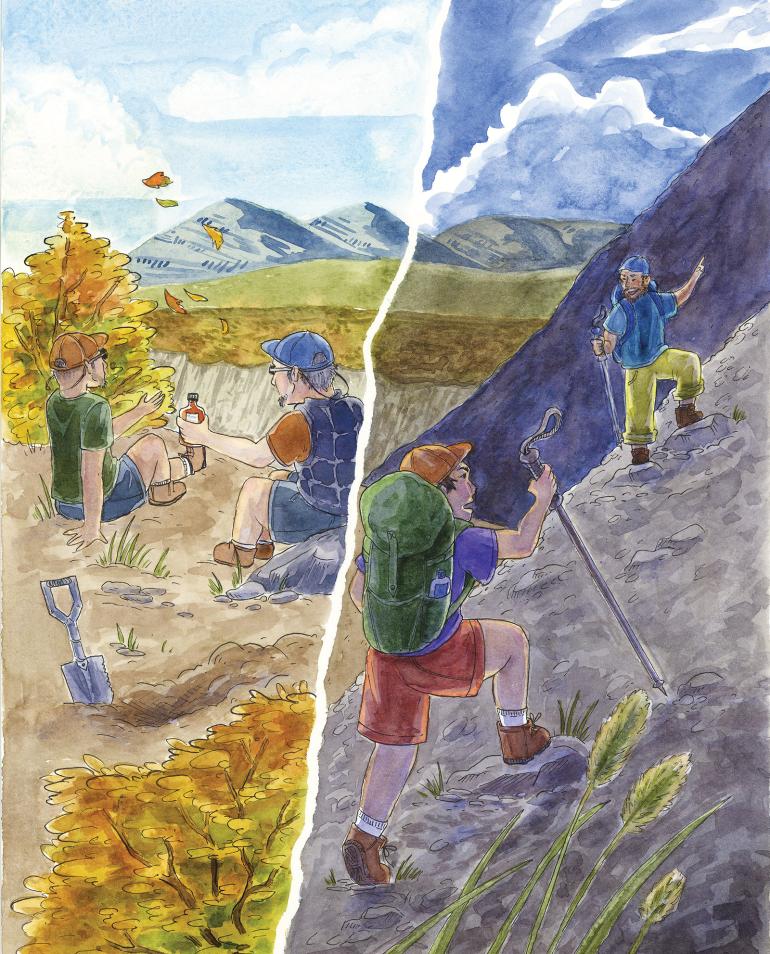
To connect themselves to a hopeful future, two men buried a bottle of whisky. To connect themselves to a reckless past, they dug it up.
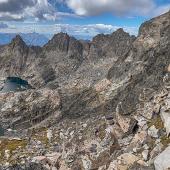
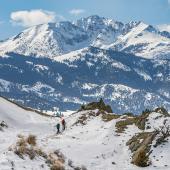
Up here, on the pass, I can see more than just terrain. Of course there is alpine landscape: glacier-formed cirques, narrow ridges, and green forested canyons. But I’m focused on what lies beyond—downstream in both directions. This gorgeous view atop the Continental Divide reveals two vastly different stories. To one side the water drizzles down to the Great Plains and the yawning mouth of the Mississippi. On the other, it tumbles to the Pacific, 500 miles to the west. Left and right, windward and leeward, and in one case, past and future. This pass is an essential character in an emerging story.
One recent afternoon, a few dozen meters below this ridge, where enough sun falls to make a warm autumn day, a small gathering of four men shared a toast from a well-aged bottle of whisky. They hadn’t met there by accident, but it was an accident that brought them back there.
The Windward Side
Two of these guys were still young, barely into their 20s. They’d been running around the mountains together since childhood—the years when they’d plinked with BB guns and outrun monsters while learning to love wild places. These young men were strong to a fault, bounding through that first chapter of adulthood—the one that convinces young men that there is nothing they can’t do. They could eat what they wished, drink like sailors, and wake up ready for more. These two guys, Ryan and Nate, would skip town on a Friday after work and be five miles up a canyon before sundown. Saturdays would find them scrambling up a narrow ridge or crawling to the top of some peak of crumbling granite. When in the mountains, they kept a civilized routine: steep climbs, freeze-dried meals, campfire… sleep like the dead.
Ryan and Nate had climbed up that mountain pass one cool morning in July of 1995, seeing it for the first time. There, with a promising day stretching out before them, they dropped their packs to the ground and filled their lungs with crisp alpine air. They stretched out for a light snack and a closer look at the map, spreading it out and pinning its corners with rocks, as one did in the days before digital maps.
They were glad to see that the sky to the west was mostly clear. During their first night of this trip, they’d been rudely awakened to a nail-biter of a storm. The lighting strikes pounding the cirque where they’d camped had filled the amphitheater with deafening cracks, seizing their breath while they lay wide-eyed in the darkness. But the morning sunlight lifted their fears and they laughed about it over oatmeal and instant coffee. Loitering just long enough for their things to dry, they struck camp, hoisted their gear, and continued up to the pass, determined to explore the land beyond.
They were one with the mountains—connected, like old friends. Or so they thought.
One misplaced foot changed the course of two lifetimes.
It turns out that the mountains did not share their view. The high plateau west of the pass didn’t offer advice later that morning when the guys lost sight of the trail, poorly marked as it was with rock cairns on the windswept tundra. The undulating ridgelines gave no warning while the guys debated how to descend to an alpine lake more than a thousand feet down. The steep, crumbling chute they decided to follow was indifferent as the two foolishly lowered themselves into it rather than backtrack to the established trail. Ryan and Nate had concluded that the chute was the most direct way down and, after all, they were sure they had the dexterity of mountain goats. They carried 50-pound packs and the full expectation that this route would lead them to the floor of the cirque and the lake below.
But the chute played out halfway down, blocked from one side to the other with a small but menacing cliff band which could not be avoided. There they stood, peering over the drop from its precarious edge. Retracting their steps up the chute would be a miserable and dangerous slog. Yet, there was no way to get past the cliff wearing large, unwieldy backpacks. Complicating their decision was the fact that, even below the cliff, there was no guarantee that another impasse didn’t await them.
Whether through bravery or foolishness, their mutual decision was to push on. They had ropes, after all, and figured they’d get past the cliff band by lowering their packs, and climbing down afterwords. It might have worked out that way, but their idea was never tested.
One misplaced foot changed the course of two lifetimes. It was nothing more than a slip on loose gravel, but the gentle breath of physics put the dominoes in motion. Nate knew from the very moment Ryan slipped that there’d be no stopping him. His initial fall was no more than 10 or 12 feet, but it was that first impact that shattered Ryan’s leg and sent him tumbling violently into an even steeper section of the chute. For several agonizing seconds he disappeared from Nate’s view, reappearing limp and seemingly lifeless on the talus slope several hundred feet below.
The hours that followed would be seared into Nate’s memory in disconnected chunks—tossing his own pack over the edge and white-knuckling his way down a chimney of rock while pleading “no, no, no, no.” He’d never forget the tourniquet, ripped from a tee shirt, the grinding bone ends, the staggering amount of blood. Nor would he forget the words, spoken by his friend in absolute sincerity, “Tell my family I love them.”
These memories don’t fade, they echo. They reverberate through other memories—a desperate, exhausting push to the trailhead, an anxious and agonizing wait, the glorious, pulsing thump of helicopter blades—and through time itself, measured not in breathless moments, but in decades.
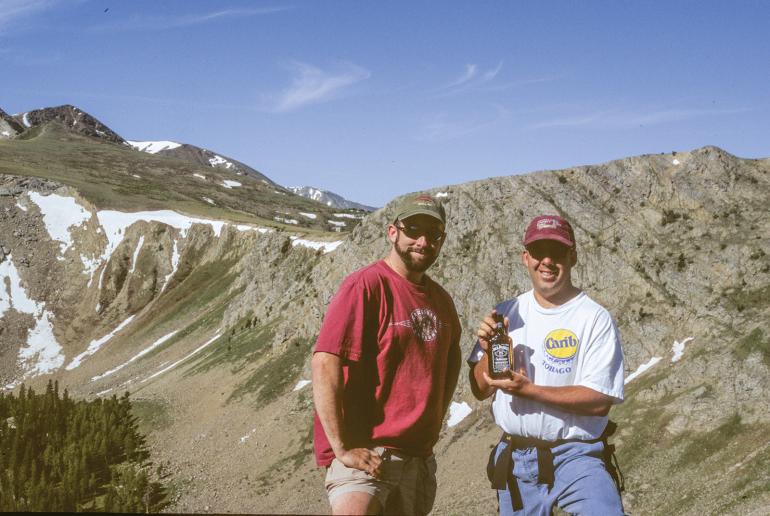
Nate & Ryan bottle burial, 2004
The Leeward Side
The other two men in this story have arrived at the pass years later. They are middle-aged men who look forward to good meals and, hopefully, a good night of sleep. They don’t go as far or as fast, but they appreciate the nuance of the journey in ways that the young bucks simply could not. They have wives and children, mortgages and plans for retirement. Every fall they hunt real game, discuss real monsters, and continue to love wild places. They may have grey beards and a few extra pounds, but they’ve gained perspective that the young men hadn’t yet earned.
For example, their extra years have given these old guys realistic expectations. Over the years they’ve been snowed out of the mountains a time or two, been frustrated to find other people camped in places where they’d planned to pitch a tent, and come back from many hunts empty-handed. They watched as the Montana of their youth began to twist itself into something new: crusty local watering holes replaced by bistros or pizza joints selling beer by the glass rather than plastic pitchers the way God intended. Year after year, these two guys found one constant, however— their mutual love and respect for the mountains.
Those young men couldn’t know for sure if the two old men would ever make it back up to the mountain to unearth their prize.
These old guys also knew, for instance, exactly what young Ryan and Nate had been thinking when they’d returned to the pass nine years after Ryan’s fall, sinking a shovel into the mountain range that had nearly killed one of them, and caching a bottle of whisky in a coffee can. They also knew that the bottle of whisky represented a toast to a future that almost didn’t happen, as well as to the exuberance of youth that paved the way for it.
Years before, with no GPS coordinates or physical marker to claim the spot, those young men had simply covered it up and walked away, vowing to return when they were both north of 50. They agreed that it would happen in the far-distant year of 2024. Those young men couldn’t know for sure if the two old men would ever make it back up to the mountain to unearth their prize.
But the two old men did.
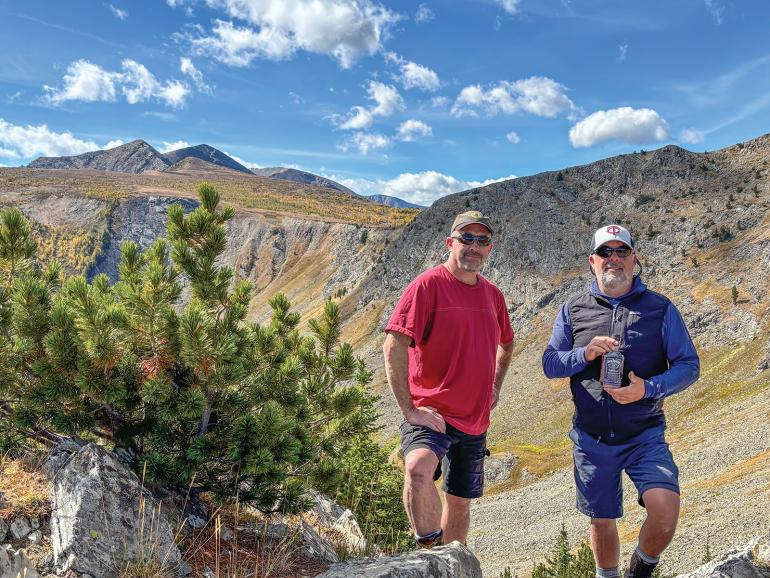
Nate & Ryan bottle retrieval, 2024
To the Sea
7,366 days is a long time to chill a bottle of whisky. The entire decades of our 30s and 40s slipped past us while that bottle sat under snowdrifts and weak summer sun. Over those years, Ryan and I have lived our separate lives, backpacked many miles, and even had a fight or two. We’ve floated some rivers, stood for hundreds of hours around glowing campfires, and thrown back more than a few cold beers to celebrate many successful adventures. These days our conversations are more likely about kids, hunting, or even barbecue than rocky peaks and mountain goats. We’ve gone from one side of the divide to the other, but the water is still flowing.
It was Ryan who spotted it after nearly an hour of searching—a rusted metal rim just barely, thankfully, protruding from the ground. We’d buried it no more than 150 yards from a trail where hundreds of people had likely passed over the years, but in a spot no one would ever find, and no one ever will now that the small hole has been filled and carefully brushed over. It’s a special spot, just below the ridge where enough sun falls to make a warm autumn day.
Twenty years makes for really smooth sipping. Sitting in the sunshine beneath the pass last fall, there is no doubt that those two young guys were gathered there with us. Ryan and I raised the old bottle and toasted their energy, foolish and naive as it might have been nearly 30 years ago. And those youngsters toasted us right back, reminding us that we’re not done yet and the water still has many more miles to flow. Those two young guys were right to gamble on our return, and us old guys are wise to keep looking downstream. Who knows? There might be a bottle somewhere out there right now, chilling.